Trip Preparation
How Fit Do You Need to Be for the Sardine Run? An 8-Week Training Plan
Updated 23 July 2026 · 10 min read · By the Sardine Run Africa crew
A bait ball rarely holds together for more than about ten minutes. When the gannets start dropping and the skipper calls the entry, you have seconds to get your mask on, swing your legs over the pontoon and slip in quietly. Then you swim, hard, at the surface, in a 5mm wetsuit, while common dolphins work the shoal beneath you. When the action moves on, you haul yourself back over the pontoon (there is no ladder on a RIB), the boat repositions, and you do it again. A sea day here runs six to eight hours.
That is the whole fitness question in one paragraph. You do not need to be an athlete, and you do not need to be a diver. You need three specific capacities: a calm open-water swim, the strength to get back onto a boat unaided, and the stamina to enjoy hour seven as much as hour one. All three are trainable in eight weeks by almost anyone starting from a reasonable base.
This is the plan we wish every guest followed before a 7-day Chintsa expedition. Three sessions a week, no gym membership required, plus the unglamorous extras that matter more than any workout, from seasickness acclimatisation to cold-water tolerance, with a straight word about medical preparation at the end. The 2026 season has just wrapped up, so anyone aiming at May to July 2027 has more preparation time than they will ever need. Use eight weeks of it well.
How fit do you need to be? The honest bar
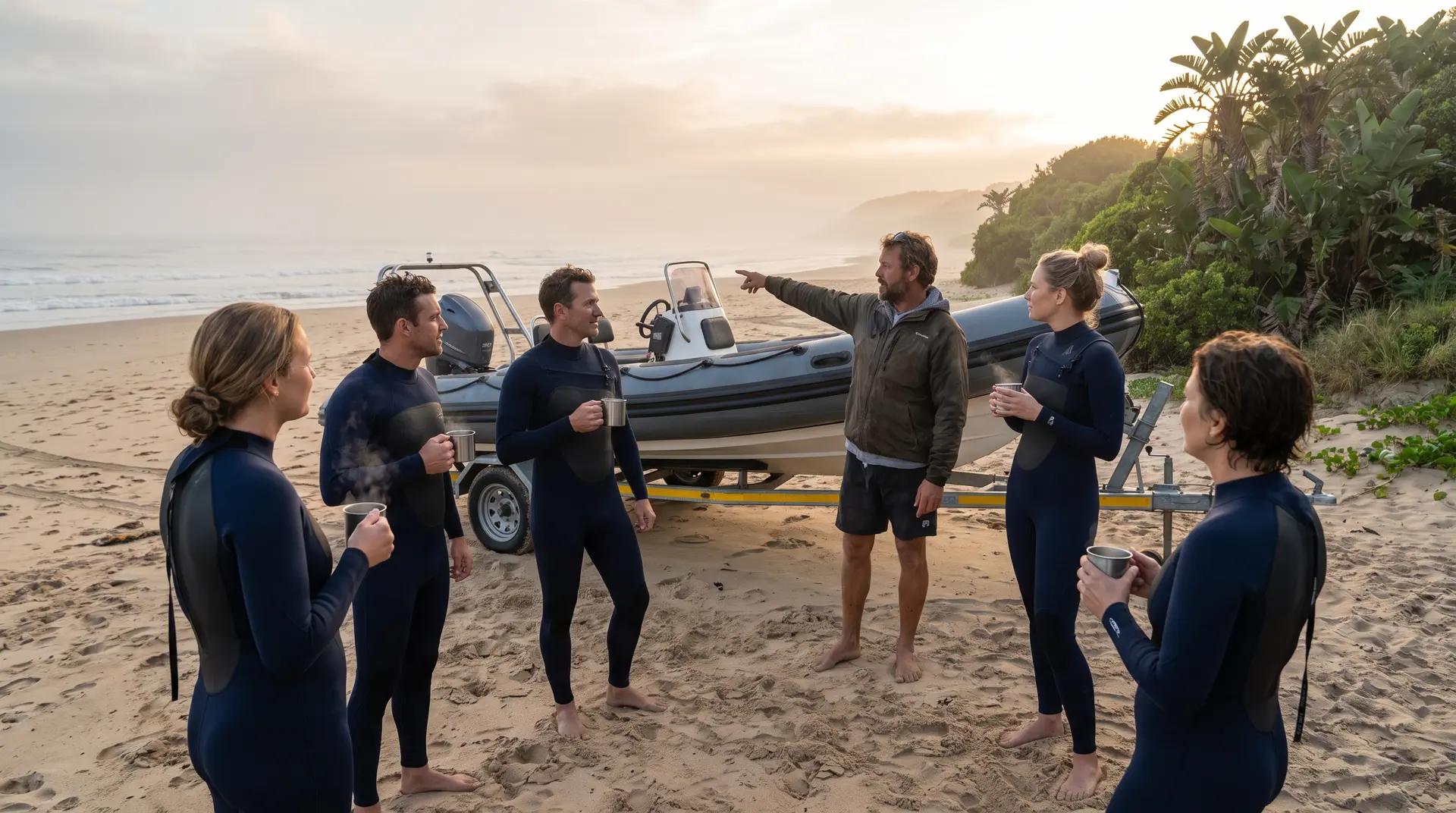
Sea days start early. Boats typically launch between 06:30 and 08:00 and stay out for six to eight hours, covering serious distance while the skipper reads the birds. A RIB is fast and stable, but it rides the swell rather than cutting through it, so your legs, back and grip work all day just keeping you braced. That low-grade physical tax is what surprises first-timers far more than any swim.
The in-water demands come in bursts. You might sit for two hours watching gannets, then have three entries inside forty minutes when the boat finds working dolphins. Because bait balls seldom last ten minutes, speed into the water decides what you see, and speed comes from fitness plus rehearsed routine. A guest who gears up smoothly and slides in calm gets minutes with the action; a guest fumbling with fins while their heart rate spikes gets the tail end of it.
Here is what a normal day in season asks of your body, without varnish:
Who should think twice
The run is not suitable for people with limited mobility, and in-water participants must be comfortable in open ocean, out of their depth, in moving water. If that is not you, there is still a seat on the boat: whales, super-pods of dolphins and diving gannets are watched from the deck, and you do not need any dive certification to be in the water on snorkel. The bar is comfort and mobility, not qualifications.
If you can swim 200m in a pool without stopping and get out of the deep end without using the steps, you have the raw material. The next eight weeks turn raw material into readiness.
The five physical demands of a sea day
- Six to eight hours on a small boat, much of it bracing against swell with your legs and core.
- Multiple fast entries: when action is spotted you gear up and slide in within a couple of minutes, sometimes several times in a morning.
- Unaided re-entry over the pontoon. You kick, grab and press yourself back over the tube. Crew will steady you, but you lift your own body weight.
- Short, hard surface swims. Bait balls drift and predators push them, so a flat-out snorkel swim against chop is routine, followed by controlled breathing while you hold position and watch.
- Repetition. The hardest part is not one swim; it is doing all of the above on day five with the same enthusiasm you had on day one.
The 8-week sardine run training plan
Three sessions a week, roughly 45 minutes each. One swim, one strength session, one mixed session for mobility and general conditioning. Consistency beats intensity every single week: 24 unspectacular sessions will prepare you better than six heroic ones and a pulled shoulder.
Scale everything to your starting point. The swim distances assume a 25m pool; the strength work needs nothing more than a floor, something sturdy to pull on (a table edge, a resistance band, a low bar) and, ideally, occasional access to a pool deep end.
| Weeks | Swim session | Strength session | Mixed session |
|---|---|---|---|
| 1-2 | 20-30 min continuous easy swimming, any stroke; focus on long, relaxed exhales | 2-3 rounds: 8 incline push-ups, 8 rows, 10 squats, 30-second plank | 20 min brisk walk or cycle, then 10 min of hip, shoulder and ankle mobility |
| 3-4 | 6-8 x 50m at moderate pace with 30-45 seconds rest; introduce mask, snorkel and fins for part of each session | 3 rounds: 8-10 push-ups, 8-10 rows or assisted pull-ups, 10 step-ups per leg, 45-second side planks | 30-45 min hike, swim or cycle; end every shower this fortnight with 30-60 seconds of cold water |
| 5-6 | 400m continuous in fins, then 4 x 25m fast; practise duck dives in the deep end | 3-4 rounds: push-ups, pull-ups or heavier rows, walking lunges; finish with 5 pool-edge exits | One open-water or unheated swim if you can arrange it; keep the cold shower finishes |
| 7 | Simulate a sea day: 5 rounds of 50m hard plus 2 min easy treading water, all in fins | 2 lighter rounds; keep the pool-edge exits | One swim in your wetsuit if you own or can rent one; nothing strenuous otherwise |
| 8 (trip week) | One short, easy swim early in the week | Rest | Travel, sleep, hydrate, pack |
Swim sessions: build an engine, not a stroke
Nobody at a bait ball cares about your freestyle technique. A 5-7mm wetsuit makes you buoyant and fins do most of the propulsion, so raw pool speed matters far less than composure. The real goal of the swim sessions is to become relaxed while out of breath: to sprint 50m, then settle your breathing through a snorkel within thirty seconds while your heart is still pounding. That skill, more than any other, is what separates guests who see everything from guests who spend the encounter fighting their own gear.
Bring fins into the pool from week three, and if you plan to use long freediving fins on the trip, train in those. Calves and ankles need weeks to adapt, and mid-ocean cramp is the most preventable problem we see. Train the kick you will actually use: legs long, from the hip, face down, snorkel breathing.
One firm safety rule. Never practise breath-holds alone in water, not even standing in the shallow end. Shallow-water blackout gives no warning. Do your breathing drills dry on the couch, and save in-water breath-hold work for a supervised freediving course, which we cover below.
Strength that matters: the pontoon haul
Boat re-entry is the one strength task you cannot talk your way around. It is a single flowing movement: a strong fin kick to breach upward, a grab on the handline or pontoon, then pressing your body weight up and over the tube while wearing a wet 5mm suit. Broken into gym language, that is a pull, a press and a hip drive, which is exactly what the strength sessions train.
The single best drill costs nothing: the pool-edge exit. From the deep end, no steps, no ladder: kick up, plant both palms on the deck and press yourself out until you can get a knee up. Do five at the end of every swim from week five, first in trunks, then in fins, and if possible once or twice in a wetsuit. If you can do that comfortably five times in a row, the pontoon will not trouble you.
No gym? Rows under a solid table, push-ups, a backpack loaded with books for step-ups and lunges, and a resistance band cover everything in the table above. The loads on expedition are your own body plus a few kilograms of wet neoprene, so bodyweight training maps almost perfectly onto the job.
Do not neglect your legs and core just because the drama happens at your arms. Hours of bracing on a moving deck is an endurance event for hips and trunk, and tired legs are what turn a routine re-entry into a struggle at 14:00 on day four. The step-ups, lunges and planks in the plan look boring. They are also the difference between finishing the week strong and counting down the hours.
Seasickness: acclimatise, do not just medicate
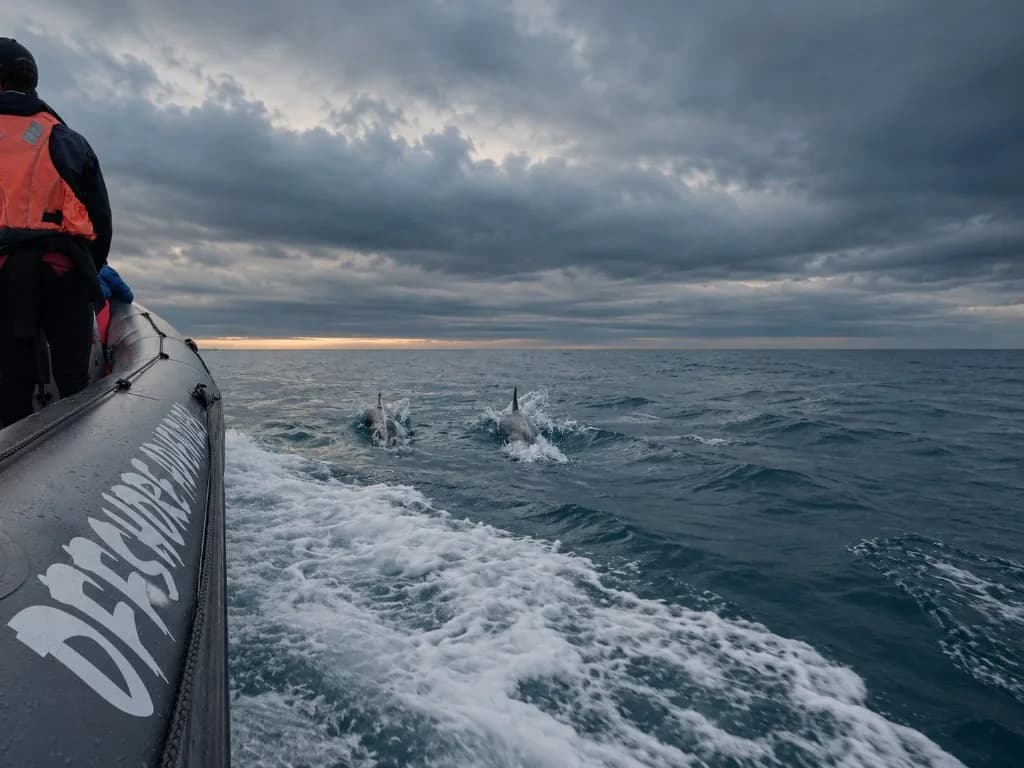
Small boat, long day, winter swell: if you are prone to motion sickness, plan for it now rather than discovering it 20km offshore. The water conditions in season are honest ocean conditions, and pretending otherwise helps nobody.
Habituation is real. Your balance system adapts with repeated exposure, so any boat time in the month before your trip pays off; a ferry crossing or a cheap fishing charter both count. It is also a quiet advantage of a 7-day expedition over a one-day outing, because most people find the later sea days easier on the stomach than the first.
Handle medication like an adult. Choose a tablet with your pharmacist, trial it on land two weeks before you travel to check how drowsy it makes you, and on sea days take it before launch, not after you feel ill, because by then it is too late. Eat a plain breakfast, keep your eyes up and on the horizon during long runs, and stay busy. Watching for gannets is better anti-nausea therapy than staring at your feet.
Cold-water tolerance: kill the gasp
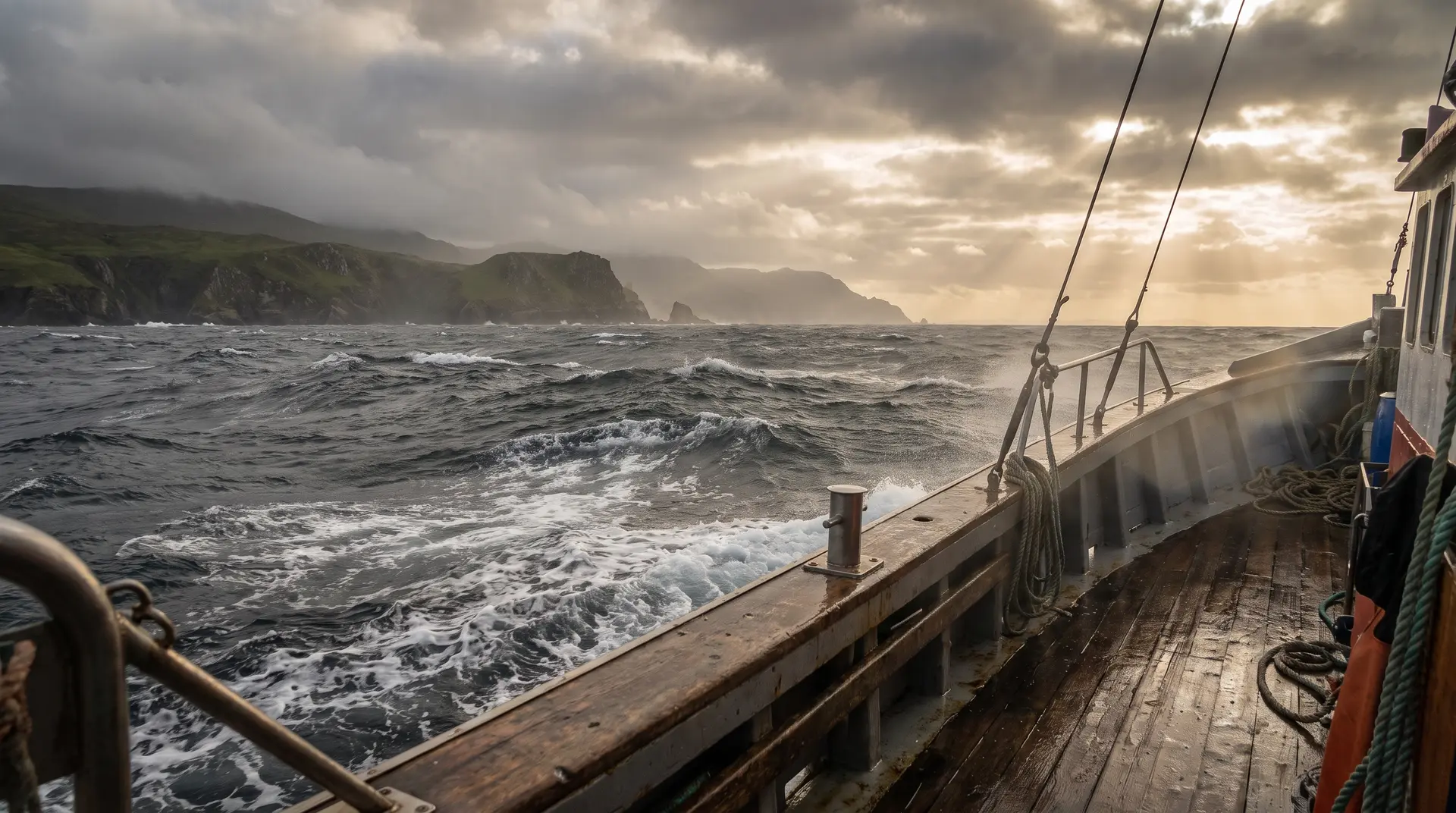
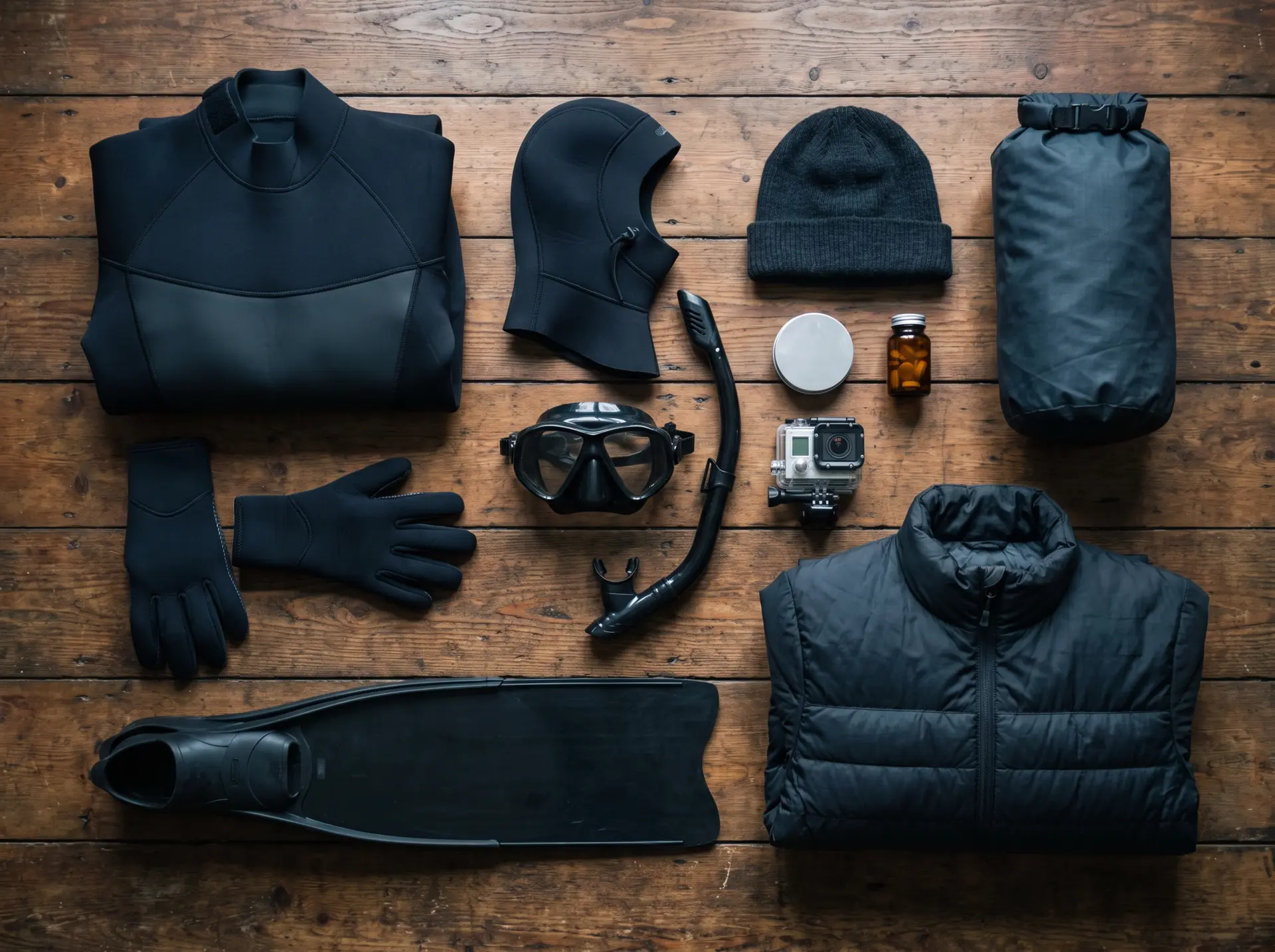
Sardine run water sits between roughly 14 and 21 degrees Celsius, with winter air temperatures in a similar band and wind chill on a moving boat doing its best to make both feel colder. Your kit does most of the work: a 5-7mm wetsuit, hood and gloves are standard, and the full list lives in our 7-day packing guide.
What training fixes is the first thirty seconds. Sudden cold immersion triggers an involuntary gasp and a spike in breathing rate, which is exactly what you do not want at the moment you are trying to slip quietly into position near a bait ball. The cold shower finishes in the plan are not about toughness; they teach your nervous system that cold water is information, not emergency. By week six, that first-contact gasp largely disappears, and your entries stay smooth.
If you buy or rent a wetsuit before travelling, swim in it at least once. You will find the chafe points, learn how buoyant you are, and discover how much harder a 400m swim feels in 5mm of neoprene while there is still time to adjust.
The freediving course: optional, transformative
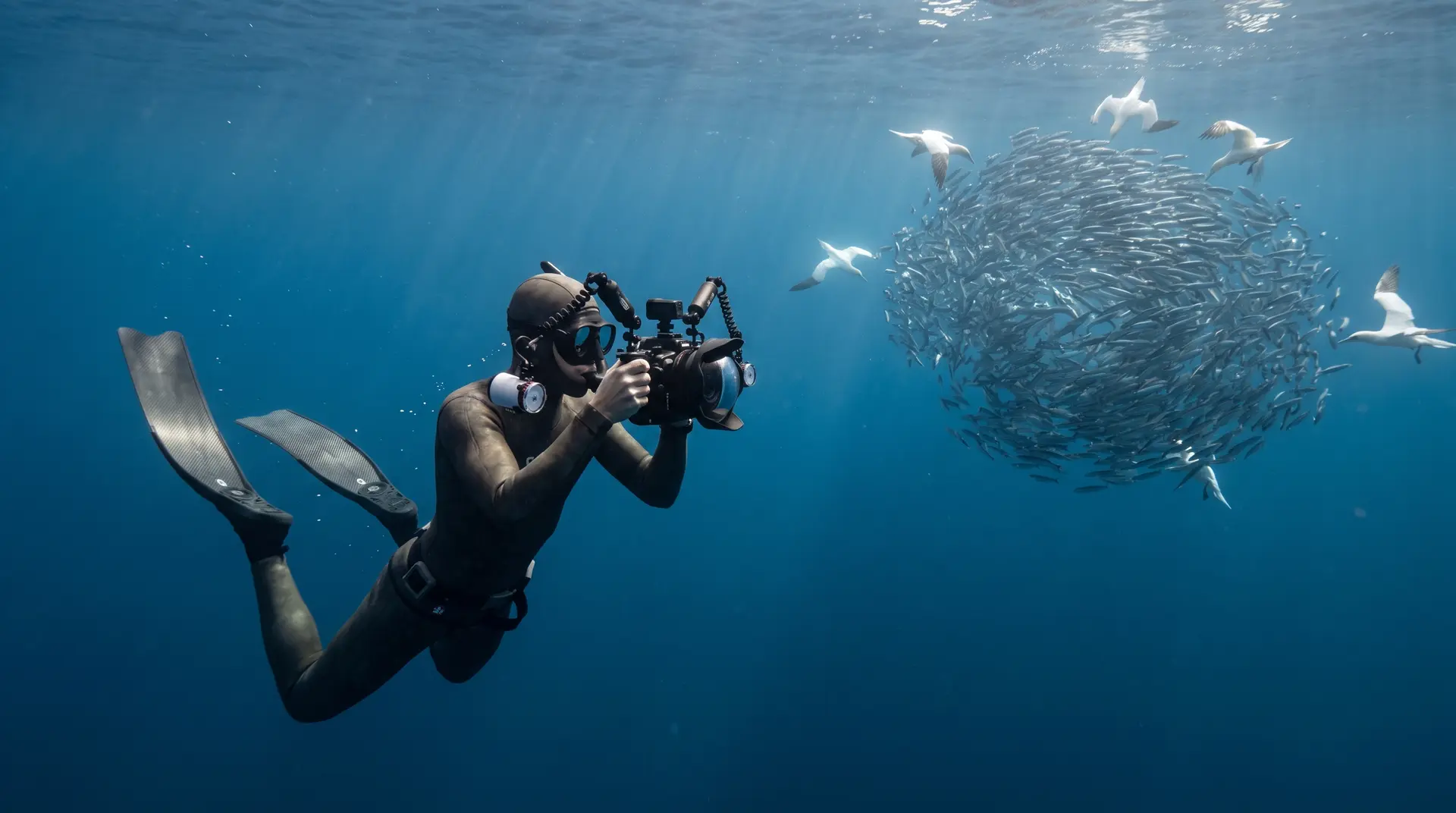
You do not need a freediving certification for the sardine run, and most guests will never use scuba out here either: the event is fast and surface-orientated, and skippers put divers on tanks only when a bait ball goes stable and static. Snorkel is the primary tool. Which is exactly why a beginner freediving course is the highest-value preparation money you can spend.
A two-day entry-level course (RAID, Molchanovs, AIDA and PADI all offer one, widely available in South Africa and elsewhere) teaches you to equalise early, duck dive cleanly and hold a relaxed breath under proper supervision. Even a comfortable dive to three or four metres transforms the encounter: you drop below the surface chop, the light improves, and dolphins that ignored a splashing surface swimmer will pass within metres of a quiet one.
Book it for weeks five or six of your plan if you can. The pool sessions before it will make the course easier, and the course will make everything after it calmer. If a course is out of reach, skip it without guilt; strong snorkellers have brilliant sardine run trips every season. Just do not attempt to self-teach breath-holds in water. That rule has no exceptions.
Medical considerations before you book
None of this replaces a conversation with your own doctor. Book a check-up before you commit if any of the following applies to you: a heart or blood-pressure condition, recent surgery or a joint replacement, significant back or neck problems (a RIB slams in chop, and your spine takes the hits), pregnancy, recurring ear or sinus trouble, or daily medication that might interact with motion-sickness tablets.
If you intend to scuba dive on stable bait balls, arrive with a current dive medical where your training agency requires one, and make sure your dive insurance is active. Cover through DAN or a similar provider is strongly recommended for everyone entering the water; the nearest hyperbaric chambers to the Wild Coast are at Port St Johns and Durban, and insurance is what makes distance a logistics problem rather than a financial one.
Expedition boats should carry oxygen and first-aid equipment, and skippers should hold SAMSA certification. Ask for specifics before you book, from us or from anyone else, and declare any medical condition at booking time so the crew can plan around it rather than react to it at sea.
Tell your doctor, then tell your operator
This guide is general preparation advice, not medical advice. Clear the trip with your GP if anything above applies to you, and declare conditions when you book. A crew that knows about your asthma or your dodgy shoulder can manage both quietly; a crew that finds out mid-ocean cannot.
Trip week: taper, do not cram
Fitness gained in the final week is imaginary; fatigue gained in the final week is real. Swim once, gently, early in the week, then stop training. Spend the saved time on sleep, hydration and admin: test-pack your bag, charge camera batteries, refill your seasickness tablets and check your travel documents.
Then get to Chintsa a day early if you can. Arriving rested, with your body clock settled and your wetsuit already tried on, means the 06:30 launch on day one feels like the start of something rather than a shock. Eight weeks of work buys you that feeling. It is worth every session.
Frequently asked questions
How fit do I need to be for the sardine run, in plain terms?
Moderately fit, with three specific abilities: swim confidently in open ocean, climb back onto a boat over the pontoon without being hauled in, and handle six to eight hours a day on a small boat for consecutive days. You do not need to be an athlete or a certified diver. The run is not suitable for people with limited mobility.
How strong a swimmer do I need to be?
If you can swim 200m in a pool without stopping and exit the deep end without steps, you have the base; eight weeks of training builds the rest. Remember that you will wear a buoyant 5-7mm wetsuit and fins in the ocean, so composure while breathing hard matters more than speed. Non-swimmers can still join as boat-based guests.
Can I do the sardine run in my 50s or 60s?
Yes, and plenty of guests across the industry do. Age matters far less than the specific bar: unaided boat re-entry, comfort in open water and day-long stamina on a moving deck. If you meet those and your doctor is happy, your birth year is irrelevant.
I only have four weeks before my trip. Is it too late to train?
No, but prioritise ruthlessly. Keep the swim sessions and the pool-edge exit drill, add cold finishes to your showers immediately, and drop the rest if time is short. Four weeks of focused swimming and re-entry practice beats four weeks of general gym work.
Is a freediving course required for the sardine run?
No. The run is a snorkel-first event and surface swimmers have superb encounters every season. A two-day beginner course is optional but transformative: it teaches equalisation and a relaxed duck dive under supervision, which gets you below the chop and closer to the action. Never practise breath-holds alone in water.
I get seasick. Will that ruin a 7-day expedition?
Usually not, if you prepare. Trial your chosen tablet on land beforehand, take it before launch on sea days, eat a plain breakfast and keep your eyes on the horizon. Habituation also works in your favour: most people find the later days of a multi-day trip noticeably easier than the first.
Keep reading
Train for eight weeks, then come test it in 2027
Our next bookable season runs May to July 2027, launching from Chintsa on the southern Wild Coast, 40 minutes from East London's King Phalo Airport. Seven days gives the run time to find you and gives your training somewhere to go. If you have a fitness or medical question before booking, ask us now; we would far rather answer it today than watch you fight a pontoon in June.
Boats carry small groups only, and prime weeks go 6-12 months out.