Field Guide
What Is the Sardine Run? The Greatest Shoal on Earth, Explained
Updated 23 July 2026 · 10 min read · By the Sardine Run Africa crew
Every South African winter, a body of fish large enough to show up on aerial surveys and satellite imagery pushes north along the Eastern Cape coast. That is the sardine run: the seasonal movement of billions of Southern African pilchards from the cool waters of the Agulhas Bank up towards the Wild Coast and southern KwaZulu-Natal, roughly between May and July. The fish travel in shoals that have been measured up to 7km long, and behind them comes one of the densest gatherings of ocean predators anywhere on the planet.
People call it the greatest shoal on Earth, and by sheer biomass moving at once, it earns the name. The sardine migration in South Africa is regularly compared to East Africa's wildebeest migration, except this herd swims, most of it never breaks the surface, and the whole event can vanish for a season if the water runs a degree or two too warm. It is a wild event, not a scheduled one.
This guide covers what the run actually is: the fish at the centre of it, why the timing and geography line up here and almost nowhere else on this scale, how big the shoals really get, and the cast of dolphins, sharks, whales and seabirds that turn a mass of fish into a spectacle. If you are planning to see it, start with when the run happens and read on for where along the coast to watch it.
The short answer
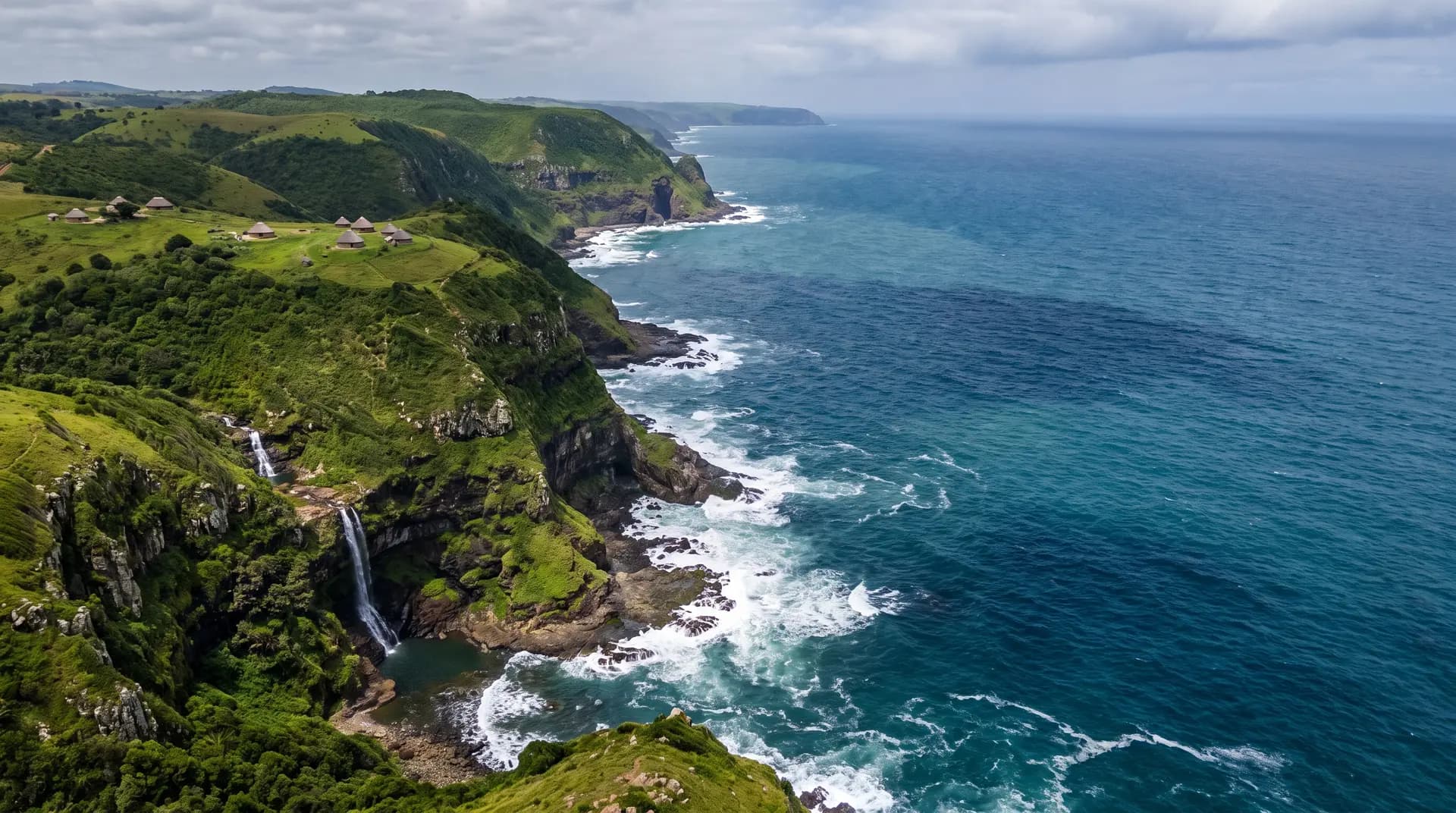
The sardine run is the annual northward migration of the Southern African pilchard, *Sardinops sagax*, along South Africa's east coast. It starts in the cool, plankton-rich water over the Agulhas Bank off the southern Cape, and follows a narrow corridor of cold inshore water up past Gqeberha, East London and Chintsa, the Kei River mouth, Coffee Bay, Port St Johns and Mbotyi, sometimes reaching the KwaZulu-Natal south coast.
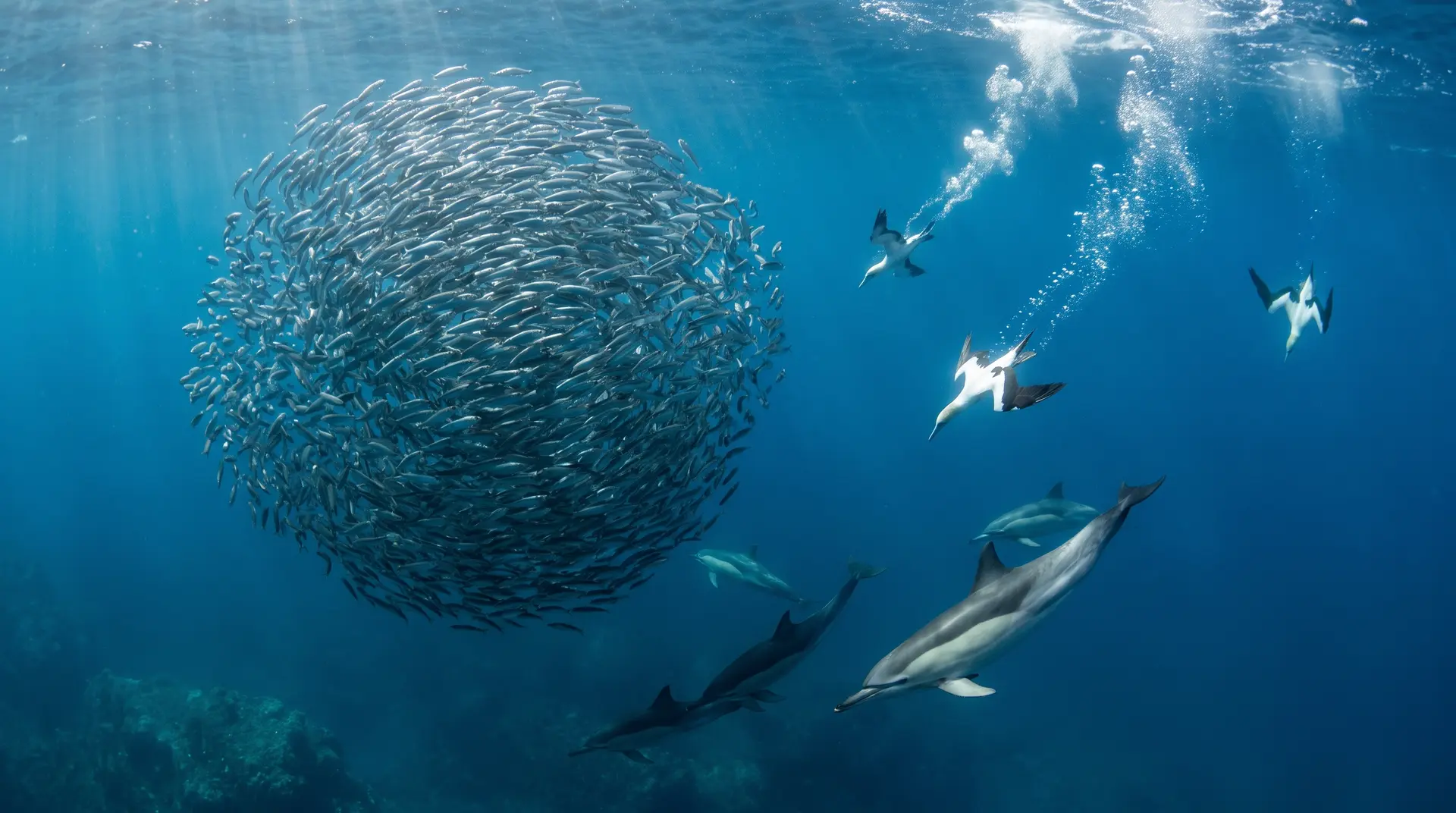
The fish move because a band of cool water opens along the coast in winter, and these are cool-water fish that will not cross warm barriers. As the shoals push north, they draw in predators from hundreds of kilometres around: super-pods of dolphins, feeding whales, sharks, seals and diving seabirds. The predators concentrate the sardines into bait balls, tight spinning spheres of fish near the surface, and that is the scene most people picture when they think of the run.
None of it is guaranteed on any given day. The run depends on water temperature, wind and current, and in warm years it can be weak or barely appear. What is reliable is the season and the coast. Understanding the science behind why it happens is the difference between expecting a wildlife show and reading the ocean like a guide does.
The fish at the centre of it: Sardinops sagax
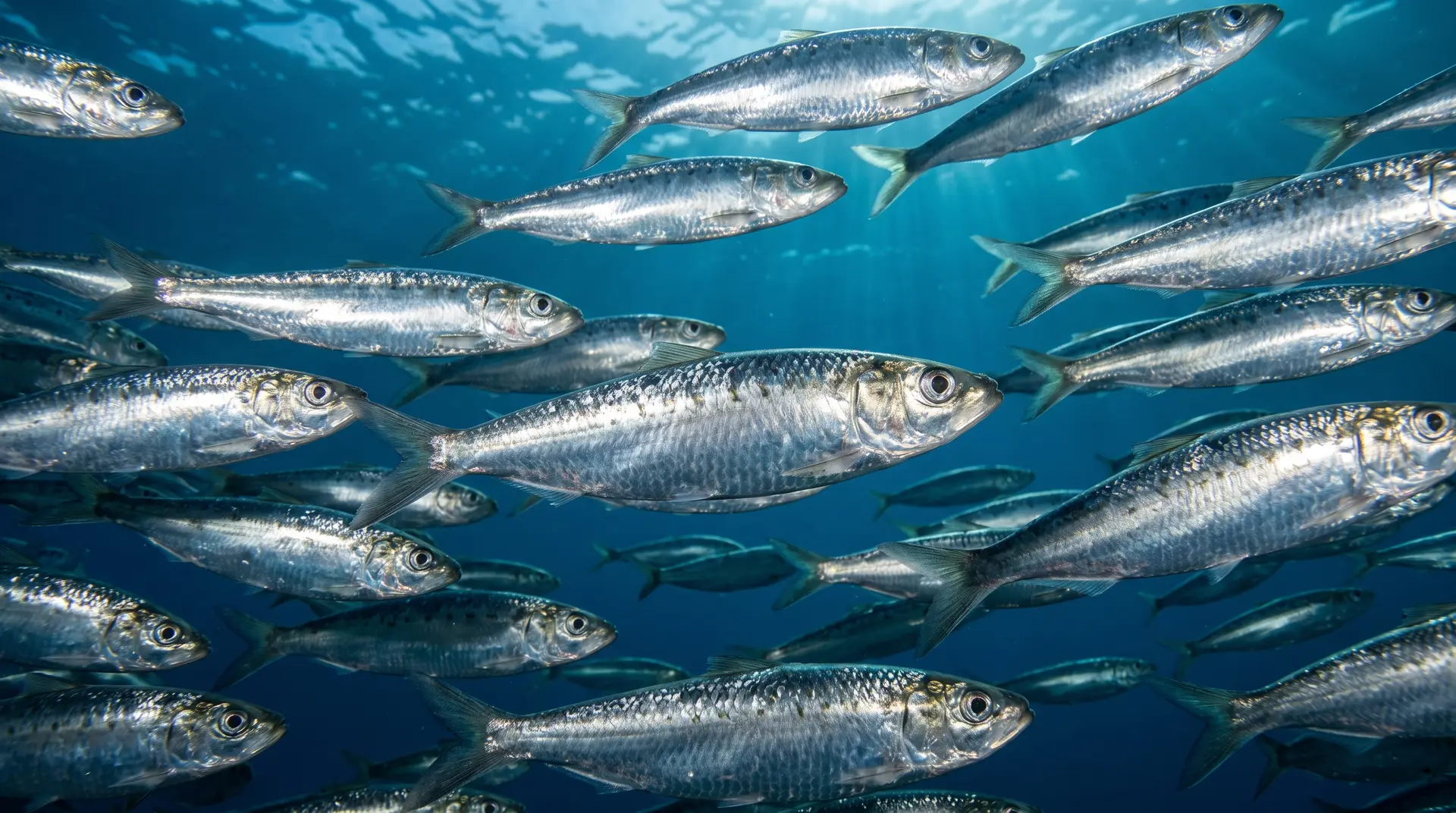
The star of the run is a small, unremarkable-looking fish. The Southern African pilchard grows to about 25cm, lives around five years, and feeds by filtering plankton from the water. On its own it is bait. In its billions it becomes one of the largest animal movements on Earth.
These sardines spawn on the Agulhas Bank, the wide, shallow shelf off the southern Cape, during the southern summer. A single female can release up to around 27,500 eggs in a spawning. The eggs and larvae drift, the survivors grow, and the population builds into the vast schools that later move up the coast. Sardines school so tightly because their lateral lines sense tiny pressure changes from their neighbours, which lets thousands of fish turn as one. That synchronised movement produces the silver flashing that photographers chase and, incidentally, makes the shoal easier for predators to track.
As a fishery, the pilchard is South Africa's largest by landed mass, around 100,000 tonnes a year, most of it netted off the West Coast. The east-coast winter run is a different story: a fraction of the total population, but the fraction that produces the show.
Why it happens here, and almost nowhere else at this scale
The South African coast has an unusual piece of oceanography working in its favour. The warm Agulhas Current runs south-west down the east coast, but in winter a band of cooler water forms inshore of it, fed by upwelling and cool counter-currents close to the shore. That cold band is a corridor. Sardines prefer water between about 14 and 20 degrees, and the run needs inshore temperatures below roughly 21 degrees to open the door. When the corridor forms, the fish follow it north along the shelf.
The geography narrows the action in places. Off Mbotyi, near Waterfall Bluff, the continental shelf pinches in close to the coast, which funnels the shoals and the predators tight against the land. That is one reason certain stretches of the Wild Coast have a reputation as reliable hotspots. The full route from start to finish tracks how the fish move through these choke points.
This combination of a cold winter corridor squeezed between a warm current and a narrowing shelf is what makes the South African run singular. Other sardine aggregations exist. Moalboal in the Philippines holds a resident bait ball year-round, and there are seasonal events off Mexico. Those are worth diving. None of them move billions of fish along a coastline with this predator cast at this scale.
Does the run happen every year?
Not dependably. The run is temperature-driven, and warm years produce weak or 'failed' runs. The KwaZulu-Natal leg in particular has weakened since the early 2000s, and a warming ocean is a documented pressure on the event. This is why no honest operator guarantees bait balls. You book the expedition and the season, not a specific sighting.
The scale: shoals you can see from the air
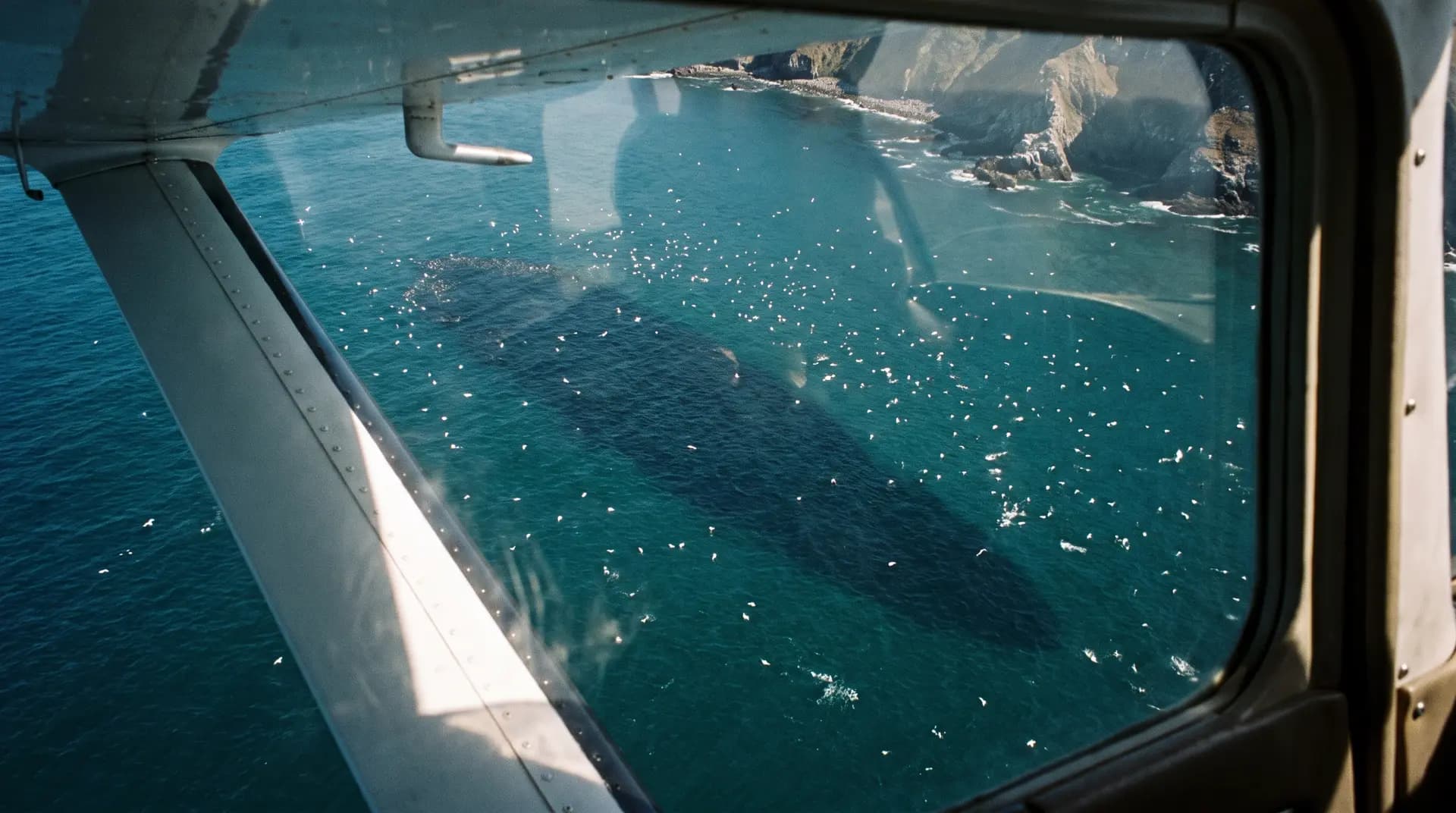
The numbers are the reason people fly across the world for this. Shoals have been reported up to around 7km long, 1.5km wide and 30m deep, with some accounts citing lengths up to 15km. A mass of fish that size darkens the water from above, which is exactly how spotter pilots and, on the biggest years, satellite sensors pick out the run. Searches for the sardine run from space are not a myth: the shoals are large enough that the discolouration they cause has been captured from the air and from orbit.
That aerial visibility is not a novelty. It is a working tool. Operators fly fixed-wing spotter planes over the coast to locate shoals and active predator activity, then direct fast boats to the scene, because bait balls form and collapse quickly. A shoal you can see from a plane is a shoal a skipper can put you next to.
| Measure | Figure |
|---|---|
| Shoal length | Up to ~7km (some sources cite up to 15km) |
| Shoal width | Up to ~1.5km |
| Shoal depth | Up to ~30m |
| Preferred water temperature | 14-20°C (run needs inshore water below ~21°C) |
| Common dolphins in a super-pod | Estimates up to ~18,000 |
| Cape gannet dive height | From ~30m above the surface |
| Typical bait ball | 10-20m across, usually lasting under 10 minutes |
Why it is compared to the wildebeest migration
The comparison is about biomass on the move. East Africa's wildebeest migration is the reference point most people carry for a great animal movement, and the sardine run sits in the same category by volume of life travelling at once. Both are seasonal, both are driven by resources and climate rather than any fixed calendar, and both pull in a following of predators that turn the movement into a hunt.
The differences matter for what you experience. The wildebeest cross open plains in daylight where you can watch the whole herd. The sardines move underwater, mostly out of sight, and the run reveals itself in flashes: a diving column of gannets marking a shoal, dolphins working the surface, a whale lunging up through a bait ball. You read the signs above the water and drop in when the action concentrates. It is closer to tracking than to watching, which is part of why a good spotter and a fast boat change the odds so much.
The predator cast
A shoal of sardines by itself is quiet. What makes the run one of the ocean's great wildlife events is the predators that assemble around the fish. They arrive from different directions and hunt in different ways, and together they build and break the bait balls that divers and snorkellers come to see. The full marine life of the run goes deeper on each species; here is the core cast.
Who follows the sardines
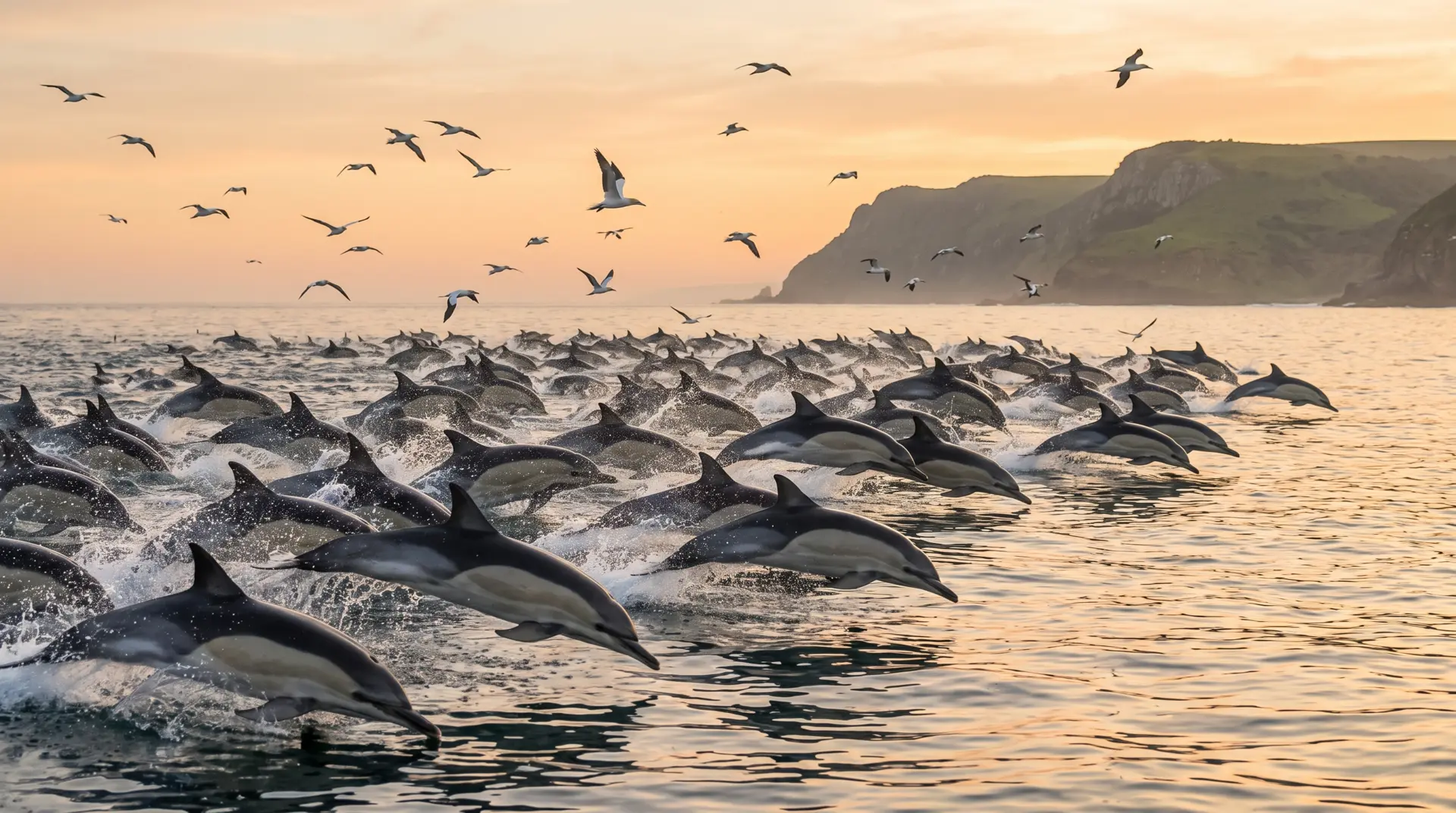
- Long-beaked common dolphins are the engineers of the run. Super-pods, sometimes many thousands strong, drive the sardines up and herd them into bait balls near the surface where other predators can reach them.
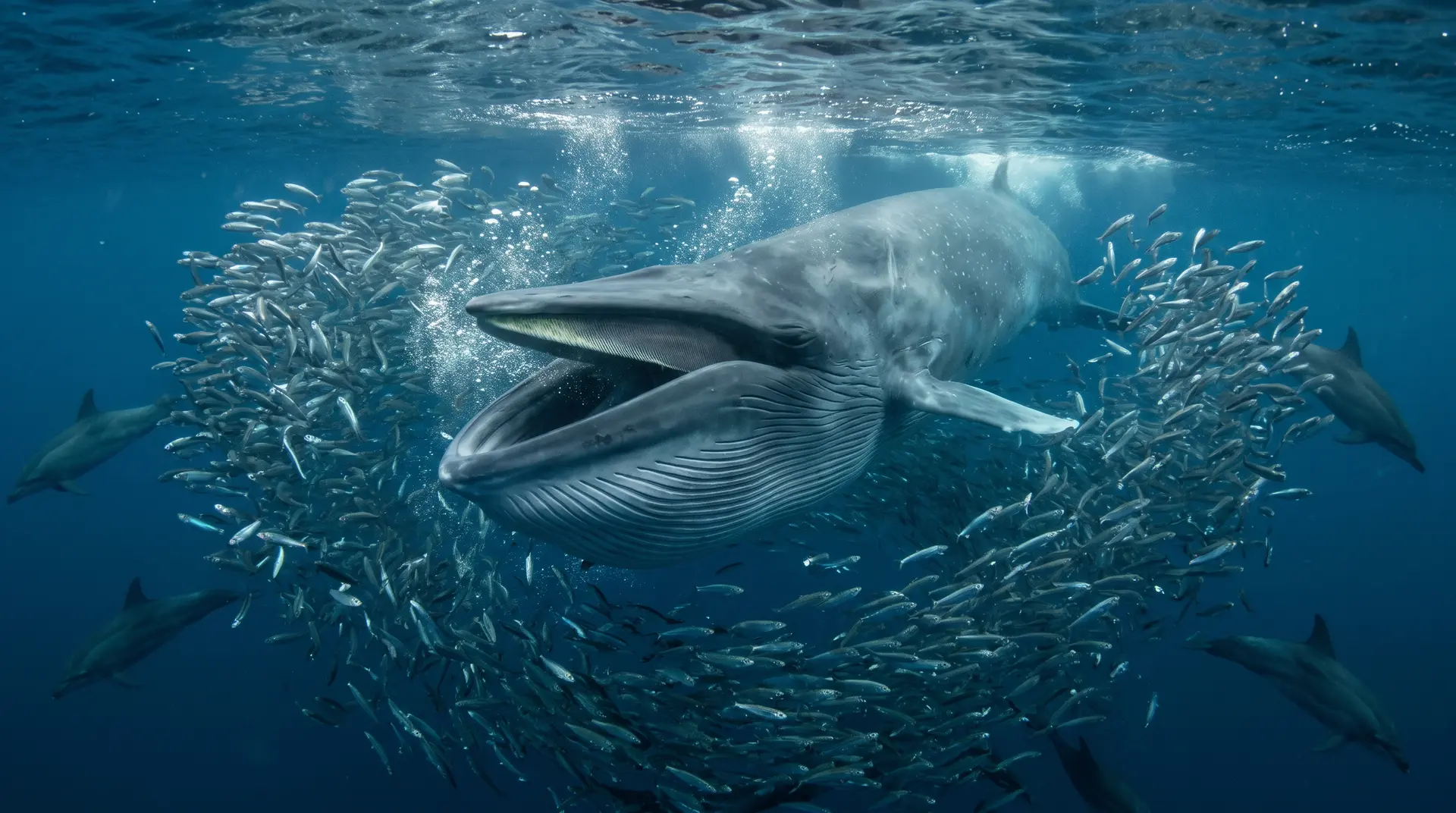
- Bryde's whales are the bait-ball feeder to watch. They lunge up through a packed ball of fish from below, often taking a large share of it in a single pass.
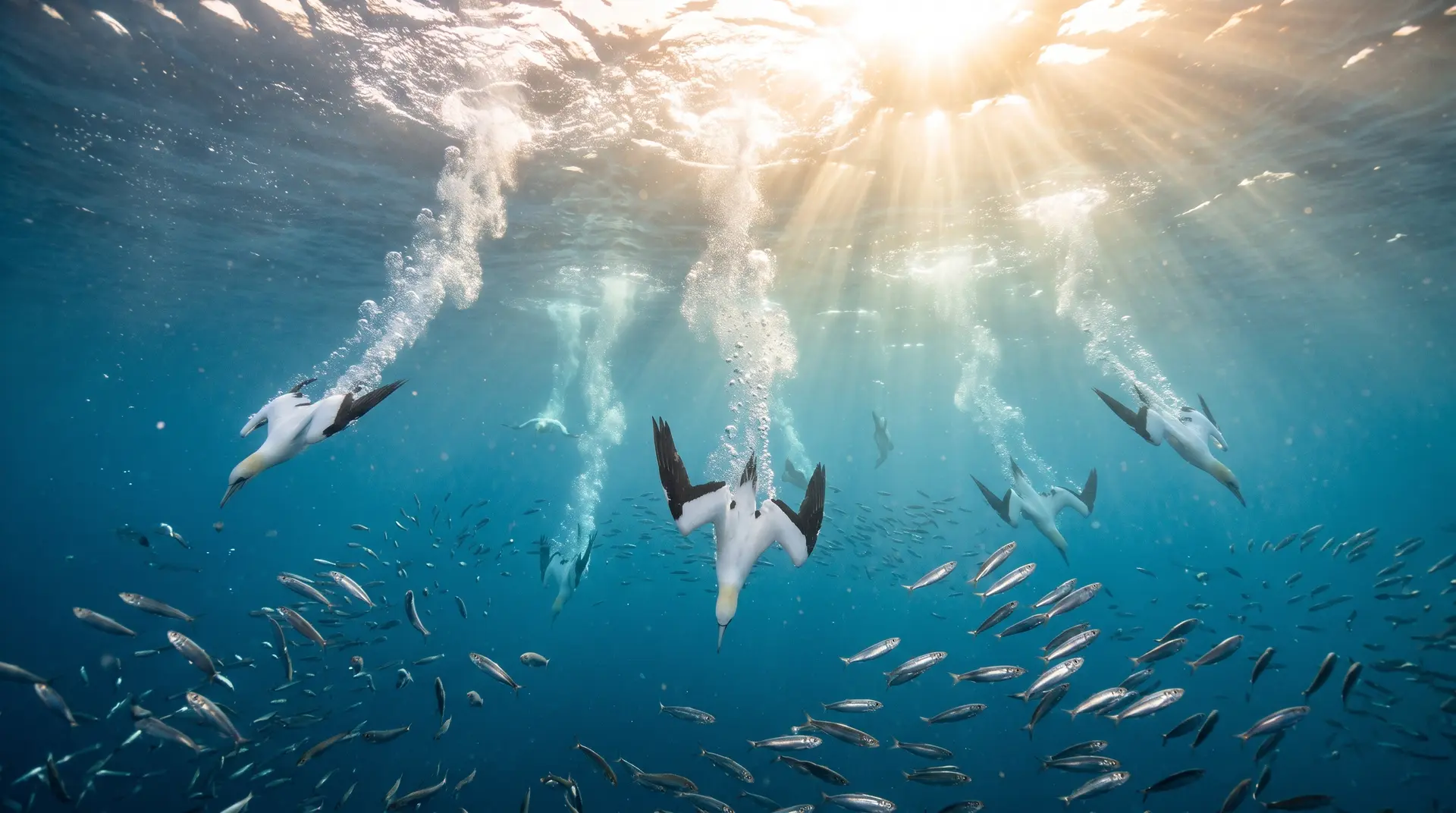
- Cape gannets are the classic indicator species. They fold their wings and dive-bomb into the water from around 30m up, and a working column of gannets is the surface sign that a shoal is beneath them.
- Copper (bronze whaler) sharks are the signature run shark, joined by dusky and blacktip sharks, and occasionally spinner sharks and great whites, all focused on the fish rather than the people in the water.
- Cape fur seals join the hunt in numbers, fast and agile around a bait ball.
- Humpback whales migrate north to breed at the same time and are seen almost daily, though they are travelling past rather than feeding on the sardines. Orcas turn up occasionally, along with African penguins and various petrels and shearwaters on the fringes.
Where and when to see it
The run unfolds along the Eastern Cape between roughly May and July, in the depth of the South African winter. The action tends to appear first in the south, around Gqeberha and the East London and Chintsa stretch in May and June, then move north to the Coffee Bay, Port St Johns and Mbotyi hotspots through mid-June and July. Historically the shoals passed the Bashee River around the 8th or 9th of June and reached Durban near the 25th, though every season runs to its own clock.
This southern-first pattern is why we run our expeditions from Chintsa, near East London. The southern Wild Coast catches the early phase of the run before the main fleet follows it north, and Chintsa sits about 40 minutes from King Phalo Airport, which has daily direct flights from Johannesburg and Cape Town. That combination of an earlier, less crowded stretch and easy access is the case we make on the East London and Chintsa guide.
Most of what you see happens at or near the surface, so you do not need a scuba qualification to take part; it works as an ocean safari from the boat and by snorkel, with scuba used only on stable bait balls at the skipper's discretion. If you want to build a trip around it, our expedition packages cover the sea days, the spotter support and the logistics. The next bookable season is 2027.
Frequently asked questions
Is the sardine run really visible from space?
On the biggest years, yes. The shoals can run several kilometres long and tens of metres deep, and a mass of fish that size discolours the water enough to be picked up from aircraft and satellite sensors. Spotter planes use the same aerial visibility every day of the season to find shoals and direct boats to them.
How is the sardine run different from a bait ball?
The sardine run is the whole seasonal migration of billions of fish up the coast. A bait ball is one small, temporary event within it: a portion of the shoal that predators have herded into a tight sphere near the surface, usually 10 to 20 metres across and lasting under 10 minutes. You come for the run; the bait balls are the moments inside it.
What kind of fish is a sardine, exactly?
The fish behind the run is the Southern African pilchard, *Sardinops sagax*. It grows to about 25cm, lives roughly five years, and filter-feeds on plankton. It spawns on the Agulhas Bank in summer, where a single female can release up to around 27,500 eggs, and the population that builds from that spawning is what later moves up the coast in winter.
Why is it called the greatest shoal on Earth?
Because of sheer biomass moving at once. The run is often ranked as the largest animal migration by numbers, with shoals reported up to 7km long, and it draws one of the densest predator gatherings in the ocean. That scale is why it is regularly compared to the wildebeest migration on land.
Does the sardine run happen anywhere else in the world?
Smaller sardine aggregations exist, notably the year-round resident bait ball at Moalboal in the Philippines and seasonal events off Mexico. None move fish on the scale of the South African run or gather the same predator cast, which comes from a specific mix of a cold winter corridor, a warm current and a narrowing continental shelf.
Is the sardine run the same as the wildebeest migration, just in the sea?
It is the closest ocean equivalent by volume of life moving at once, and both are seasonal, resource-driven events with a following of predators. The main difference is that the sardines move underwater and mostly out of sight, so you read surface signs like diving gannets and working dolphins rather than watching the whole herd cross open ground.
Does the run happen at the same time every year?
The season is reliable, May to July, but the timing and strength within it vary year to year because the run is driven by water temperature, wind and current. Warm years produce weak or failed runs. The action generally appears first in the south around East London and Chintsa before moving north up the Wild Coast.
Keep reading
See the greatest shoal on Earth for yourself
Sardine Run Africa runs 7-day expeditions from Chintsa, near East London, on the southern Wild Coast where the run appears first each winter. The next season is 2027. Browse our packages or get in touch to plan your dates and hold a seat on the boat.
Boats carry small groups only, and prime weeks go 6-12 months out.