Field Guide
Sardine Run from East London & Chintsa: Why the Southern Wild Coast Wins
Updated 23 July 2026 · 9 min read · By the Sardine Run Africa crew
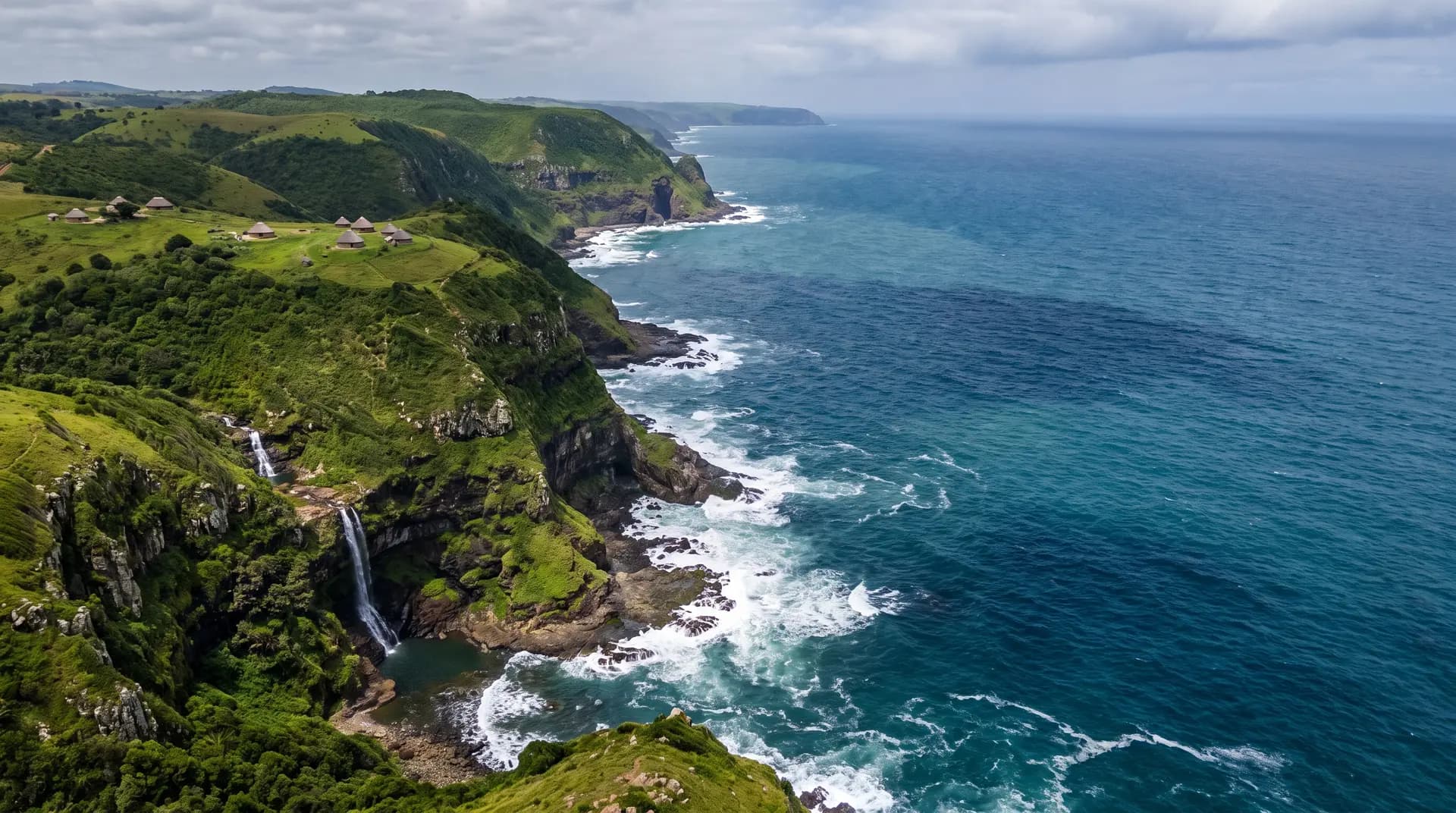
The sardine run does not start at Port St Johns. It arrives there. The shoals form on the Agulhas Bank in autumn and push northeast along the Eastern Cape coast, and by May and early June they are moving through the water off Gqeberha and East London, weeks before the main fleet assembles further north. PADI's own destination guide places the early phase of the run (May and June) in exactly this southern zone. Chintsa, the beach village 40 minutes up the coast from East London, sits directly on that early corridor.
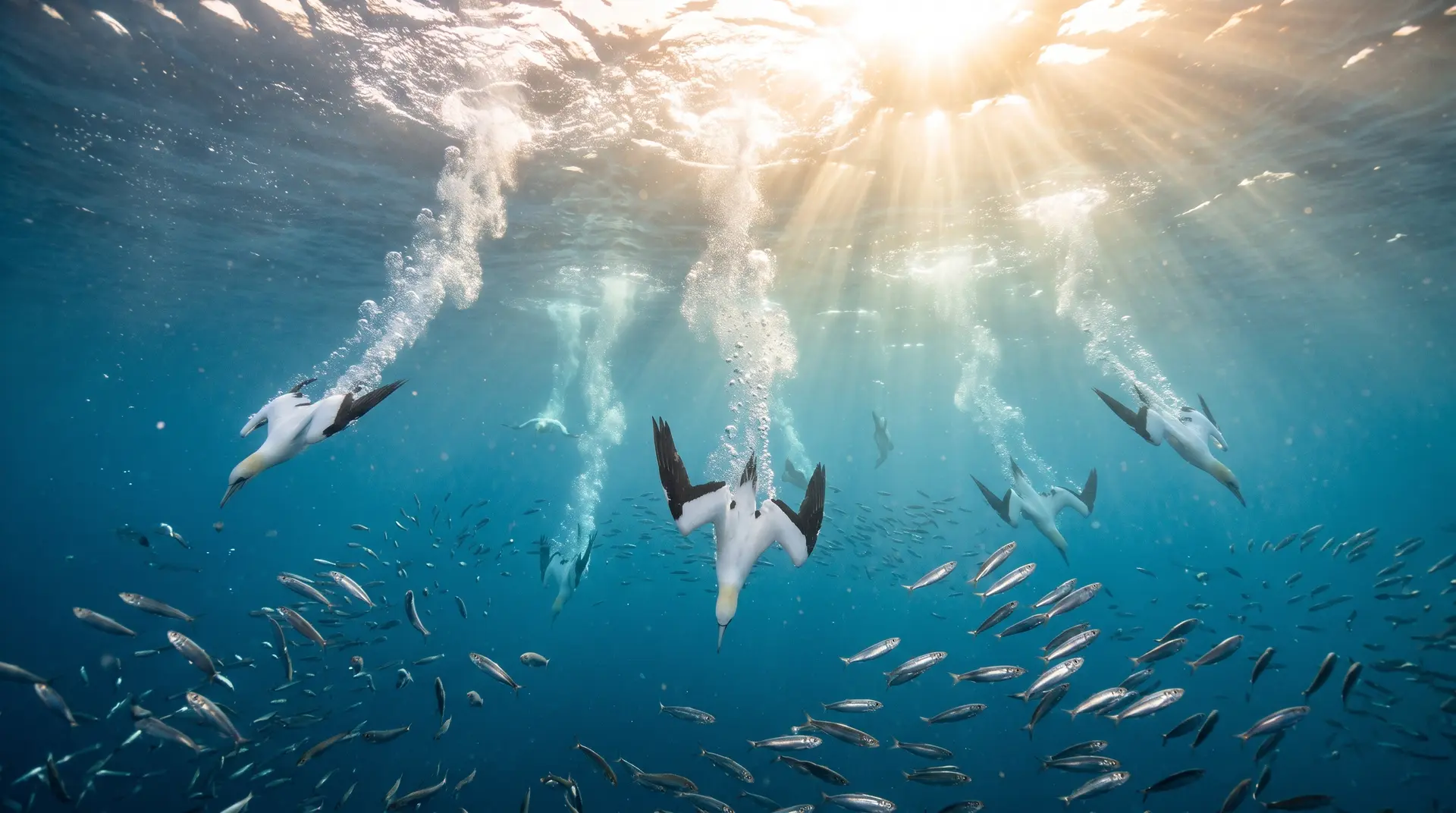
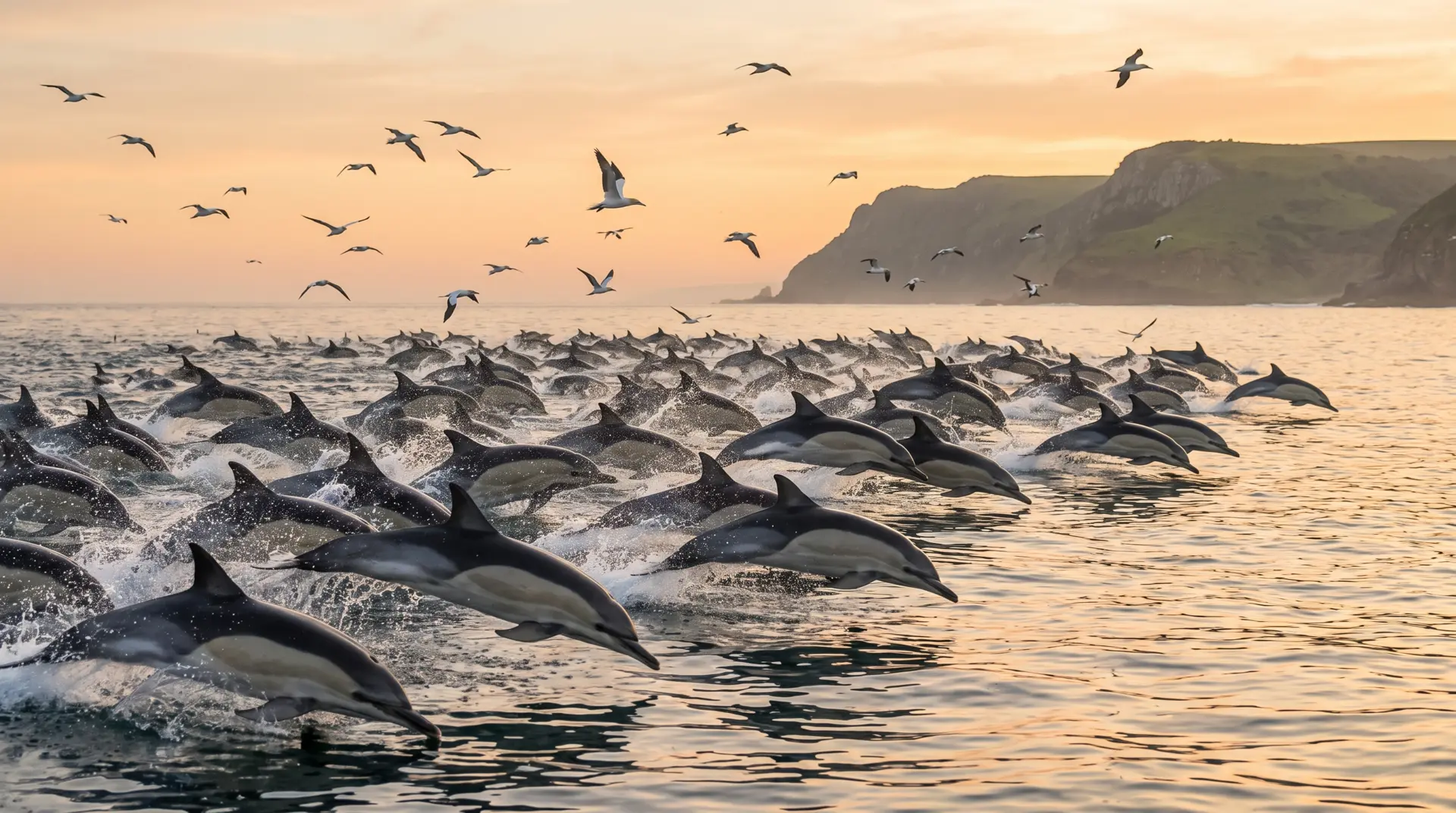
That one fact changes the shape of an expedition. Base yourself at Chintsa in late May or June and you meet the run on its way north: common dolphin superpods, gannets falling out of the sky, Bryde's whales lunge-feeding, copper sharks circling below, all working sardines that most of the industry has not yet launched a boat for. You do it from a village with a daily-flight airport 40 minutes away and a private game reserve up the road for the days the sea refuses to cooperate.
This is our home water. Sardine Run Africa runs 7-day expeditions from Chintsa through the May-July season, and this guide covers what we get asked most about the East London stretch: why the timing works, how the logistics compare with every other base, what a sea day here looks like hour by hour, and what you actually do when the wind gets up.
Why the shoals pass East London first
The run is a moving event, not a place. Southern African pilchards need inshore water below about 21°C to travel, and each winter a corridor of cool counter-current water opens along the coast, inshore of the warm Agulhas Current. That corridor opens from the south. Shoals reported at up to 7km long and 30m deep work their way up from the Agulhas Bank past Gqeberha, then East London and Chintsa, then across the Kei River into the central Wild Coast. Historically the fish passed the Bashee River around 8 or 9 June and reached Durban near the 25th. The full route, start to finish is worth reading if you want the mechanics.
The industry's own calendars confirm the sequence. Operators working the Chintsa stretch sell sea days from roughly 10 May to the end of June. Port St Johns operators sell mid-June into early August. Same fish, different weeks. If your leave falls in May or the first half of June, the southern Wild Coast is not a compromise choice; it is where the action is. Our season and dates guide breaks the whole window down month by month.
Early season carries a bonus most people do not expect. The northbound humpback migration runs through the same weeks, so from the boat you are watching two migrations at once: sardines and their predators below, whales travelling on the horizon. By late June the humpback traffic off this coast is close to a daily sighting.
Getting here: King Phalo Airport is 40 minutes away
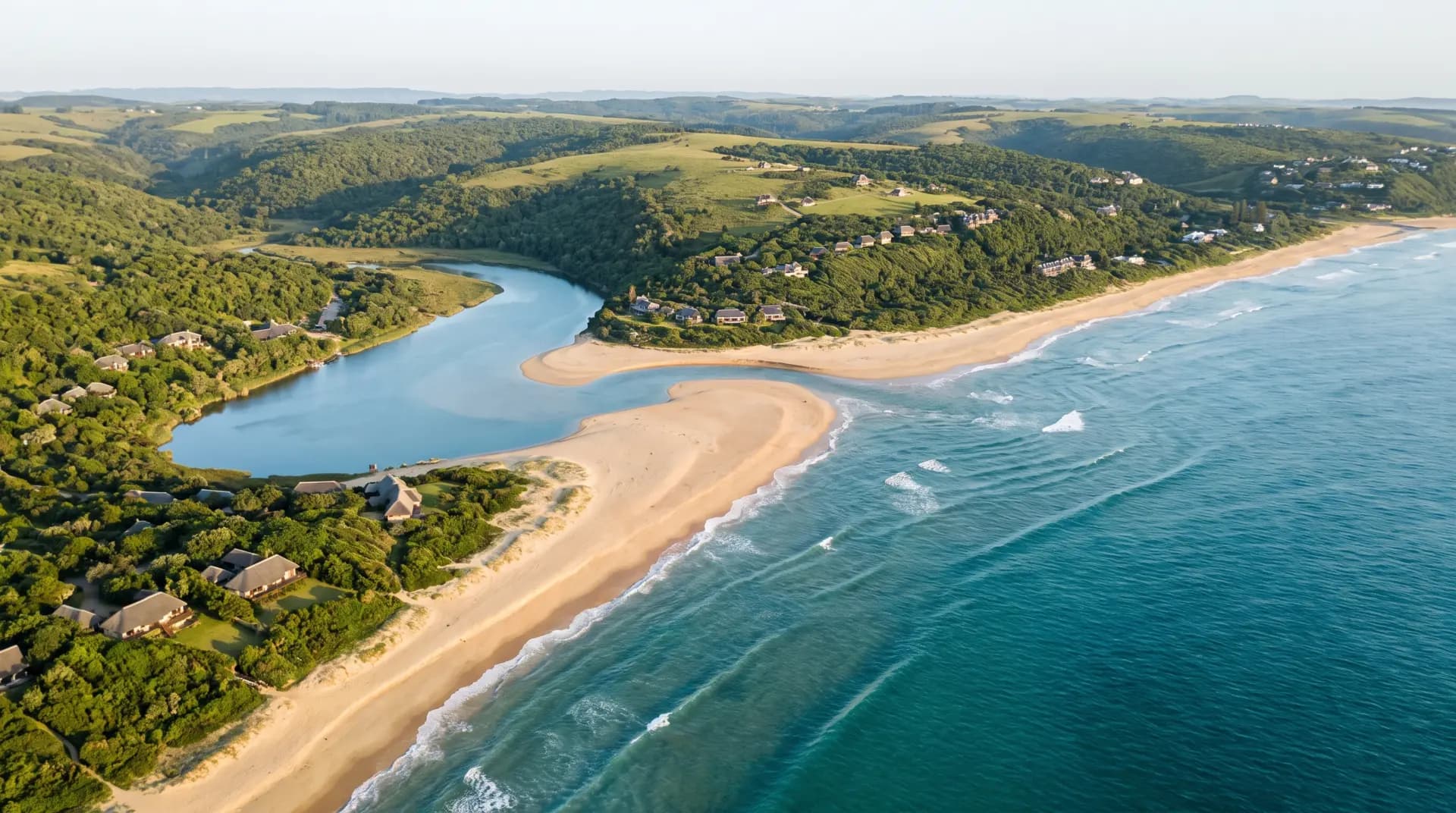
No other sardine run base comes close on access. King Phalo Airport in East London takes daily direct flights from Johannesburg (about 1h35) and Cape Town, and the road transfer to Chintsa takes around 40 minutes. You can leave Johannesburg after breakfast and be walking Chintsa beach before lunch. Compare that with the classic alternatives.
For Port St Johns you fly to Mthatha on a limited schedule and then sit through a 1.5-hour road transfer, or you drive roughly five hours from Durban. The boutique Wild Coast camps at Mdumbi and Mpame sit two to six and a half hours from the nearest airport on rural roads. None of this makes those places bad; it makes them expensive in time, and it makes a missed connection a real problem. Our Chintsa travel guide covers flights, transfers, self-drive notes and where to stay before and after an expedition.
| Base | Nearest airport | Transfer to base | Flight access |
|---|---|---|---|
| Chintsa / East London | King Phalo (East London) | ~40 minutes by road | Daily direct flights from Johannesburg (~1h35) and Cape Town |
| Port St Johns | Mthatha | ~1.5 hours by road | Limited schedule; or a ~5-hour drive from Durban |
| Mdumbi / Mpame | Mthatha or East London | 2 to 6.5 hours on rural roads | Same limited Mthatha schedule, then a long drive |
Fewer boats on the water
Port St Johns is the traditional mid-season epicentre, and in a good July it looks like one: a full field of operators, boats sharing aerial intel, and more than one hull converging when a bait ball forms. The Chintsa stretch is different. Only a couple of operators work this coastline at all, across roughly 150km of water between Hamburg and the Kei River.
That matters because of how bait balls behave. A ball is typically 10 to 20 metres across and rarely holds together for more than about ten minutes. When one forms, the boats that are already close get the action. Fewer boats on a longer stretch of coast means that when your skipper finds working birds, you are usually the only group on it, with no queue to drop and no second boat's fins in your camera frame. If you are weighing up all the venues, our guide to where to see the sardine run compares every base without spin.
A sea day from Chintsa, hour by hour
Every day is shaped by the ocean, but the rhythm is consistent. Expect six to eight hours on the water. This is what a standard sea day with us looks like.
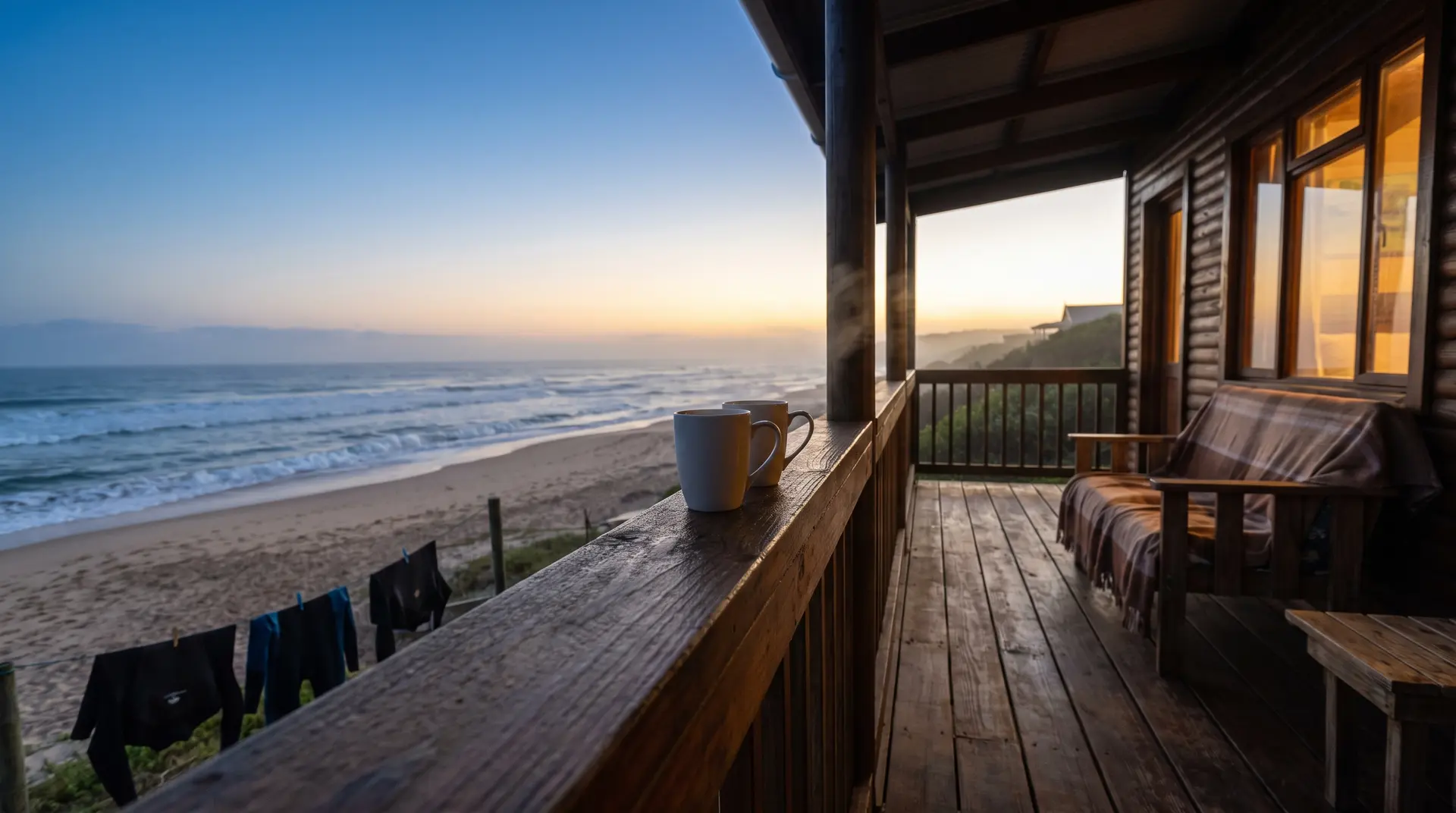
- 05:45 Wake-up, coffee and a hot breakfast at the lodge while the skipper checks the morning's wind and swell.
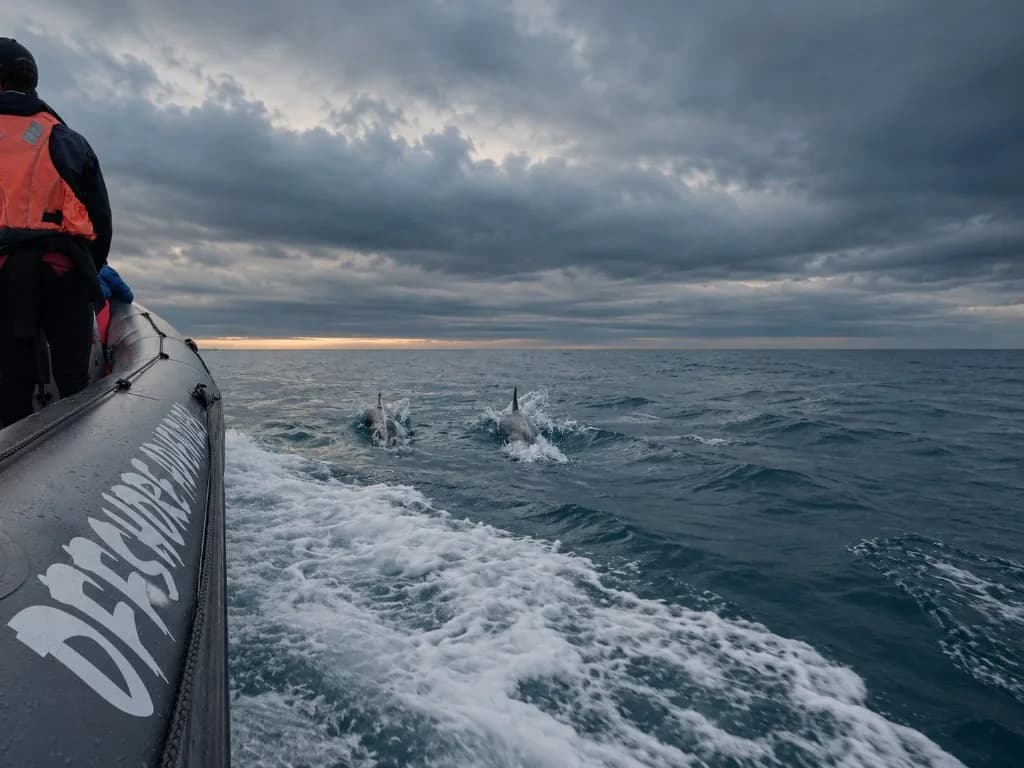
- 06:30 Kit loaded, safety briefing on the sand, then a protected beach launch from Chintsa beach. Wetsuits go on before you board; the first hour is cold.
- 07:00-09:00 Running the coastline. Everyone scans for the tells: gannets rafting or diving, dolphin pods moving with purpose, oil slicks, whale blows. The skipper works radio reports from along the coast.
- 09:00-12:00 The prime window. Follow working common dolphins, drop on activity as the guide calls it. On a stable bait ball, snorkellers slip in first; if the ball holds and conditions allow, qualified divers kit up on scuba at the skipper's discretion.
- 12:00-13:00 Lunch packs and hot drinks on the boat, usually while paralleling a humpback or watching a Bryde's whale work an area. Nobody goes back for lunch; the run does not keep office hours.
- 13:00-14:30 Last action window, then the run home while the afternoon wind builds.
- 14:30-15:00 Beach landing, gear rinse, debrief. The rest of the afternoon is yours: the beach, the lodge deck, editing photos.
No operator can promise a bait ball
The run is a wild event driven by water temperature, wind and current. Dolphins, whales, sharks and birds are seen on most sea days in season; the tight, filmable bait ball is the jackpot, not the baseline. This is exactly why five or more sea days is the market consensus minimum, and why a base with real land-day options beats one without.
Scuba diving East London's sardine run
First, the honest version: the sardine run is a surface-first event everywhere, including here. The action moves fast, and most in-water time happens on snorkel because a freediver can be over the side in seconds and back on the boat just as quickly. If you have never dived at all, that is no barrier; read our guide to doing the run without scuba and come anyway.
Scuba earns its place when a bait ball stabilises. A static ball with sharks and dolphins carving through it, viewed from ten metres down, is the shot every underwater photographer on this coast is chasing, and it is only available on a tank. We put qualified divers on stable balls at the skipper's discretion. An Advanced certification, or Open Water with solid ocean experience, is the sensible standard.
Conditions on this stretch in season: water between 14 and 21°C, visibility anywhere from 2-3m on a churned day to 30m on a clean one, and winter air temperatures in the mid to high teens. A 5-7mm wetsuit with hood and gloves is standard kit; our packing list guide covers the rest, down to the seasickness tablets.
Land days: what Chintsa offers when the sea says no
Every operator on this coast loses days to weather; it is winter in the Indian Ocean. Nobody refunds them. The difference between bases is what a blown-out day actually looks like, and this is where Chintsa quietly wins.
Inkwenkwezi, a private game reserve, is a short drive from the village and turns a lost sea day into a game drive. Chintsa's beach runs for kilometres of walkable sand at the mouth of a lagoon, there are hiking trails through the dune forest and hills behind the village, and East London itself is 40 minutes away for anything a small village cannot supply. Guests who have sat out a two-day blow at a remote Wild Coast camp will understand why this matters.
For travelling couples where one partner is not keen on eight hours in a wetsuit, this is also the base that works. The non-boat partner has a real village, a real beach and real activities instead of a long wait in a remote camp.
Chintsa or Port St Johns? An honest answer
Port St Johns earned its reputation. From mid-June through July the shelf narrows toward Waterfall Bluff and the run concentrates, and the PSJ fleet is experienced and well set up. If your dates fall in July and you want the traditional epicentre with the biggest fleet around you, it remains a strong choice. We wrote a full, fair assessment in our Port St Johns guide.
Choose Chintsa when the trade-offs point south: travel in May or June when the shoals are on this stretch, a 40-minute airport transfer instead of a flight-plus-long-drive, far fewer boats sharing the water, a protected beach launch, and land days with actual content. For a first sardine run, the logistics alone remove most of what can go wrong with the trip around the trip.
Booking a 2027 expedition from Chintsa
The 2026 season has just wrapped, which makes this the right moment to plan rather than a year too early. Sardine run boats carry small groups, prime weeks sell out well in advance across the whole industry, and the standing advice is to book 6 to 12 months out. For the May-June window that favours Chintsa, that means securing dates over the coming spring and summer.
Our 7-day expeditions run through the season with five-plus sea days, lodge accommodation in Chintsa and the backing of Offshore Adventures, our sister operation in Plettenberg Bay. Dates and pricing for the 2027 season packages are the place to start; if you want help matching your dates to the likely movement of the fish, ask us and we will tell you straight.
Frequently asked questions
When does the sardine run reach East London and Chintsa?
The early phase of the run, May through June, plays out along the southern zone between Gqeberha and East London before the shoals cross the Kei River and move up the Wild Coast. Operators on this stretch typically run sea days from around 10 May to the end of June. By July the concentration has usually shifted north toward Port St Johns and Mbotyi.
How do I get to Chintsa for a sardine run expedition?
Fly to King Phalo Airport in East London, which has daily direct flights from Johannesburg (about 1h35) and Cape Town, then it is roughly a 40-minute road transfer to Chintsa. That is the shortest airport-to-boat journey of any sardine run base in South Africa. Self-driving from the airport is straightforward on tarred roads.
Is the Chintsa launch a harbour or a beach launch?
It is a protected beach launch from Chintsa beach. You board the RIB on the sand after the morning briefing and the skipper takes it out through the shorebreak, which is part of the experience rather than an ordeal. Kit goes on before you board because the first hour on the water is the coldest.
Can I scuba dive the run from Chintsa, or is it snorkel only?
Both. Most in-water action happens on snorkel because the event moves fast, but when a bait ball stabilises, qualified divers go in on scuba at the skipper's discretion. Advanced certification, or Open Water with real ocean experience, is the practical standard for tank drops.
What happens on days the boat cannot launch?
Weather days are not refunded anywhere in the industry, so the question is what you do with them. From Chintsa the realistic options include a game drive at the Inkwenkwezi private reserve, long beach walks, dune-forest and hill hikes, and East London 40 minutes away. It is the strongest land-day programme of any run base.
Is Chintsa better than Port St Johns for the sardine run?
It depends on your dates. In May and June the fish are on the southern stretch and Chintsa puts you on them with easy logistics and very few other boats; by July the concentration has usually moved north and Port St Johns is the traditional epicentre. Neither is wrong, but matching your base to your travel window matters more than brand loyalty to either town.
Keep reading
Meet the run where it arrives first
Our 7-day Chintsa expeditions for the 2027 season cover the May-June window when the shoals pass this coast, with a 40-minute airport transfer, small groups and real land-day options built in. Boats fill 6 to 12 months out, so look at dates now and ask us anything before you commit.
Boats carry small groups only, and prime weeks go 6-12 months out.