Trip Planning
Sardine Run Packing List: What to Pack for a 7-Day Expedition
Updated 23 July 2026 · 9 min read · By the Sardine Run Africa crew
The sardine run happens in the South African winter. That one fact should drive every packing decision you make, and it is the one most first-timers get wrong. Water along this coast runs 14 to 21C in season. Air temperature sits in the same band, and you will spend six to eight hours a day on an open boat with wind chill working on a wet wetsuit. Pack for a tropical dive trip and you will be cold by day two. Cold people climb back on the boat early, and the ocean does not schedule bait balls around your comfort.
The good news is that the kit list is short and specific. You do not need a mountain of gear. You need the right wetsuit, fins that let you keep up, warm dry layers for the boat, a seasickness plan you have tested, and the paperwork sorted before you fly. Everything on this page comes from what actually works on the water between East London and the Kei River, where our 7-day expeditions run out of Chintsa each May to July.
Work through the categories below, then use the lists in each section as your final check before you zip the bag. If you are joining us for the 2027 season, this is the same list we send every confirmed guest.
Exposure protection: the wetsuit decision
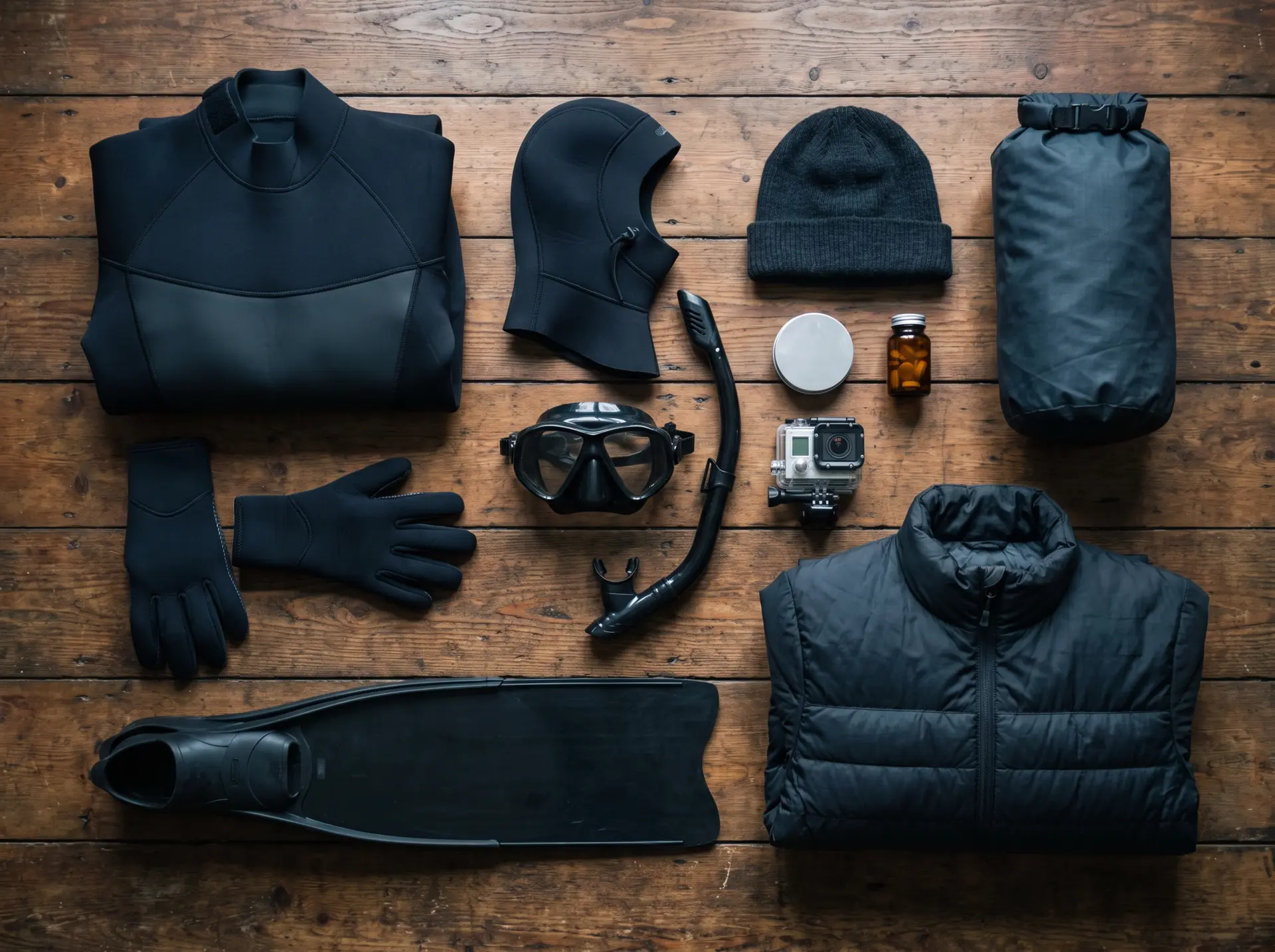
Your wetsuit matters more than any other item you pack. The Agulhas Current pushes warm water down this coast, but the run rides the cold inshore counter-currents, so you can jump into 21C water in the morning and 15C water an hour later. We cover why in our guide to sardine run water conditions. What it means for your bag is simple: bring a 5mm suit as your baseline, and consider 7mm if you know you feel the cold or you plan long freediving sessions.
The open-cell question comes up on every trip. Open-cell freediving suits (the raw neoprene sits directly against your skin) are noticeably warmer than a standard lined suit of the same thickness, and they flex better for repeated duck dives. The trade-off is that they need soapy water or conditioner to put on, they tear more easily on boat fittings, and getting into one on a pitching RIB between bait balls is nobody's favourite job. If you already own and love an open-cell suit, bring it. If you are buying for this trip, a good standard 5mm with a hooded vest underneath is the practical choice for most guests.
Do not skip the hood. You lose a large share of body heat through your head, and a 3 to 5mm hood (or a hooded vest layered under your suit) is the difference between doing five in-water sessions in a day and doing two. Gloves at 3mm keep your hands working on camera controls and boat lines. Booties at 3 to 5mm matter too, both for warmth and because you will be walking on a beach at 06:30 in winter before the launch.
| Setup | Warmth | Best for | Watch out for |
|---|---|---|---|
| 5mm standard lined suit + hooded vest | Good | Most guests; snorkelers doing multiple short sessions | Add the vest; 5mm alone is marginal on cold days |
| 5mm open-cell freediving suit | Very good | Experienced freedivers doing long water time | Fragile; slow to don on a moving boat |
| 7mm suit (lined or open-cell) | Excellent | Cold-sensitive guests; scuba drops on stable bait balls | More buoyancy, so bring or request extra weight |
Test your suit before you fly
A wetsuit that fitted in 2023 may not fit in 2027, and a suit that has never been wet is an unknown. Do one cold-water swim or pool session in your full setup (suit, hood, gloves, booties, weight belt) at home. Every season someone discovers a torn seam or a too-tight hood on day one, when the nearest dive shop is a flight away.
Fins, mask and snorkel: go long if you can
Most of your water time on the run is on snorkel, at the surface, moving. Bait balls form fast, drift with the current and predators, and rarely last more than about ten minutes. Long freediving fins turn that maths in your favour: more speed per kick means more minutes on the action and an easier swim back to the boat. If you are choosing between packing your stiff scuba fins or a pair of long-blade freediving fins, bring the long blades. Scuba fins are fine for the occasional tank drop on a stable ball, and they still work on snorkel, but you will notice the difference when a super-pod is moving and everyone else is keeping pace.
The exception is fit and confidence. A long fin you have never worn will cramp your feet and wreck your ankles by day three. If your scuba fins are what you know, bring them and swim hard. This is also worth saying plainly: you do not need scuba gear at all to do this trip properly, and our snorkeler's guide to the sardine run explains why the surface is where most of the show happens.
On masks, low-volume freediving masks are easier to clear and give a wider view for surface work. Bring a spare mask. It weighs almost nothing, and a snapped strap with no backup means watching gannets from the boat for a day. A simple J-snorkel beats anything with valves and splash guards; fancy snorkels trap water and slow your breathing recovery between duck dives.
In-water kit checklist
- 5mm wetsuit (7mm if you run cold), tested before travel
- Hood or hooded vest, 3-5mm
- Gloves, 3mm
- Booties, 3-5mm
- Long freediving fins (or your familiar scuba fins)
- Low-volume mask, plus a spare mask
- Simple J-snorkel
- Weight belt (ask about weights when you book rather than flying with lead)
- Anti-fog or a small bottle of baby shampoo
- Rash vest or thermal layer for under the suit
Boat clothing: dressing for 14-21C air and wind
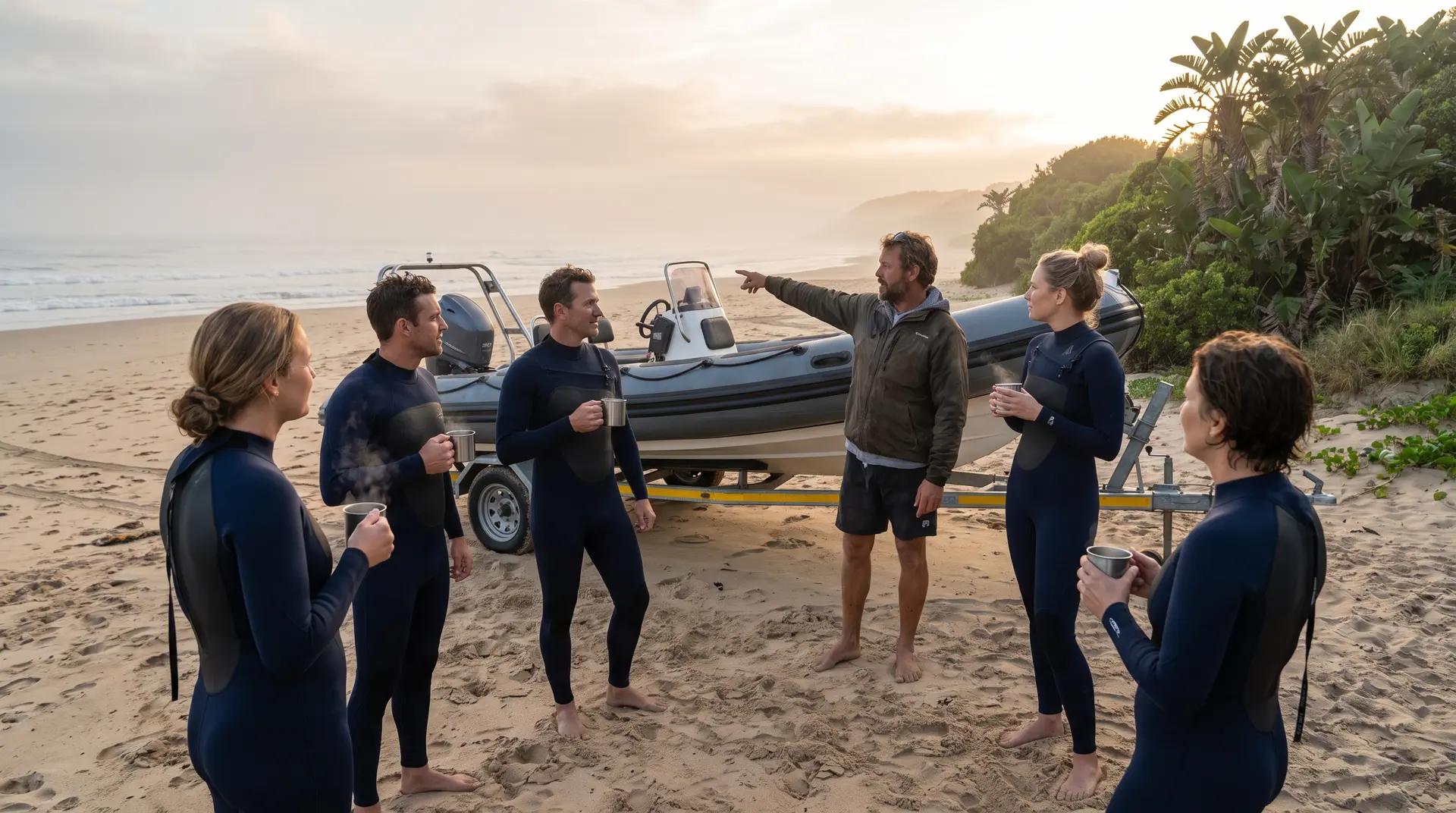
Launches happen between roughly 06:30 and 08:00, which means you are on the beach before sunrise in mid-winter. The days are often sunny and can feel warm by noon, but the run of the day goes cold, warm, wet, windy, cold. The answer is layers you can add and strip on a boat with no dry cabin, packed in a proper dry bag.
The single most valuable item on this list is a windproof shell. Wind over a damp base layer strips heat fast at 20 knots. Second most valuable is a beanie. Between water sessions, most experienced guests pull the wetsuit down to the waist, towel off, and get a dry thermal, beanie and shell on within two minutes. Learn that routine on day one and the week gets much easier.
Boat bag checklist
- Windproof, water-resistant shell jacket
- Two thermal base layers (merino or synthetic, never cotton)
- Fleece or mid-layer
- Beanie that stays on in wind
- Quick-dry towel or changing robe
- 20-30L dry bag for everything above
- Sunglasses with a retainer strap
- High-SPF, reef-safer sunscreen and SPF lip balm
- 1L+ water bottle
- Cap or wide-brim hat for calm sunny stretches
Seasickness: have a plan before you need one
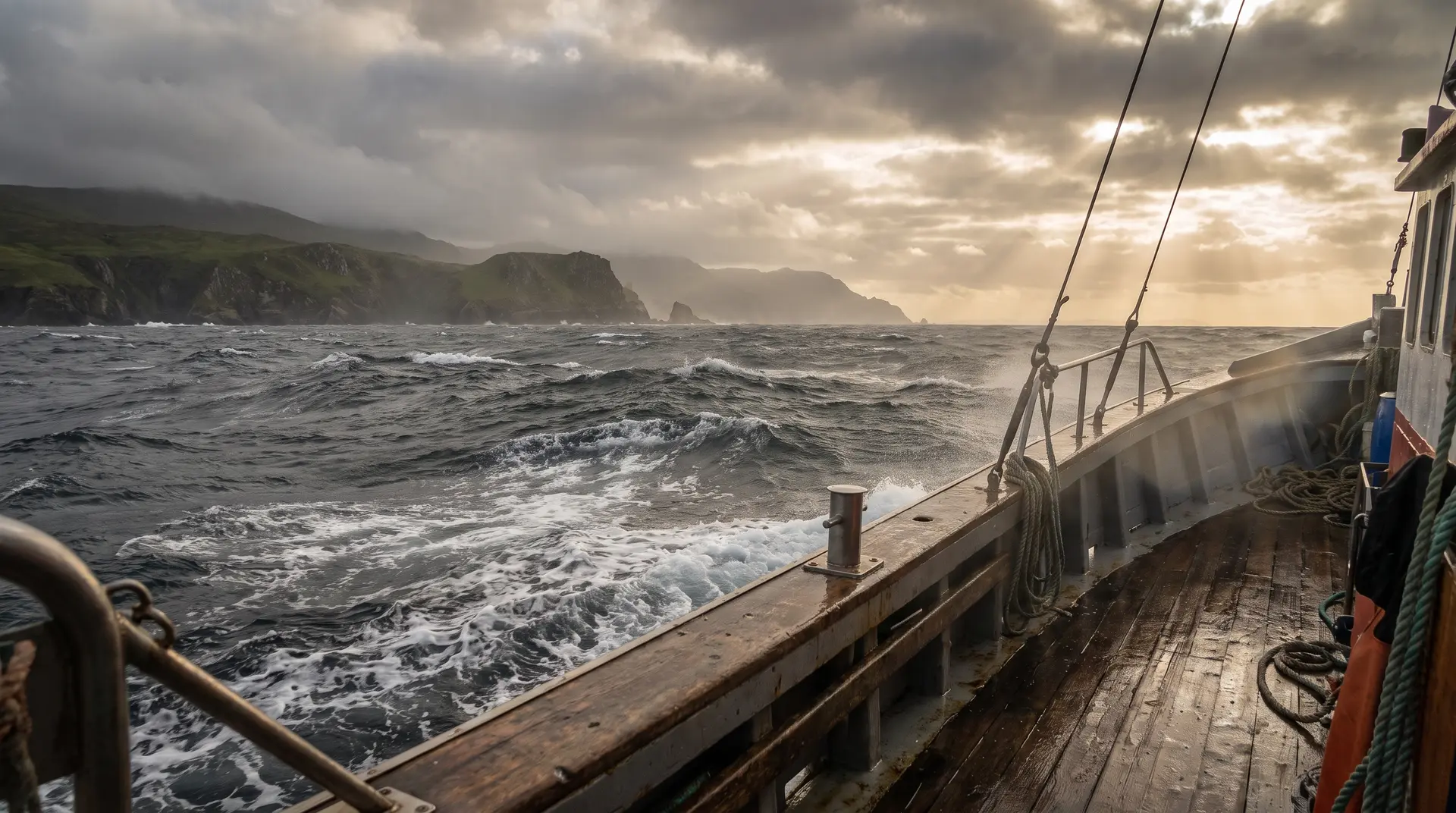
Six to eight hours a day on a RIB in winter swell will find out anyone who is prone to motion sickness, and plenty of people who thought they were not. The mistake is waiting to see how you feel. By the time you feel it, tablets are too late to help much, and a rough first day can put a guest off the water for the whole week.
The strategy that works: start your chosen medication the evening before your first sea day, take it again with breakfast, eat a real breakfast (an empty stomach is worse, not better), stay on deck watching the horizon rather than staring into a bag or a camera screen, and keep drinking water. Speak to your pharmacist or doctor before you travel about which medication suits you; some cause drowsiness, which matters when you also want to be sharp in the water. If you know you are badly affected, ask about prescription options and patches well before the trip, and test whatever you choose on a boat or a long winding drive at home first.
If you do get sick
Tell the skipper early. There is no shame in it, and a quiet word means we can position you at the most stable point of the boat and time your water entries for when you feel strongest. Guests who hide it have a worse week than guests who manage it.
Camera kit: enough, not everything
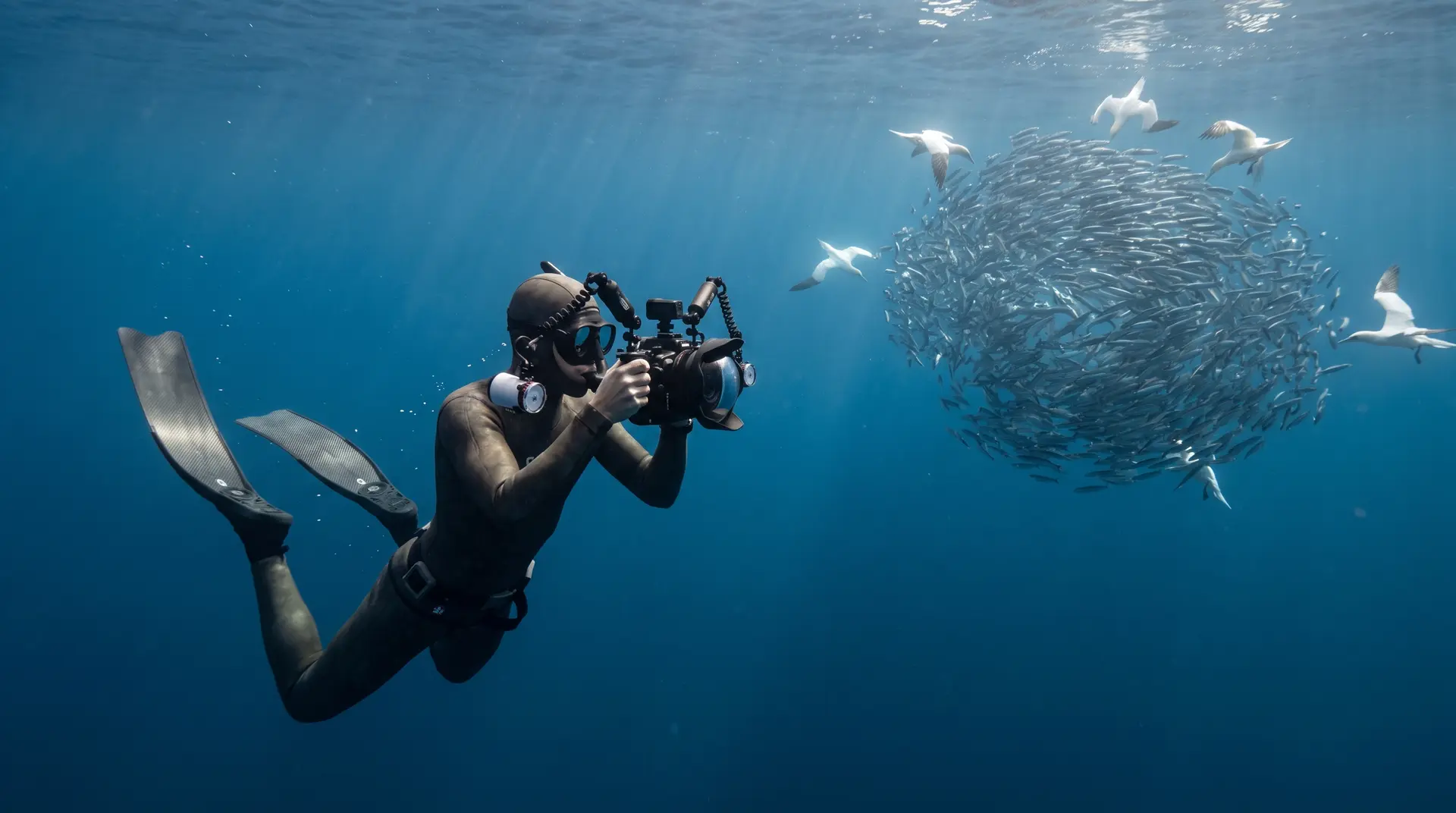
The run rewards fast, simple camera setups. Action happens at the surface in natural light, bait balls move, and you will be swimming hard while shooting. A housed mirrorless with a wide lens, or an action camera on a short grip, gets more keepers here than a heavy rig with strobes that slows your swim. Our full sardine run photography guide covers settings, sun angle and technique; the packing side is below.
Two things bite photographers every season. First, batteries drain faster in cold water and cold air, so carry at least double what you think you need and keep spares warm in the boat bag. Second, moisture. A housing opened on a wet boat is a flooded housing waiting to happen, so set up each morning at the lodge, and pack silica gel sachets.
Camera checklist
- Camera and housing, pressure-tested before the trip
- Wide-angle lens or wide conversion port
- Action camera as a second body or backup
- Double your normal battery count, plus chargers
- More memory cards than feels reasonable
- Silica gel sachets and a microfibre cloth
- Small padded dry case for spares on the boat
- Laptop or storage drive for nightly backups
- Float strap or lanyard (the sea keeps what you drop)
Documents, insurance, money and power
Dive and travel insurance is not optional padding on this trip; it is part of the kit. DAN (Divers Alert Network) cover, or an equivalent policy that explicitly covers freediving and scuba, is the standard we recommend, and South Africa's hyperbaric chambers relevant to the run are at Port St Johns and Durban. Bring proof of insurance, your certification cards if you plan to scuba, and your logbook if your cert is Open Water and you want tank drops considered.
South Africa uses type M plugs (the big three-round-pin) and, increasingly, the newer type N. Most European two-pin plugs fit type N sockets, but do not count on finding one in every room; a type M adapter is the safe buy, and one adapter plus a multi-plug from home charges your whole camera kit off a single socket. Standard voltage is 220-240V.
Cash-wise, card is accepted almost everywhere around Chintsa and East London, but carry some rand for tips, roadside stalls and the odd card machine that picks the wrong day to sulk. Flights into King Phalo Airport (East London) are the easy route in, about 40 minutes from the village; our Chintsa travel guide covers transfers, SIM cards and what to do on land days.
Paperwork and practical checklist
- Passport valid 6+ months with two blank pages
- Dive/travel insurance documents (DAN or equivalent covering freediving and scuba)
- Certification cards and logbook if you plan to scuba
- Flight and transfer confirmations
- Type M power adapter (type N as a bonus), plus a home multi-plug
- Power bank for the boat
- Personal medication for the full week, in hand luggage
- Basic first aid extras: painkillers, rehydrate sachets, blister plasters
- Some South African rand in cash
What not to bring
Every kilogram you do not pack is a kilogram you do not haul through two airports. The list of things people bring and never use is remarkably consistent.
- A drysuit. The water is cold, not Arctic; a drysuit is slow, buoyant and wrong for fast surface swimming.
- A full scuba rig if you are snorkel-focused. Cylinders and weights live on this side; confirm what is provided when you book instead of flying with a BCD you use once.
- Brand-new, untested gear of any kind. The expedition is not the place for a first fitting.
- Shiny jewellery and dive watches you care about. Flash and sparkle have no place in water full of predators keyed to silver fish.
- Big strobe rigs, unless you are an experienced underwater shooter who has worked bait balls before.
- A drone, unless you have checked the rules with us first. Airspace and permit questions are yours to solve before you fly, not on the beach.
- A hard-shell suitcase as your main bag. A duffel stows and travels better on transfers.
- More than one set of smart clothes. Evenings here are fleece-and-firepit, not dress code.
Pack fit, then fitness
Gear solves the cold. It does not solve the swimming. The guests who get the most out of a 7-day expedition are the ones who arrive able to swim hard on snorkel for short bursts, climb back onto a RIB unaided, and do it again an hour later. If your last serious swim was a while ago, start now; our fitness preparation guide has a realistic plan that fits around a normal job.
One last practical note. If any of this list is a problem (you do not own a suit, your fins died, airline baggage is tight) tell us when you book rather than solving it alone. We can advise on what to buy, what to rent locally and what to skip for your specific week. The details of what each expedition includes are on our packages page, and the 2027 season is the next one open for booking.
Frequently asked questions
Is a 5mm wetsuit warm enough for the sardine run?
For most people, yes, provided you pair it with a hood or hooded vest, gloves and booties. Water runs 14-21C and you are in and out all day, so the accessories matter as much as the suit. If you know you feel the cold or you plan long freediving sessions, step up to 7mm and bring extra weight to offset the buoyancy.
Should I bring long freediving fins or my scuba fins?
Long fins if you own them and have used them. Most of the action is surface snorkeling on fast-moving bait balls, and blade length translates directly into minutes on the action. If long fins are new to you, your familiar scuba fins beat unfamiliar gear that cramps your feet by day three.
Can I rent a wetsuit and fins instead of bringing my own?
Ask when you book rather than assuming either way. Rental stock in expedition sizes is limited everywhere on this coast, and a suit that fits properly is the most important item on the list. If you rent, confirm your sizes well in advance; if you buy, test everything in the water at home first.
What seasickness medication should I take?
That is a conversation for your pharmacist or doctor, because the effective options vary in drowsiness and how they suit individuals. Whatever you choose, the pattern matters more than the brand: first dose the evening before your first sea day, again at breakfast, and tested beforehand at home. Do not wait until you feel ill on the boat; by then it is largely too late.
What power adapter do I need for South Africa?
Type M is the safe answer: the large three-round-pin plug found everywhere in South Africa. Newer type N sockets are spreading and accept standard European two-pin plugs, but you cannot rely on finding one. One type M adapter plus a multi-plug from home will run your entire charging setup.
Do I need DAN insurance, or is normal travel insurance fine?
You need cover that explicitly includes freediving and, if you plan tank drops, scuba diving, and many standard travel policies exclude both. DAN is the established option divers use and it covers hyperbaric treatment; the chambers relevant to this coast are at Port St Johns and Durban. Bring printed or offline proof of cover.
How much luggage does all this add up to?
Less than you would think: a duffel plus a carry-on handles it comfortably. The wetsuit, fins and boat layers are the bulk; wear your heaviest layers on the plane and pack fins along the spine of the duffel. Check your airline's baggage allowance on the Johannesburg or Cape Town to East London leg, as domestic limits are often lower than international ones.
Keep reading
Sorted your kit? Now lock in the week.
Our 7-day Chintsa expeditions for the 2027 season run May to July, and confirmed guests get this packing list plus gear advice specific to their week. If you are unsure about any item on this page, ask us before you buy. We would rather answer a wetsuit question in an email than watch you shiver through a season highlight.
Boats carry small groups only, and prime weeks go 6-12 months out.