
Field Guide
Sardine Run Photography: Settings, Gear and Field Technique
Updated 23 July 2026 · 11 min read · By the Sardine Run Africa crew
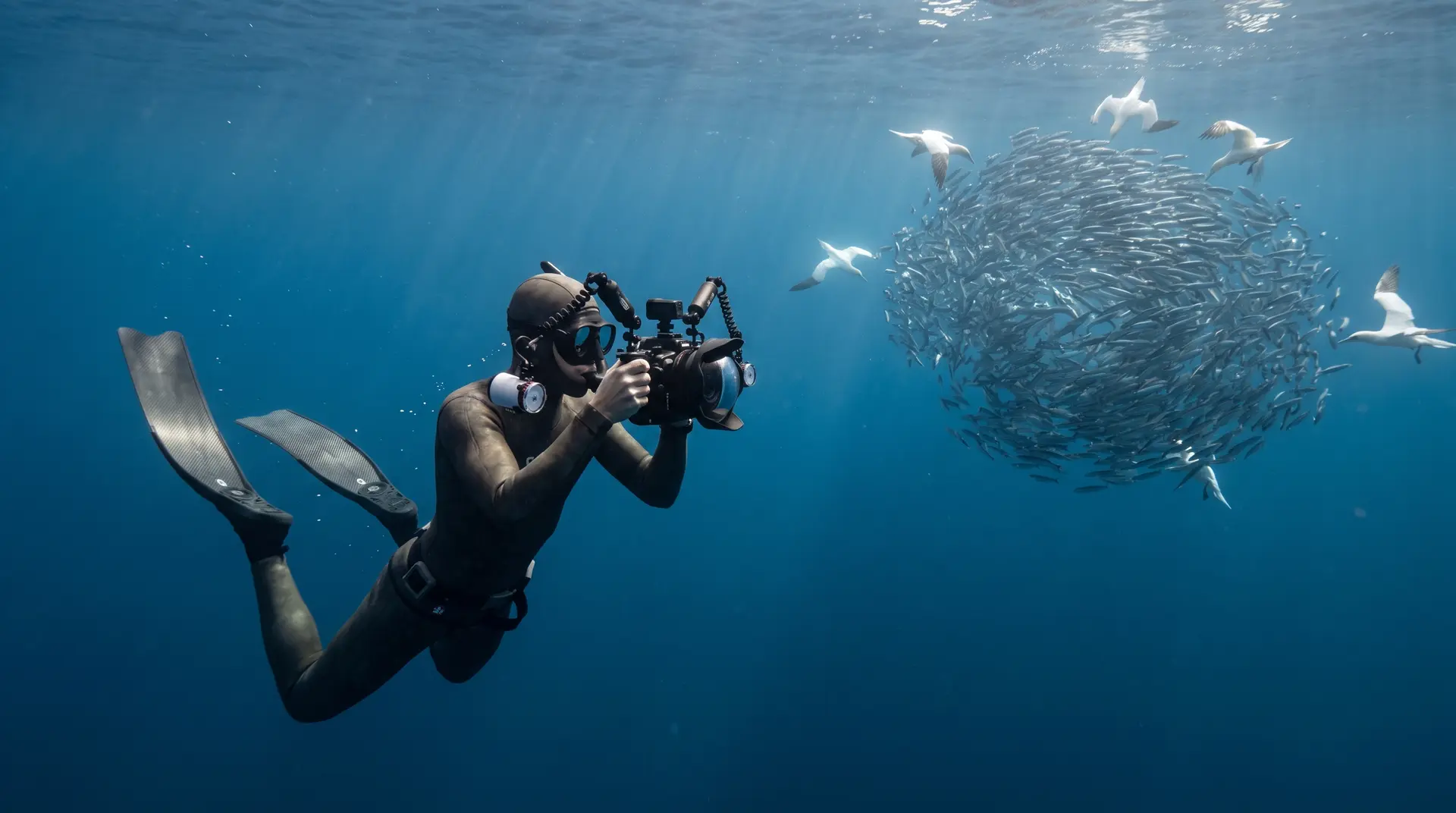
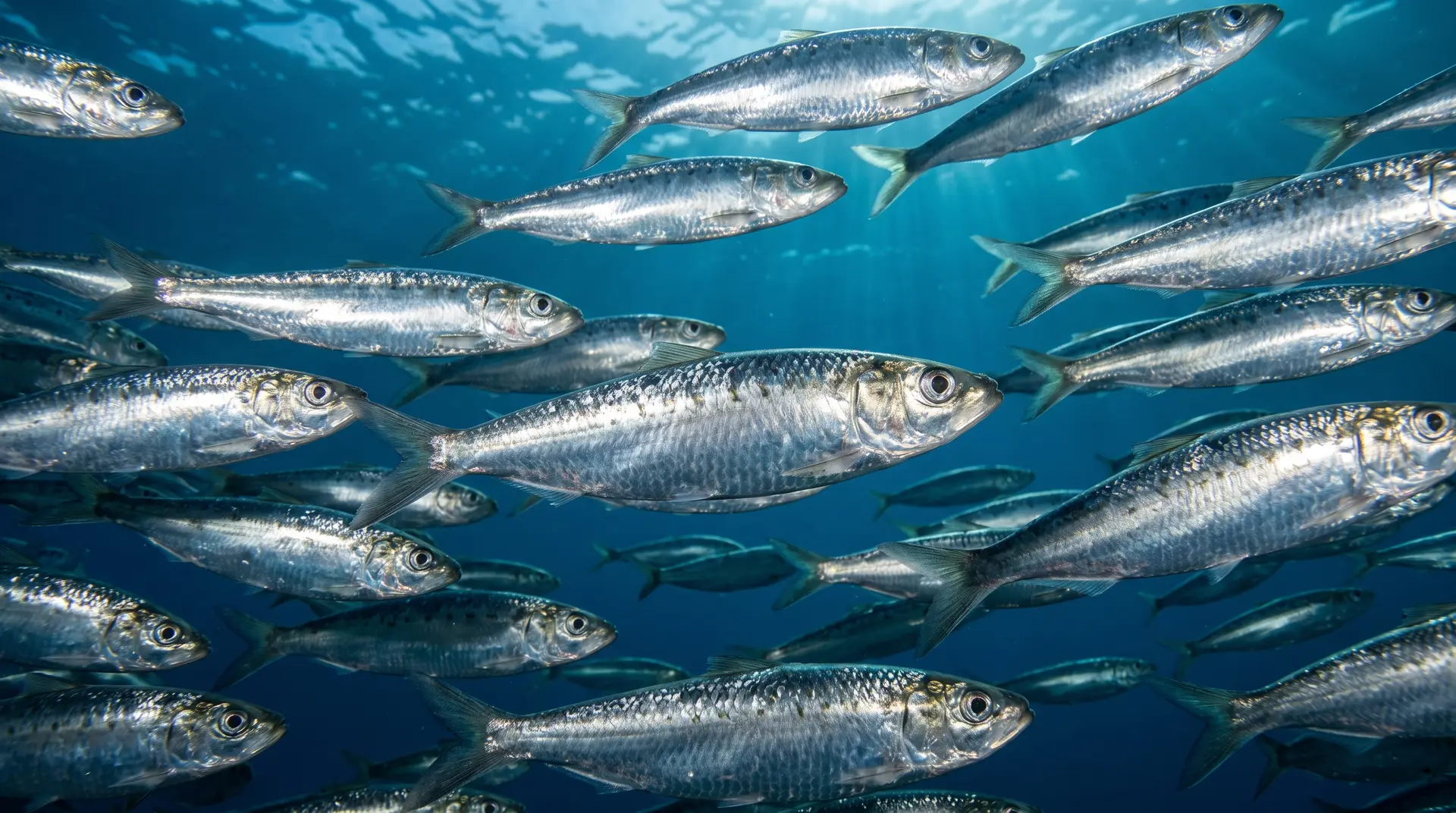
A bait ball rarely lasts ten minutes. Visibility on the same stretch of coast can be 3 metres one day and 30 the next. Your subjects are mirrors: thousands of silver fish flashing in unison, herded at speed by common dolphins while copper sharks and Cape gannets punch through from every direction. No other marine photography assignment stacks this many technical problems into such a short window.
The photographers who come home with a portfolio are not the ones with the most expensive rigs. They are the ones who locked in their settings on the beach, who can slip into the water without a splash, and who understand that the run rewards preparation over reaction. Once the ball forms, there is no time to menu-dive.
This guide covers the full workflow: camera and housing choices, dome versus flat ports, the settings that survive fast silver subjects in variable vis, freediving approaches, long-lens work for gannet rain and breaching humpbacks, drone law in South Africa, and how light moves through a winter sea day. It is written for the southern Wild Coast around Chintsa and East London, where our 2027 expeditions launch.
Camera and housing: what actually earns its place on the boat
Any current mirrorless body with reliable subject tracking and 10+ frames per second will do the job. Full frame buys you cleaner high-ISO files, which matters more here than resolution, because green water eats light and you will be pushing ISO on dark mornings. A crop-sensor body in a good housing beats a full-frame body you are scared to get wet.
For glass, one lens does 90 percent of the underwater work: a wide zoom in the 16-35mm range, or a fisheye if you are confident you will get close. Bait balls are typically 10 to 20 metres across, and in average vis you need to be inside a few metres of the action for the frame to hold any contrast. There is no underwater focal length long enough to compensate for hanging back.
Housings from Nauticam, Isotta, Aquatica, Sea Frog and Ikelite all see service on run boats. What matters is that your controls are second nature. You will be operating the rig in a 5mm glove, on breath-hold, while tracking dolphins. Practise in a pool or on shore dives before you fly. A leak detector and a fresh main O-ring are cheap insurance; a vacuum valve is better.
Dome port or flat port?
Dome. A flat port magnifies your scene by roughly a quarter underwater and butchers the corners on a wide lens; it belongs on macro trips, and the sardine run is the opposite of a macro trip. A dome port corrects the refraction, restores your lens's full angle of view and keeps the edges usable at wide apertures.
Size is a trade-off. A large dome (200mm class) gives you clean over-under split shots of gannets rafting on the surface, but it is a sail in current and a liability climbing back onto a RIB. A mini-dome (100-140mm) is far easier to swim fast and travels in hand luggage. If bait ball action is your priority, take the small dome and forget the splits.
Bait ball photography settings: a starting matrix
The core recipe is simple: shutter priority or manual with auto-ISO, a minimum shutter of 1/250, and an ISO ceiling you have tested and can live with. Sardines flick direction faster than any autofocus can think, so you freeze motion with shutter speed and let the camera trade ISO against the light. Set the auto-ISO ceiling at 6400 on a modern full frame, 3200 on crop, and check your own body's files before the trip rather than trusting a forum.
Shoot RAW, always. White balance in green Wild Coast water is a lost cause in-camera; auto WB plus a RAW correction in post is faster and better than fiddling with presets at sea. Leave the strobes on the boat for bait ball work. Ambient light is usually enough in the upper 10 metres, strobes light up every particle in the water column, and two arms of hardware slow your swim exactly when speed decides whether you reach the ball at all. Water conditions on this coast swing hard day to day, so re-check your ceiling each morning against the vis.
| Scenario | Shutter | Aperture | ISO | Notes |
|---|---|---|---|---|
| Bait ball, mid-water, fair vis | 1/250-1/320 | f/8 | Auto, ceiling 6400 | Continuous AF, wide tracking area, burst |
| Dolphins hunting at speed | 1/500 | f/7.1 | Auto, ceiling 6400 | Track the animal, not the fish |
| Sharks in low vis (3-8m) | 1/250 | f/5.6 | Auto, ceiling 6400 | Get close; contrast beats sharpness |
| Surface splits, gannets rafting | 1/320 | f/11 | 400-800 | Large dome only; spit-rinse the glass |
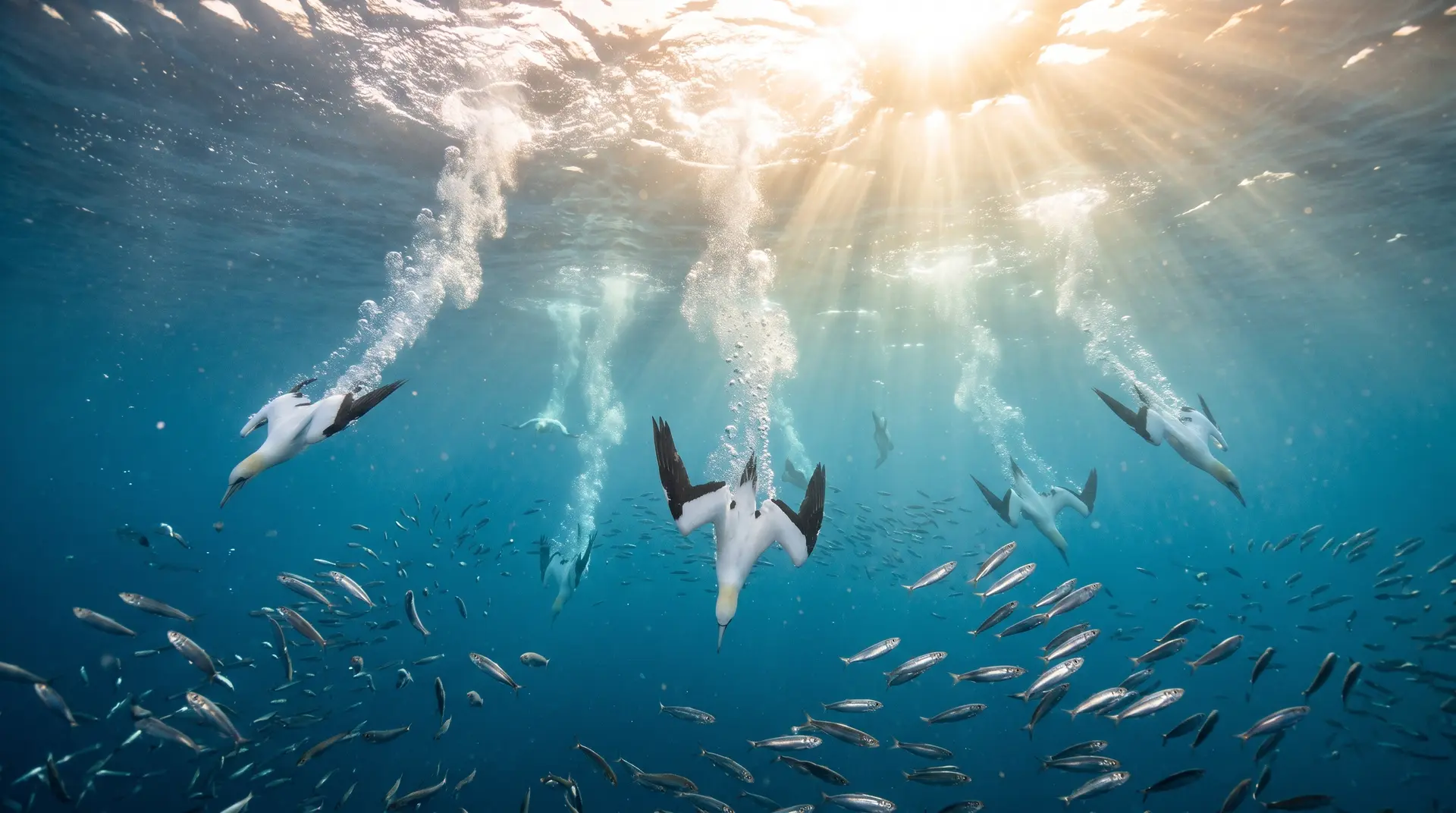
| Gannet plunge trails underwater | 1/320 | f/8 | Auto, ceiling 6400 | Shoot up into the light for the bubble columns |
Freediving your approach
Most sardine run photography happens on breath-hold, not scuba. The action moves too fast for tanks except on the rare static ball, and bubbles push fish and birds away from you. You do not need to be a competitive freediver; you need clean, quiet technique in the top 5 to 10 metres. If you can duck-dive without a splash, equalise hands-free or with one quick pinch, and hold 45 relaxed seconds while finning, you have what the job requires. Our guide to doing the run without scuba covers the skills baseline in detail.
Approach matters more than depth. Enter off the boat like you are trying not to wake someone: feet-first slide, no giant stride. Swim to the edge of the activity, never at its centre, and read the direction the ball is being pushed before you commit. Duck-dive up-current and slightly deep, then level off beside the ball rather than above it. Predators attack from below; a silhouette hanging overhead reads as competition and can move the whole event away from everyone.
Keep your dives short and your recovery honest. Two crisp 30-second dives beat one straining 90-second dive, and shallow-water blackout is a real risk when adrenaline is telling you to stay down. Surface, breathe, reposition, repeat. Our fitness preparation guide has a pre-trip conditioning plan; the photographers who fade by day three are the ones who skipped it.
Topside: long-lens work for gannet rain and breaches
Half your portfolio gets shot from the boat, and plenty of photographers under-plan for it. Cape gannets hit the water from around 30 metres up at highway speeds, and a feeding frenzy of hundreds of birds is one of the great action subjects in wildlife photography. You need 1/2000 or faster to freeze the impact spray, a 70-200mm or 100-400mm, and a high burst rate. Pre-focus on the splash zone, not the sky; the birds enter the frame faster than you can find them.
Humpbacks migrate through the same water all season, and breaches come without warning. Keep the long lens on a body around your neck between swims, shutter at 1/1600+, drive mode on high, and shoot from a braced crouch with your knees absorbing the swell. A dry bag or soft cooler keeps the topside body safe through launches and spray; salt mist is a slower flood but a flood all the same.
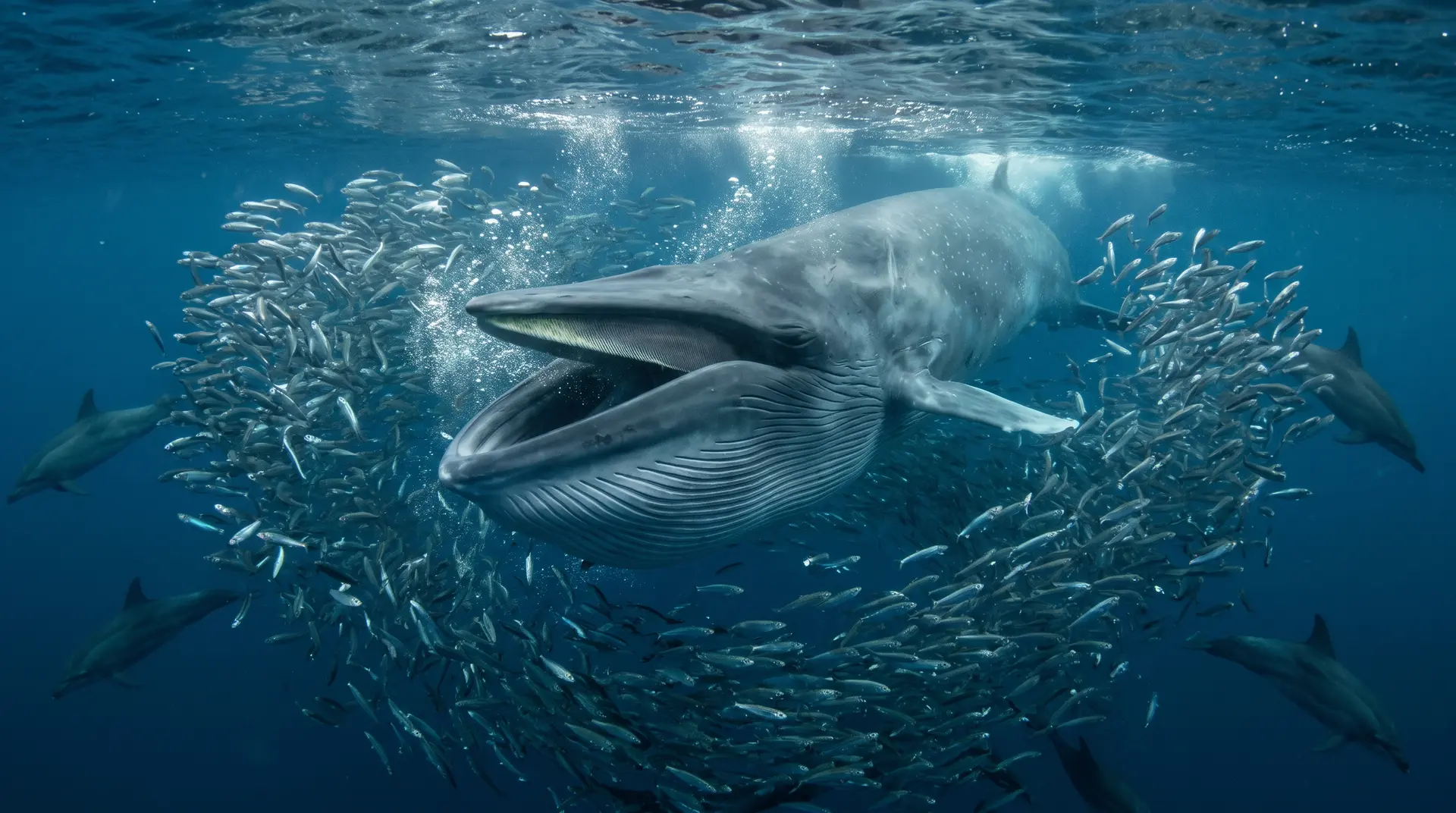
The full predator cast, from super-pods of common dolphins to Bryde's whales lunging through the surface, is covered in our marine life guide. Read it before the trip so you can anticipate behaviour instead of reacting to it. Knowing that a tightening dolphin pod usually precedes bird activity buys you 30 seconds of lens-ready time that other shooters spend fumbling.
Drone rules in South Africa: what the CAA allows
South Africa regulates drones under the Civil Aviation Authority's Part 101 rules, and they are enforced. Flying for private, non-commercial purposes, you must keep the aircraft within visual line of sight, below 120 metres (400 feet), at least 50 metres from people, roads and property you do not have permission over, and at least 10 kilometres from any aerodrome. Daylight only. If the footage is for commercial use, including paid stock or client work, the bar rises steeply: you need a Remote Pilot Licence and the flight must fall under a licensed RPAS operator certificate. That is not a formality you can arrange the week before.
Beyond aviation law, wildlife law applies on the water. South Africa prohibits approaching whales closer than 300 metres without a permit, and a low drone that alters an animal's behaviour is a disturbance problem regardless of altitude. Launching and catching from a moving RIB in swell is also a genuine skill; brief the skipper before the trip, fly only when the crew confirms the operational window, and accept that some days the answer is no.
Talk to us before you pack the drone
Bring proof of your CAA compliance status and tell us your plans when you book. We will give you a straight answer on which days and conditions allow safe boat launches, and when the drone stays in the bag. An uncontrolled drone in a gannet frenzy is a hazard to birds, swimmers and the aircraft.
Light angles through a winter sea day
Boats launch between about 06:30 and 08:00, and in a southern-hemisphere winter the sun stays relatively low all day. That is a gift. Early morning gives you warm side-light topside and moody, directional water below; it is the best window for dolphin silhouettes and surface work, though underwater ISO will be at its ceiling.
From mid-morning to early afternoon the sun climbs high enough to drive shafts of light through the shoals, and this is prime bait ball light: enough penetration to hold colour at 10 metres, enough angle to keep texture in the fish. If you get a ball in this window, shoot it from every quadrant, because the same ball is a different photograph up-sun versus down-sun. Late afternoon, on the run home, turn around: backlit spray off the bow, gannets against a dropping sun, and the day's last breach attempts all live behind the boat.
Etiquette: wildlife first, then the other shooters
The event does not belong to you. Never swim into the middle of a bait ball or dive through it for a frame; splitting the ball can end the feeding event for every animal and every boat on site. Stay on the perimeter, keep your fins quiet, and leave when the ball collapses rather than chasing the stragglers. The predators built this; your job is to witness it.
In the water, work a sector and hold it. If four swimmers orbit a 15-metre ball at random, everyone's frames have neoprene in them. Agree rough positions before you enter, give the videographer an uninterrupted line when they call it, and rotate the prime up-sun slot between dives. On the boat, respect the entry order the guide sets. Small groups make all of this easier, which is one practical reason to weigh boats with fewer photographers per bait ball when comparing operators, and it is a real difference on the quieter southern stretch of the run.
The short version
- Never split or dive through the ball; work the edge.
- Approach from beside, not above; predators own the vertical.
- No strobes in the frenzy; they add backscatter and slow you down.
- Hold your sector; rotate the up-sun position between swimmers.
- Follow the guide's entry order and recall signal without argument.
- Whales: 300m boat approach law; drones do not exempt you from disturbance rules.
Why five-plus sea days make the portfolio
The run moves in pulses, not on a schedule. A shoal passes, the ocean goes quiet for a day, then a cold-water push brings the next wave. Bait balls last minutes and vis changes overnight, so any single sea day is a lottery ticket; a week of them is a strategy. The market consensus across every serious operator is a minimum of five sea days, and working photographers routinely book ten or more, because the difference between one bait ball encounter and four is the difference between a lucky frame and a portfolio.
This is the logic behind our 7-day format: five dedicated sea days plus margin for the Wild Coast's winter weather, based in Chintsa, 40 minutes from King Phalo Airport, on the stretch where the run arrives first. If 2027 is the year you shoot it, the expedition packages page has dates and what is included, and the packing list covers the wetsuit, thermal and dry-bag details this guide skipped. Prime weeks on small boats sell out months ahead; photographers who want the up-sun slot book early.
Frequently asked questions
Should I bring strobes for sardine run photography?
For bait ball work, no. Ambient light in the top 10 metres is usually sufficient, strobes illuminate every suspended particle in green water, and the extra drag slows your swim when speed matters most. Pack them only if you also plan reef dives on rest days.
Is a GoPro or action camera enough for the sardine run?
For video, action cameras do surprisingly well because the action happens close and wide. For stills they struggle: small sensors fall apart at the high ISOs green water demands, and fixed ultra-wide framing gives you no control. Many shooters run a GoPro on a short handle as a video second camera alongside a housed stills rig.
What single lens should I take if I can only bring one underwater?
A 16-35mm equivalent wide zoom behind a dome port. It covers a tight bait ball at arm's length and a Bryde's whale pass at five metres, which a fisheye cannot do without you being dangerously close. Add a 100-400mm for topside and the two-lens kit covers the whole expedition.
What are the best settings for bait ball photography in low visibility?
Hold 1/250 as your floor, open up to f/5.6, and let auto-ISO climb to your tested ceiling. In 3 to 5 metre vis, get inside two metres of your subject and accept grain; a close, contrasty file at ISO 6400 prints better than a clean frame of grey soup. Shoot RAW so the green cast is recoverable.
How do I protect camera gear on a RIB all day?
Housed rigs ride in a padded crate or on camera trays with the dome cover on between swims. Topside bodies live in a dry bag with a chamois to hand, because salt spray is constant on a 6 to 8 hour sea day. Rinse housings in fresh water every evening and check O-rings nightly, not weekly.
Do I need a licence to fly my drone on a sardine run trip?
For personal, non-commercial footage you must follow the CAA's Part 101 rules: visual line of sight, under 120m altitude, 50m from people, 10km from aerodromes, daylight only. Any commercial use requires a Remote Pilot Licence under a licensed operator certificate, arranged well in advance. Either way, clear it with the skipper before launch day.
Keep reading
Shoot the 2027 run from the front of the queue
Our 7-day Chintsa expeditions put you on the southern stretch where the run arrives first, with five sea days to stack the odds behind your portfolio. Tell us you are shooting when you enquire and we will talk through boat setup, rinse tanks and drone logistics before you book.
Boats carry small groups only, and prime weeks go 6-12 months out.