Trip Planning
Where to See the Sardine Run: Durban, KZN or the Wild Coast?
Updated 23 July 2026 · 9 min read · By the Sardine Run Africa crew
The most common sardine run planning mistake is booking for where the run was famous, not where it happens now. For most of the twentieth century the shoals reached Durban around 25 June, sardines washed up in the surf, and KwaZulu-Natal beach netting made the evening news. That is the version of the run most South Africans grew up with, and it is why more people still search for the sardine run in Durban than anywhere else. But since 2002 the KZN leg has been unreliable, and the divers, film crews and bait balls have shifted south to the Eastern Cape Wild Coast.
Your choice of base decides almost everything about your trip: which weeks you should book, how many boats will be circling the same gannet activity, which airport you fly into, how long the road transfer takes, and what you do on a day the sea blows out. The bases are not interchangeable. Some catch the run early, some catch it late, some are a 40-minute drive from a jet airport and some are six hours down gravel roads.
This guide compares every base worth considering, from Durban down to Chintsa, with the trade-offs stated plainly. We run our expeditions from Chintsa, and we will tell you why, but Port St Johns and the mid Wild Coast lodges are covered on their own merits. Pick the base that fits your dates, your budget and your appetite for remoteness.
Durban and the KZN South Coast: The Famous Name, the Fading Show
The sardine run built its public reputation in KwaZulu-Natal. Commercial beach netting peaked in the 1930s and 40s, and for decades the arrival of the shoals on the KZN South Coast around late June was a reliable civic event. That reputation is why the phrase sardine run and the word Durban are still welded together in most people's minds.
The fish have other ideas. The run only pushes into KZN when inshore water cools below about 21 degrees, and warm years increasingly stop the shoals short. KZN runs have weakened noticeably since 2002, with climate warming a documented pressure on the event. Some years sardines still beach on the South Coast and the netters have their day; other years the run barely crosses the provincial line. You cannot build a 7-day expedition around a maybe.
Durban itself has real advantages as a travel hub. King Shaka International takes direct international flights, and one of South Africa's two run-relevant hyperbaric chambers is in the city. Several long-standing KZN dive operators run sardine expeditions from towns like Umkomaas and Scottburgh, but read the fine print: most of them drive or relocate their boats to Port St Johns and the Wild Coast for the season, because that is where the in-water action is. If a KZN-based trip does not clearly state where the boats actually launch in June and July, ask.
Cape Town and the South Coast: Where the Sardines Come From
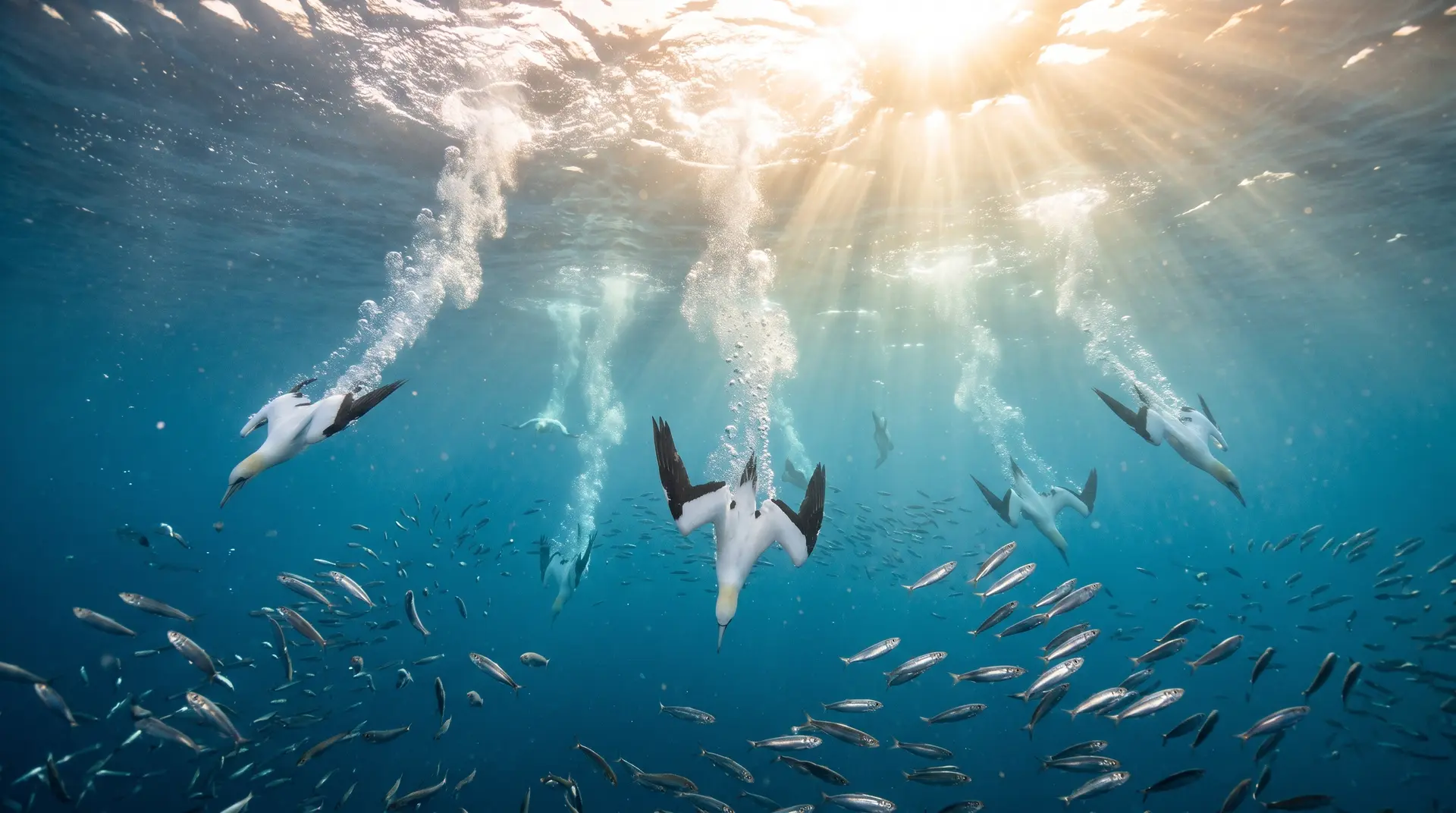
People searching for the sardine run in Cape Town are half right. The sardines spawn on the Agulhas Bank in southern summer, so in a real sense the run starts in Cape waters. But the spectacle, the tight bait balls with dolphins, sharks, Bryde's whales and gannets working them, forms as the shoals funnel up the Eastern Cape coast in winter. Cape Town has world-class marine wildlife of its own; it is simply not a sardine run base, and no operator runs bait-ball expeditions from there.
The confusion goes the other way too. In KZN, "South Coast" means the Scottburgh-to-Port-Edward strip, the historical netting coast covered above. If you follow the run's full path from spawning grounds to its northern limit, the route passes Gqeberha, East London and Chintsa, crosses the Kei River onto the Wild Coast proper, then runs past Coffee Bay, Port St Johns and Mbotyi toward southern KZN. We map the whole corridor in our sardine run route guide. The short version: the further south and east you base yourself, the earlier you meet the fish.
The Wild Coast: Where the In-Water Action Lives
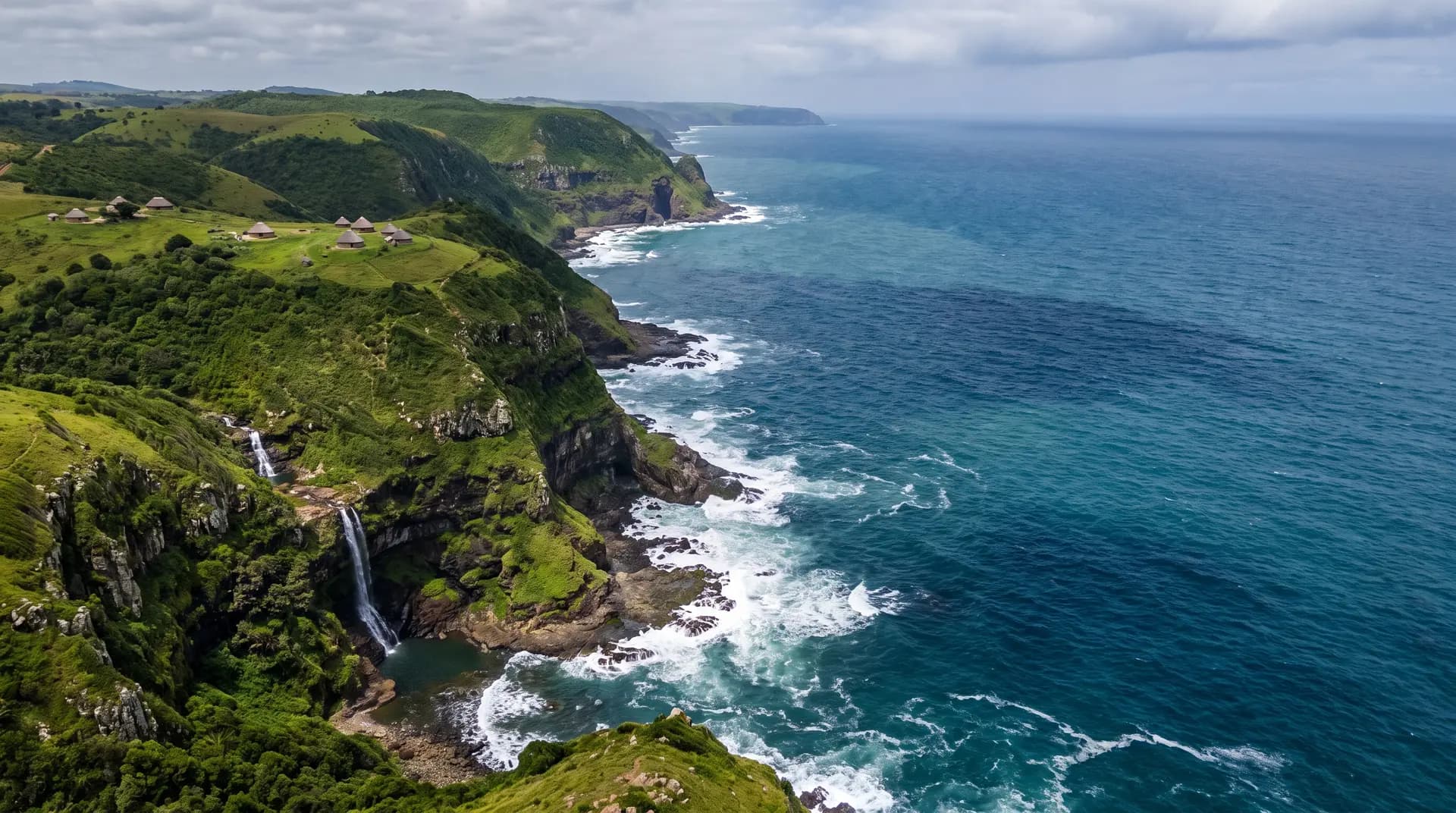
The stretch of Eastern Cape coastline between the Kei River and Mbotyi is where the modern sardine run happens for divers. The continental shelf narrows here, the shoals pass close inshore, and every serious operator in the country positions boats somewhere along this coast between May and July. The bases differ sharply in access, timing and crowding.
Port St Johns: the mid-season epicentre
Port St Johns is the traditional heart of the run from mid-June into July, and it earns the title. The town sits at the mouth of the Umzimvubu River, boats launch down the river to sea, and in peak weeks the largest fleet on the coast works this water, with spotter planes overhead and the Pondoland Marine Protected Area permit system in play. There is a hyperbaric chamber in town, which matters if you plan to dive on scuba.
The trade-offs are access and company. Getting there means flying to Mthatha on limited schedules and then a 1.5-hour road transfer (operators quote R1,925 to R2,695 for it), or driving roughly five hours from Durban. And because everyone is there in the same three or four weeks, a good bait ball can draw several boats. Prime PSJ weeks also sell out months ahead; many 2026 slots were full long before the season opened. We cover the town, the operators and the launch in detail in our Port St Johns guide.
Mbotyi: the northern gateway
Mbotyi, a small lodge settlement north of Port St Johns, sits near Waterfall Bluff, where the shelf pinches the migration corridor closest to shore. It shares Port St Johns' mid-June-to-July timing and adds real remoteness: you are a long drive from any airport, on Wild Coast roads, with little to do on a blown-out day. Photographers who want late-season action and do not mind the logistics rate it highly.
Coffee Bay, Mdumbi and Mpame: the quiet middle coast
Between the Kei River and Port St Johns lies a string of small mid-coast bases. Coffee Bay and neighbouring Mdumbi offer rondavel-style lodges and beach launches; Mdumbi in particular has film pedigree, with Blue Planet II and Our Planet crews having worked this water. Mpame hosts boutique operations capped at six guests per boat. All three see the run in the mid-season window and share one big draw: far fewer boats than Port St Johns.
The cost is access. These bases sit two to six and a half hours from the nearest airport, accommodation is simple, and if the weather closes the sea for two days there is not much of a plan B. They suit self-sufficient travellers who value empty water over comfort and convenience.
Chintsa and East London: First to the Run, Easiest to Reach
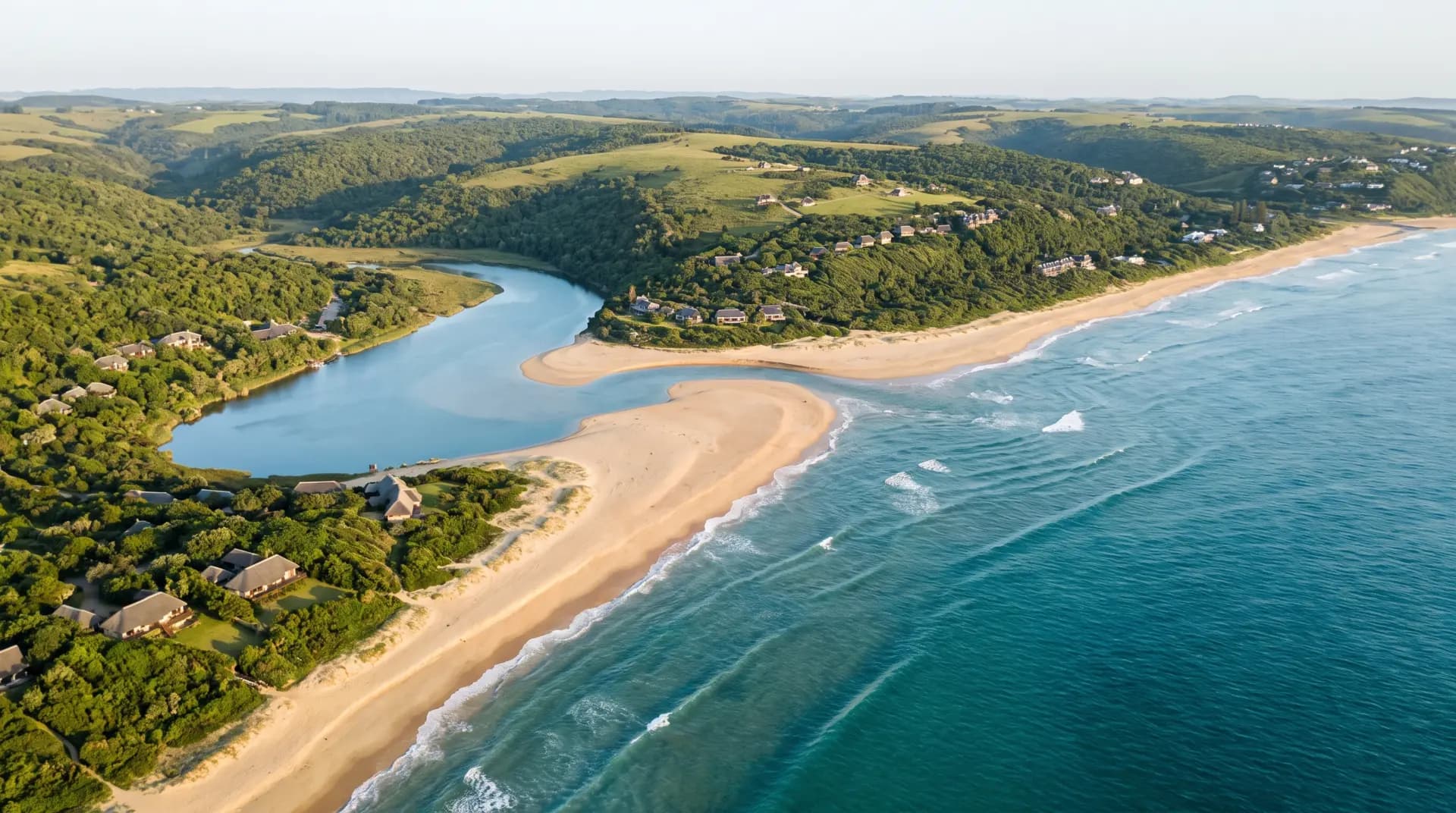
Chintsa sits at the southern gateway to the Wild Coast, about 40 minutes from King Phalo Airport in East London, which has multiple daily direct flights from Johannesburg (around 1 hour 35 minutes) and Cape Town. No other sardine run base on the coast comes close on access. You can leave Johannesburg after breakfast and be watching the surf at Chintsa by lunch.
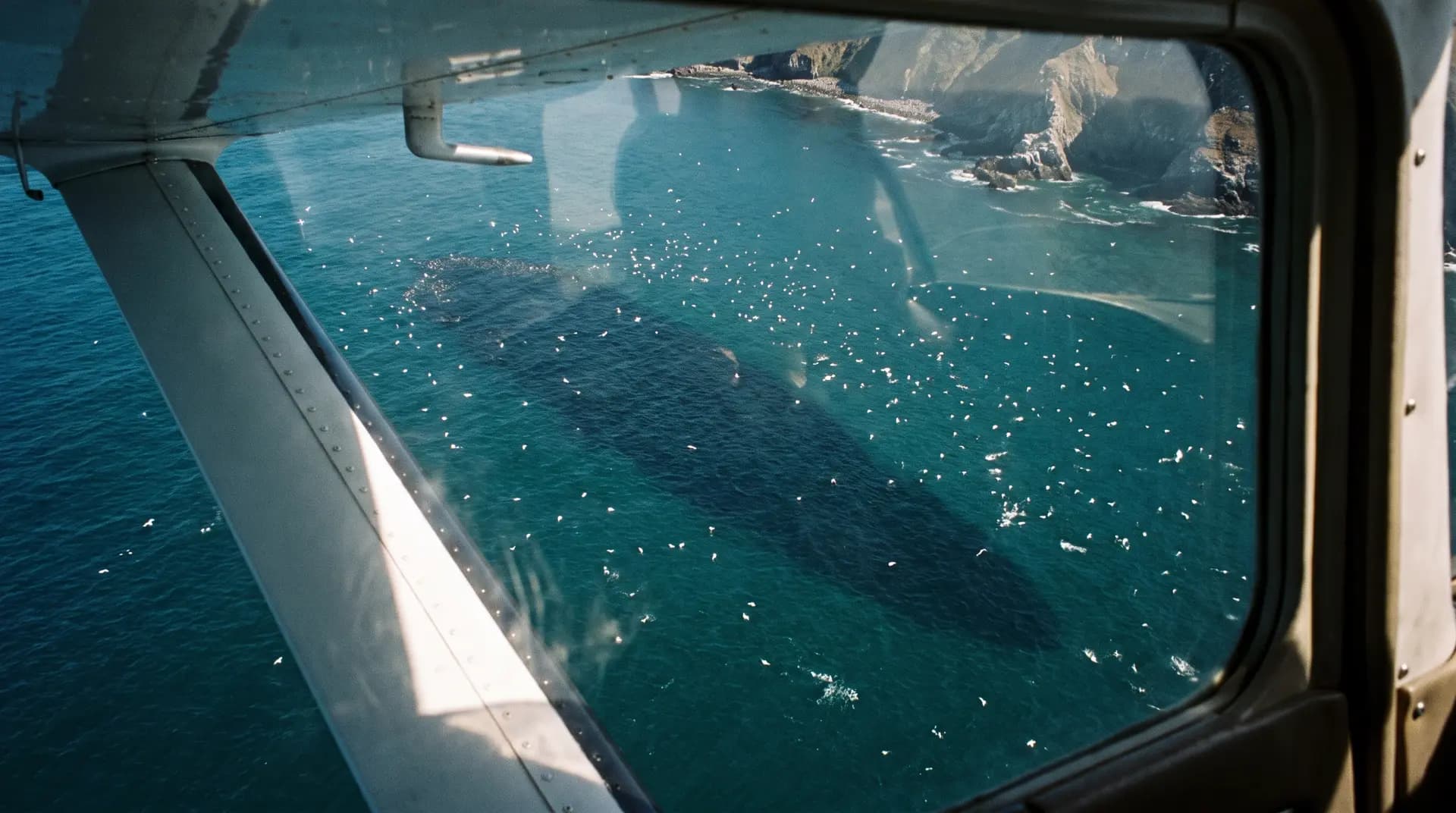
Timing is the other half of the case. The run's early phase, from May into June, plays out in the southern zone between Gqeberha and East London before the shoals push north; PADI's own destination guidance says exactly this. Basing at Chintsa means meeting the fish first, weeks before the fleet concentrates at Port St Johns, and boats here work a long stretch of coastline from around Hamburg up toward the Kei River. Crowding is the third factor: only a handful of operators launch from this beach, so a bait ball found off Chintsa is rarely shared.
Chintsa also solves the blown-out-day problem better than any base north of it. Weather days are a fact of winter expeditions everywhere on this coast, and no operator refunds them. The difference is what you do instead. From Chintsa you have game reserves, long swimming beaches, horse rides and East London's restaurants within easy reach, where the remote bases offer a lodge deck and a book. Our East London and Chintsa base guide covers the village, the lodges and the launch in full, and our 7-day expedition packages are built around this stretch of coast for the 2027 season.
Every Base Compared
Season windows below follow the run's usual south-to-north progression; exact weeks shift with water temperature each year, so read them alongside our season and dates guide before locking in flights.
| Base | Nearest airport and transfer | Best weeks | Crowd levels |
|---|---|---|---|
| Chintsa / East London | King Phalo (East London), ~40 min; daily direct flights from JNB and CPT | Late May to late June (early phase) | Low: a handful of boats on ~150 km of coast |
| Coffee Bay / Mdumbi | Mthatha, limited flights, then 1.5-2 hr on rural roads | Mid-June to early July | Low: one or two small operations |
| Mpame | ~6.5 hr drive from Durban; no close airport | Mid-June to mid-July | Very low: boutique boats capped at 6 guests |
| Port St Johns | Mthatha, limited flights, + 1.5 hr transfer (R1,925-R2,695), or ~5 hr drive from Durban | Mid-June to late July (peak) | High: the largest fleet on the coast in peak weeks |
| Mbotyi | Long road transfer via Mthatha or Durban; remote | Late June to late July | Moderate: fewer boats than PSJ, same window |
| Durban / KZN South Coast | King Shaka International; excellent connections | Late June to July, in years the run arrives | N/A in weak years: most local operators relocate south |
How to Choose Your Base
There is no single right answer, but there is usually a right answer for you. Work through it in this order: dates first, because the run moves and each base has a window; then access, because a missed Mthatha connection can cost you a sea day; then crowds and comfort.
Match the base to the traveller
- You want the earliest action and the easiest logistics: Chintsa. Direct flights to East London, a 40-minute transfer, the May-June southern phase, and quiet water.
- You want peak-season intensity and can only travel in July: Port St Johns or Mbotyi. Book 6 to 12 months out and budget for the Mthatha transfer.
- You want empty water and do not mind rough roads and simple lodging: Coffee Bay, Mdumbi or Mpame.
- You are a photographer chasing maximum bait-ball odds: book more sea days rather than agonising over the perfect base. Five sea days is the market minimum; serious shooters book ten, sometimes split between a southern base early and a northern base late.
- You are based in Durban and hoping to see it from home: enjoy the beach netting if it comes, but book the Eastern Cape for the in-water event.
The run is booked in pulses, not on impulse
Boats on this coast carry 6 to 8 guests and prime weeks sell out 6 to 12 months ahead; many Port St Johns departures for 2026 were full months before the first sardine moved. The 2026 season has just wrapped, which makes now the window to secure 2027 dates at whichever base you choose.
One Coastline, One Honest Conclusion
Strip away the nostalgia and the marketing and the picture is simple. Durban is the run's history. Cape Town is its origin story. The Wild Coast is its present, with Port St Johns owning the crowded mid-season peak and the southern stretch around Chintsa and East London owning the early weeks, the empty water and the only genuine jet-airport access on the coast.
We chose Chintsa for those last three reasons, and because winter on this coast punishes bases with nothing to offer on a blown-out day. If your dates fall in late May or June, the southern Wild Coast is hard to argue against. If they fall in July, look north to Port St Johns and book early. Either way, base your decision on where the fish will be in your week, not on where the cameras were in 1995.
Frequently asked questions
Can you still see the sardine run in Durban?
Sometimes, but not reliably. The run only reaches KZN when inshore water cools below about 21 degrees, and it has weakened there since 2002. In good years sardines still beach on the South Coast around late June, historically arriving in Durban about the 25th, but no operator can promise it, which is why expedition boats now work the Eastern Cape instead.
Does the sardine run happen in Cape Town?
No. The sardines spawn on the Agulhas Bank in Cape waters during summer, but the winter migration spectacle forms along the Eastern Cape coast from around Gqeberha northward. Cape Town is a departure point for flights to East London, not a viewing base.
Which airport should I fly into for the sardine run?
It depends on your base. For Chintsa, fly to King Phalo Airport in East London (direct from Johannesburg and Cape Town, then about 40 minutes by road). For Port St Johns, fly to Mthatha on limited schedules plus a 1.5-hour transfer, or drive roughly five hours from Durban. The remote mid-coast bases involve two to six-plus hours by road from any airport.
Where is the sardine run in May versus July?
It moves south to north. May and early June belong to the southern zone between Gqeberha and East London, including Chintsa. By mid-June the action shifts across the Kei River toward Coffee Bay, and from late June through July it peaks around Port St Johns and Mbotyi. Historically the shoals passed the Bashee River around 8 or 9 June.
Is Port St Johns or Chintsa better for the sardine run?
They cover different phases of the same event. Port St Johns owns the mid-June-to-July peak but comes with awkward flights, transfer costs and the biggest fleet on the coast. Chintsa catches the earlier May-June phase with direct-flight access via East London, far fewer boats, and real land-based options on weather days. Match the base to your travel dates.
Why do KZN operators advertise sardine run trips if the run rarely reaches KZN?
Most established KZN dive operators relocate their boats to Port St Johns or elsewhere on the Wild Coast for the season, so the trip is real even though it does not run from their home port. Before booking any KZN-marketed expedition, confirm the actual launch site, the accommodation location and who covers the positioning logistics.
Keep reading
Meet the Run First, at the Southern Gateway
Our 7-day expeditions launch from Chintsa, 40 minutes from East London's King Phalo Airport, on the stretch of coast where the sardine run arrives first. Boats carry small groups and 2027 season weeks are limited, so if this guide has settled the where, the next question is when. Get in touch and we will help you pick your week.
Boats carry small groups only, and prime weeks go 6-12 months out.