Trip Planning
Do You Need to Scuba Dive the Sardine Run? The Snorkeler's Case
Updated 23 July 2026 · 9 min read · By the Sardine Run Africa crew
Here is the fact that surprises almost everyone who enquires about a sardine run expedition: on most sea days, the scuba gear never leaves the boat. A bait ball typically lasts less than ten minutes. It forms fast, gets torn apart by dolphins, sharks and gannets, and is gone before a diver could finish a buddy check. The people in the water when it happens are on snorkel, because snorkel is the only way to move at the speed the event demands.
That single fact reshapes the whole question of who the sardine run is for. You do not need a dive certification. You do not need a logbook. What you need is to be comfortable in open ocean, reasonably fit, and quick over the side of a RIB when the skipper says go. Some of the best encounters of any season belong to freedivers and snorkelers who were in the water thirty seconds after the birds started dropping, while certified divers on other boats were still assembling kit.
This guide covers what actually happens in the water, the specific conditions under which scuba does get used (and who qualifies), and the boat-based option for people who do not want to get in at all. If you have been putting off the run because you never got certified, you can stop putting it off.
Why the sardine run is a surface event
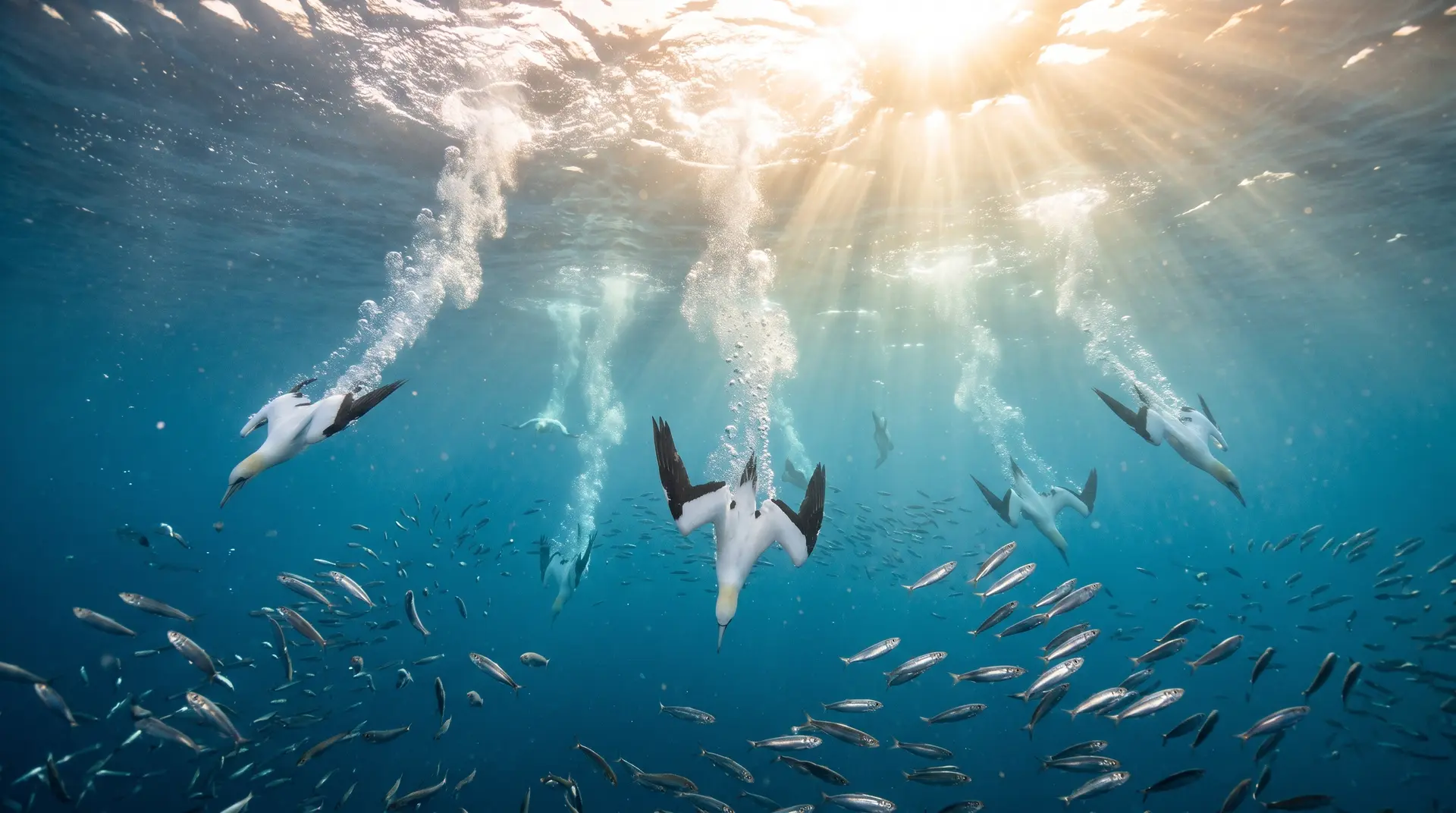
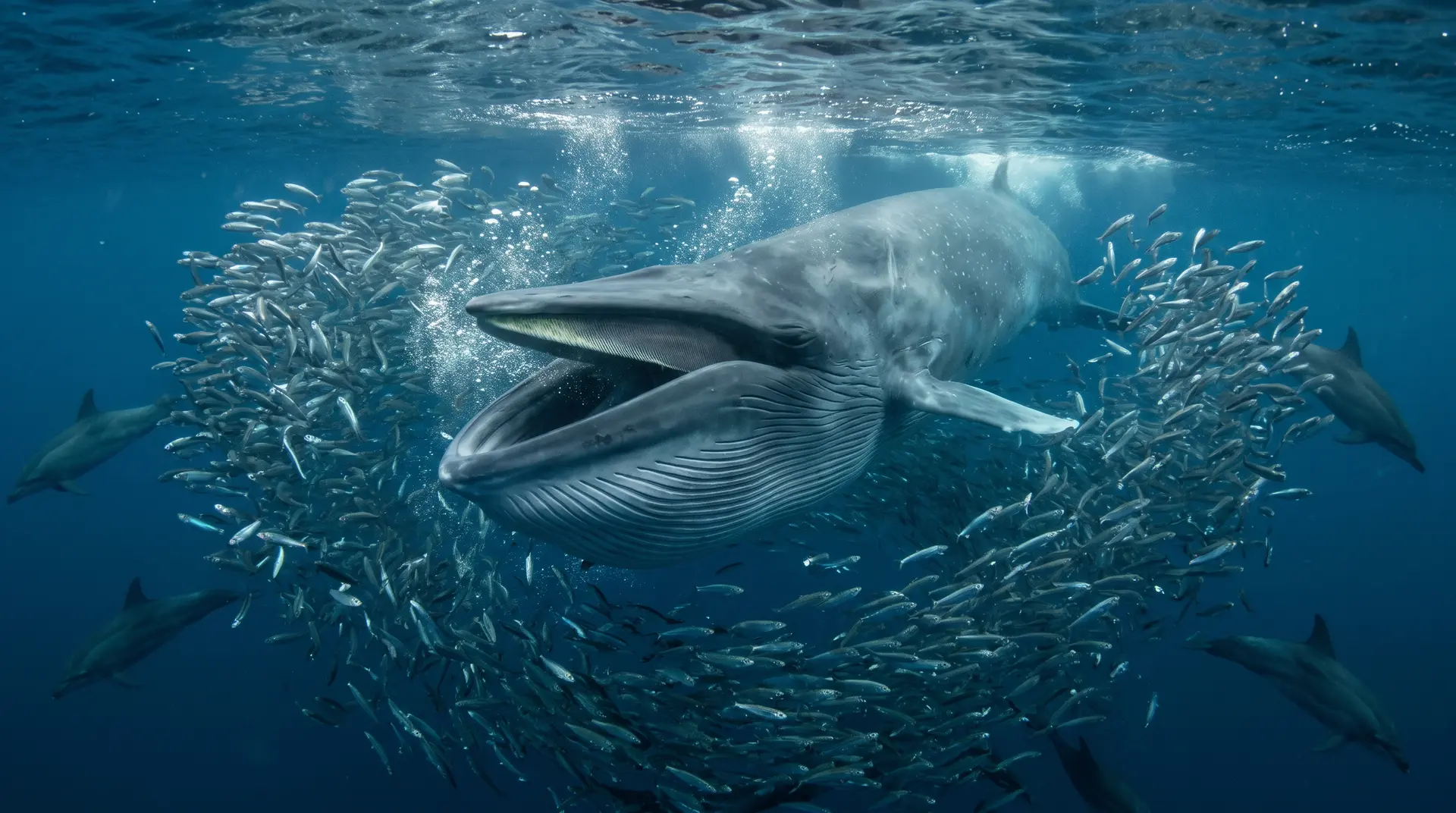
The run is driven from below. Long-beaked common dolphins, in super-pods that can number in the thousands, locate a shoal and carve off a section of it, herding the sardines upward. The surface acts as a wall. Pinned against it, the fish pack into a tight, spinning ball, usually 10 to 20 metres across, sitting in the top few metres of water. That is where the feeding happens: dolphins striking from the sides, copper sharks cutting through the middle, Cape gannets hitting the water from 30 metres up, and sometimes a Bryde's whale swallowing a whole section of the ball in one lunge.
All of it plays out within snorkel depth. You float at the surface, put your face in the water, and the entire food chain is right there. Divers who have done both will tell you the view from above, with gannet trails spearing down past you, is often better than the view from underneath.
The other reason is speed. Bait balls move. Dolphins push them along at pace, the ball drifts with current and panic, and the whole event rarely survives ten minutes. The boats chase, reposition, and drop swimmers again and again through the day. A snorkeler rolls off the pontoon and is on the action in seconds. A scuba diver needs assembled kit, a weight check, a controlled descent. By the time all that happens, the ball has usually moved 200 metres or dissolved entirely. This is why every experienced operator on the coast, including those who sell themselves on diving, runs the event snorkel-first.
Snorkelers often see more than scuba divers
This is the myth-busting part, so let's be direct about the mechanics. In-water time on the run is rationed by the animals, not by your air supply. The limiting factor is how fast you can get in, and how many drops you can do in a day. Snorkelers win on both counts. Over a 6 to 8 hour sea day the boat might reposition a dozen times; a snorkeler can take every single drop, while a scuba diver burns time and energy on kit for each one.
There is also a visibility argument. Wild Coast water conditions range from 2 or 3 metres of visibility to 30 on the good days. When visibility is average, the action concentrated in the top few metres is the action you can actually see. Descending 15 metres on a tank often just means watching silhouettes from below.
None of this means scuba is pointless, and we will get to when it earns its place. But if you picture the sardine run as a diving holiday with a snorkel option bolted on, you have it backwards. It is a surface ocean safari with a scuba option, used when the sea offers the right moment.
What the operators themselves say
Read the fine print on any established sardine run operator's site and you will find the same admission, usually buried in an FAQ: the trip is mostly snorkel-based and scuba happens at the skipper's discretion. We would rather put it in the headline, because it is the best news a non-diver could hear.
When scuba diving does come out
Sometimes the ocean hands you a different kind of bait ball. A ball gets pushed against a reef or simply settles, the predators fall into a steady rotation, and the whole system holds in one place. These stable, static balls are the exception rather than the rule, but when one forms it can run long enough to justify tanks. That is when the skipper makes the call, kit goes together, and certified divers drop down to sit beside the ball while sharks and dolphins work it.
It is a discretionary call every time. Sea state, current, how settled the ball looks, and who is on board all factor in. No operator on this coast can promise you a scuba drop in a given week, and any who does is selling you something the ocean has not agreed to.
Certification-wise, the market standard is Advanced Open Water, or Open Water with solid post-course experience. This is not gatekeeping for its own sake. A sardine run scuba drop is a blue-water descent with no reef reference, moving animals, current, and a live boat overhead. It is no place for a diver still working on buoyancy. If you are certified and current, bring your card and your logbook; if the moment comes, you want to be eligible for it.
Freediving: the sweet spot
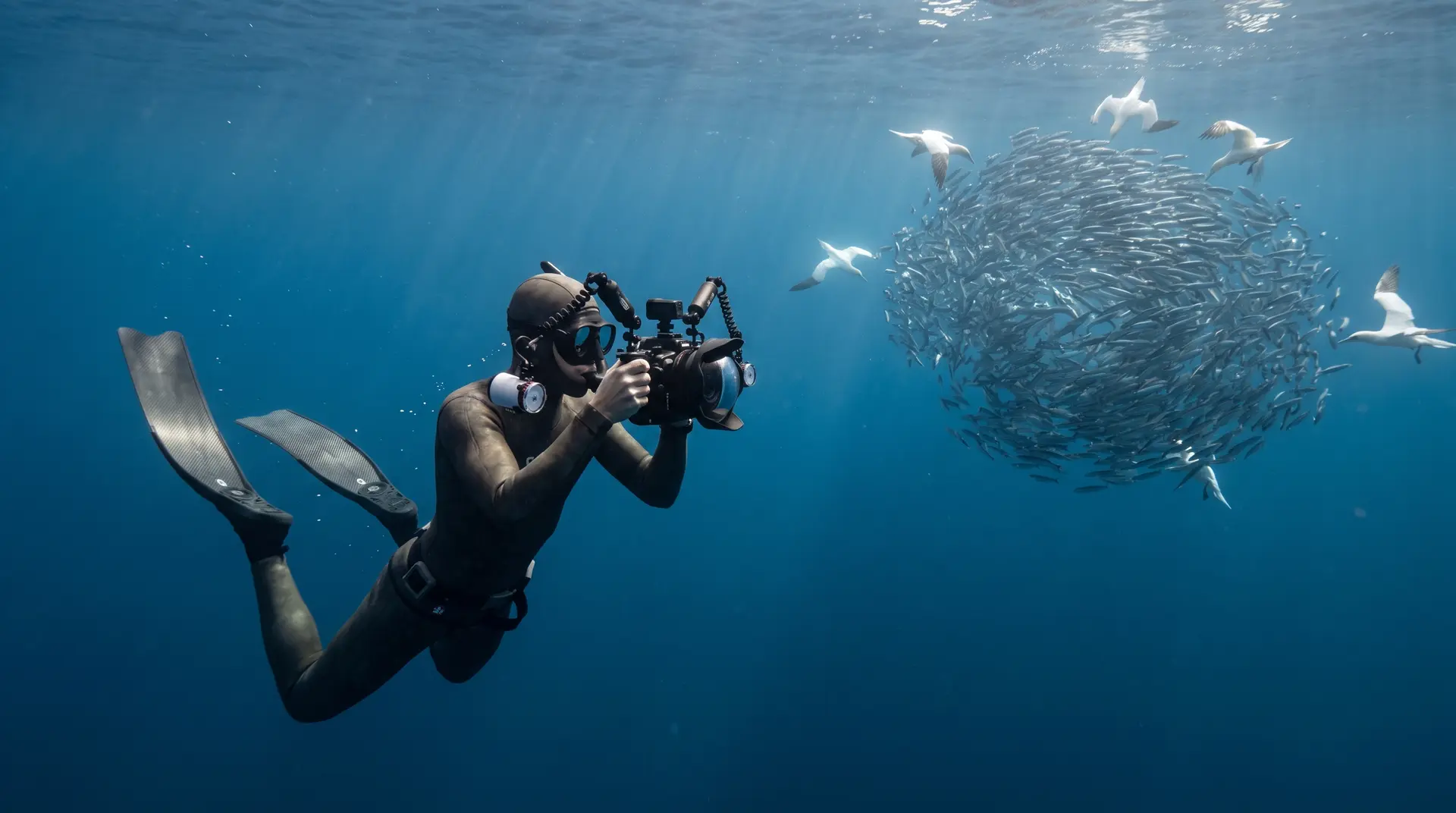
Between snorkel and scuba sits the discipline the run rewards most. A freediver gets the snorkeler's speed off the boat plus the ability to slip down 5 or 10 metres and hang level with the ball for the length of a breath. No bubbles, so the animals behave naturally around you. Most of the iconic sardine run photographs you have seen were shot exactly this way. You do not need a freediving certification to join, only comfort and competence. If you can duck-dive a few metres on a relaxed breath, you already have the core skill, and our fitness and preparation guide covers how to build on it in the months before your expedition.
The boat-based option: no swimming required
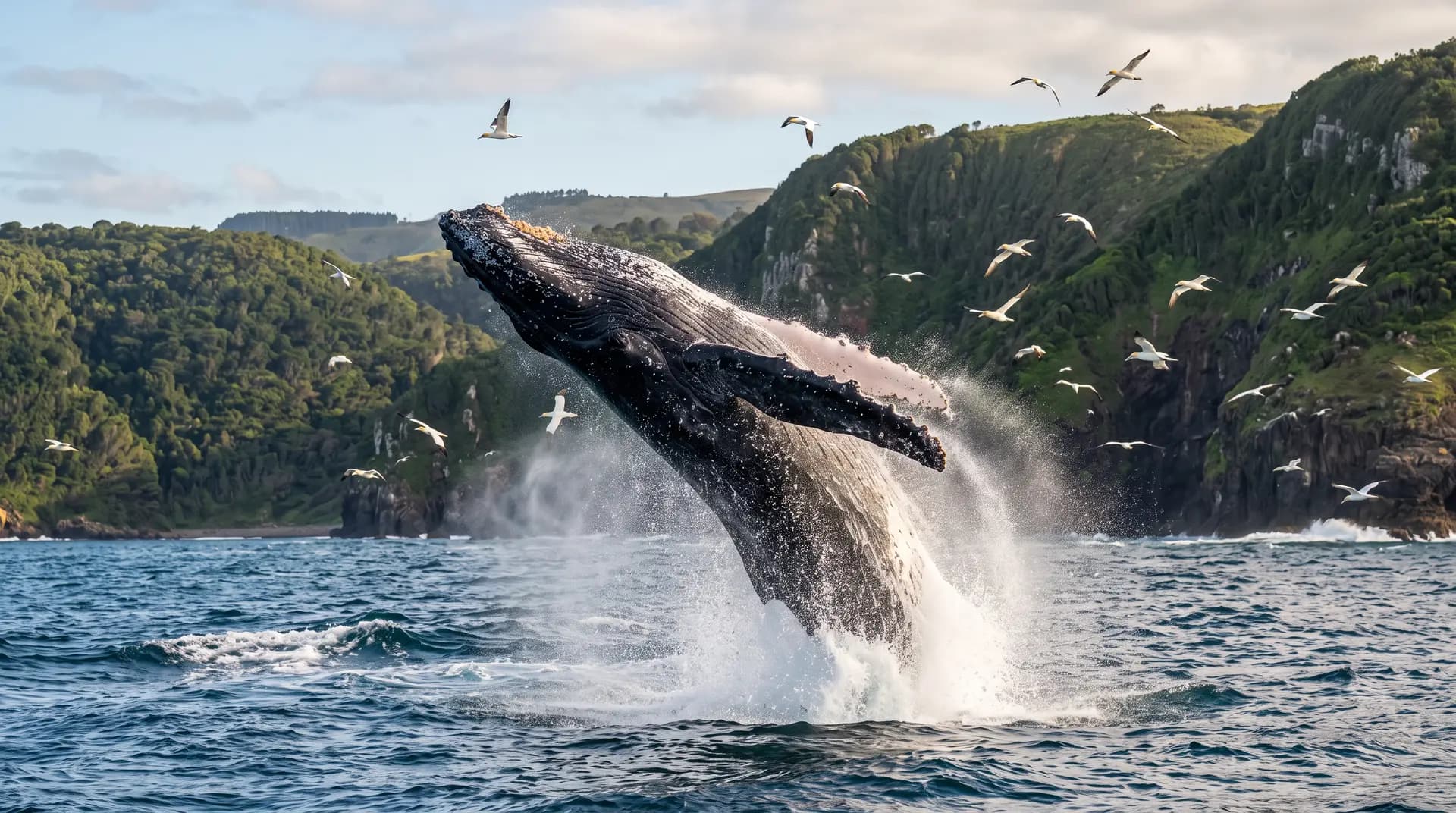
Plenty of the run's best moments never require you to leave the boat. Humpback whales are migrating north through the same water all season and are seen almost daily, sometimes breaching clear of the surface. Common dolphin pods stream past the bow in ribbons that take minutes to pass. Gannets rain down on a working shoal in the hundreds, a spectacle you hear as much as see. Bryde's whale lunges and shark activity at the surface are all visible from the pontoon of a RIB.
So a non-swimmer, or a partner who simply prefers to stay dry, can book the same expedition and spend the same 6 to 8 hours a day at sea as a boat-based observer. You share the boat, the briefings, the sightings and the stories. Several guests each season come precisely this way, often alongside a snorkeling partner. The full predator cast, from dolphins to orcas on the rare days they appear, is covered in our marine life guide.
One honest caveat: these are small boats, usually carrying 6 to 8 guests, working open winter ocean for hours at a time. Boat-based does not mean effortless. You will get wind, spray and swell, and seasickness medication is worth taking the night before. It does mean nobody in your party gets left on the beach for lack of a dive card.
Snorkel, scuba or boat-only: what each option asks of you
Here is the honest comparison, side by side. Note that everyone on the boat, in the water or not, needs moderate fitness for long days at sea, and in-water guests must be able to climb back onto a RIB unaided.
| Snorkeling | Scuba diving | Boat-based | |
|---|---|---|---|
| Certification | None | Advanced Open Water, or Open Water with experience | None |
| Swim ability | Confident in open ocean; strong surface swimming | Confident diver; blue-water descents | None required |
| How often it happens | Every workable sea day, multiple drops | Only on stable, static bait balls, at the skipper's discretion | Every sea day |
| What you see best | Bait balls, gannet plunges, dolphins, sharks at the surface | The ball from alongside or below, when conditions allow | Whales, super-pods, bird storms, surface feeding |
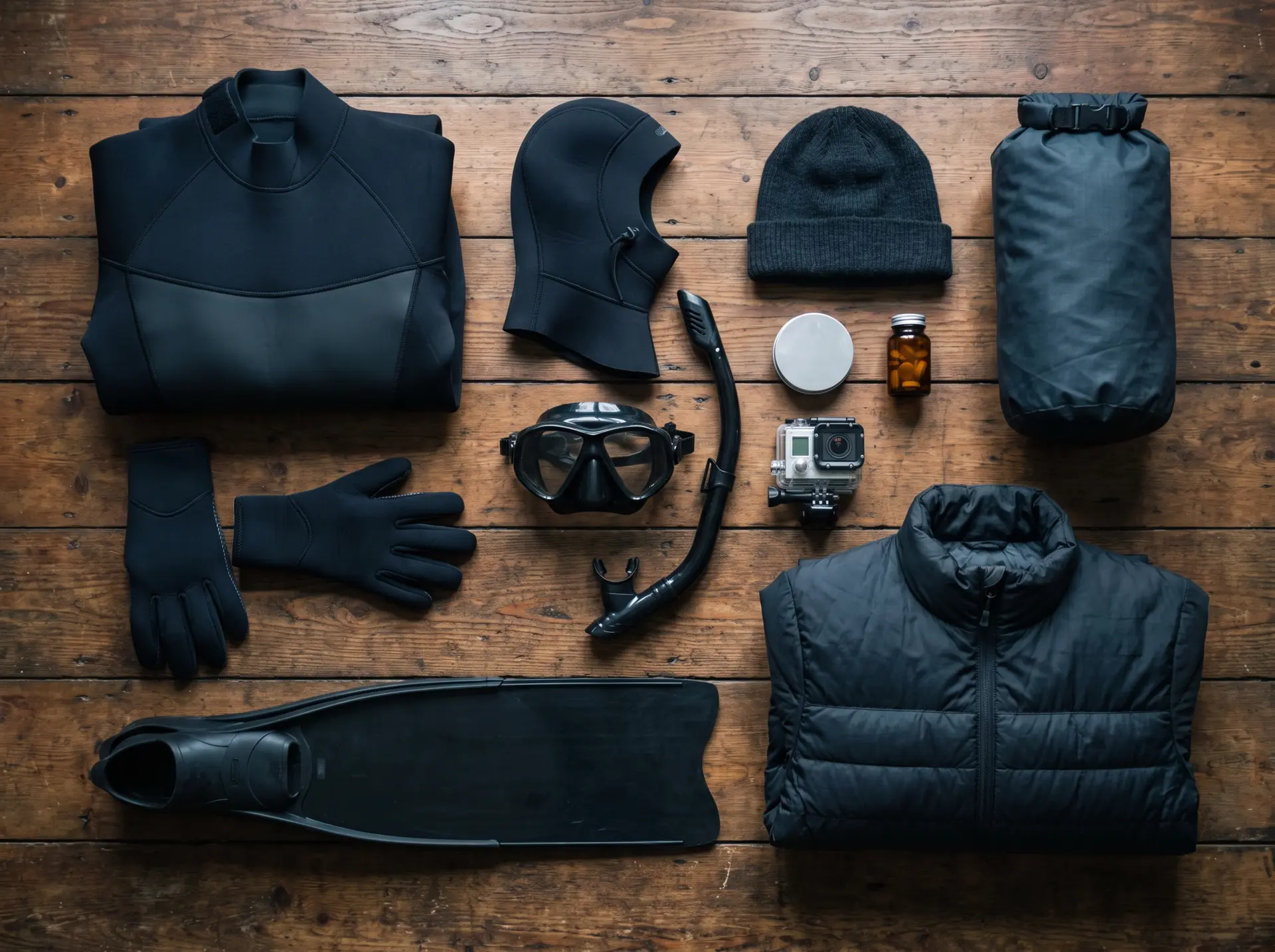
| Core gear | 5-7mm wetsuit, hood, gloves, long fins, mask and snorkel | As snorkel, plus full scuba kit (tanks and weights supplied) | Warm layers, windproof shell, sunscreen, seasickness tablets |
What you do need instead of a dive card
Dropping the certification requirement does not drop every requirement. The Wild Coast in winter is a working ocean, and the run asks three things of in-water guests.
The real entry requirements
- Open-water comfort. You will swim in deep blue water with no bottom in sight, in swell, sometimes near large animals. If a swimming pool is your ceiling, spend time in the sea before you come. Calm competence matters more than speed.
- Moderate fitness. Sea days run 6 to 8 hours with multiple fast entries and exits. You must haul yourself back onto the pontoon without a ladder and without help. It is very achievable for most active people, and a few weeks of swim training beforehand pays off on day one.
- Cold-water tolerance, properly dressed. Water runs roughly 14 to 21 degrees Celsius in season. A 5-7mm wetsuit with hood and gloves keeps snorkelers working all day. Our packing list covers the full kit, including what we can supply.
- The right attitude. This is a wild event. Nobody can guarantee a bait ball in any given week, and the guests who love the run are the ones who treat every super-pod, whale and bird storm as the trip, not as filler between bait balls.
How a no-tank sea day actually runs from Chintsa
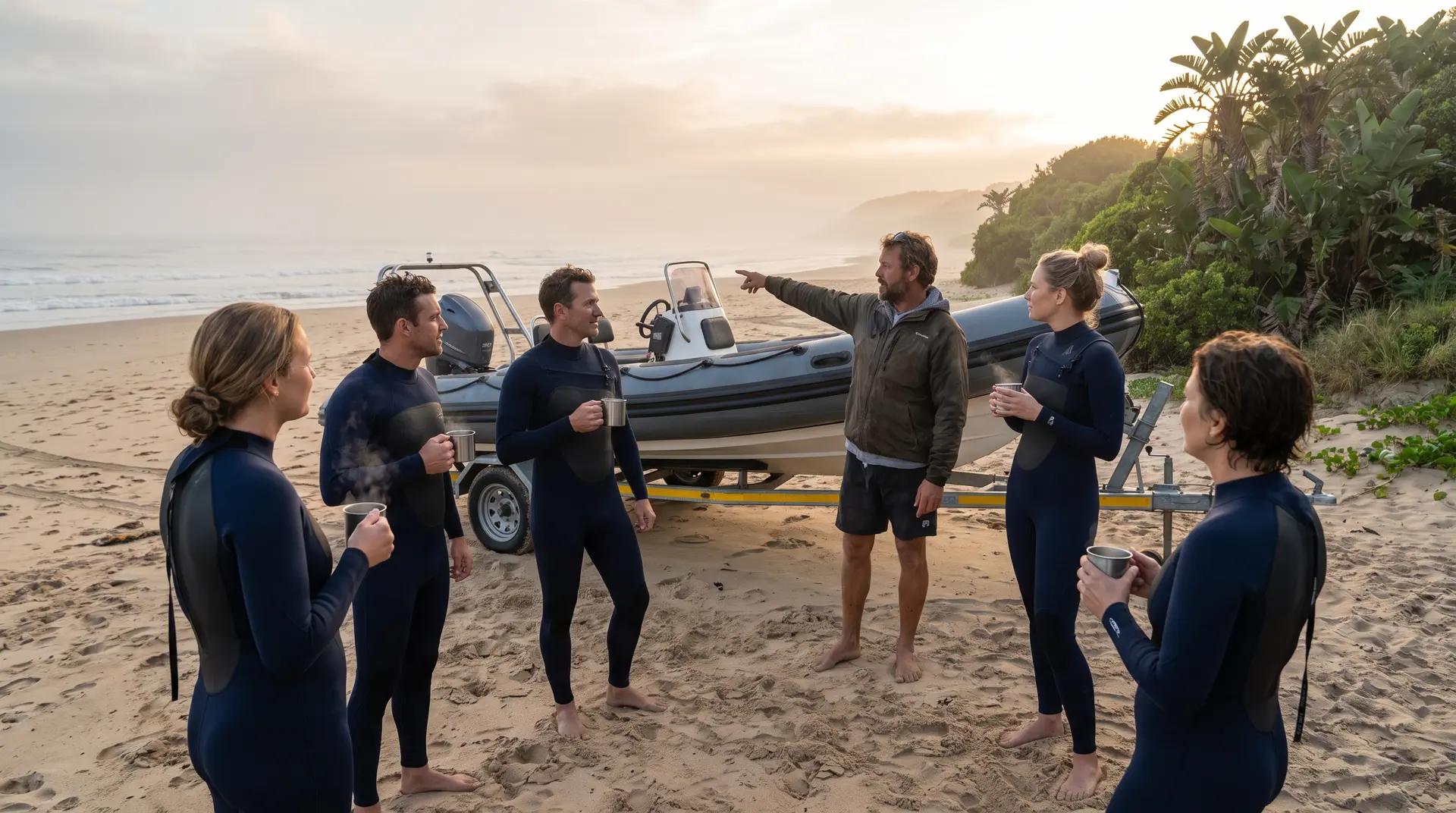
A typical day starts with an early beach launch, wetsuits on, kit checked the night before. The first hours are spent reading the water: bird activity on the horizon, dolphin pods, whale blows, and reports along the coast. When the signs line up, the boat runs to the activity and holds off while the skipper reads it. On his signal, snorkelers roll in as a group with the guide, watch the action for as long as it lasts, and climb back aboard when it moves. Then you do it again. And again. Lunch is eaten on the boat between drops.
Chintsa sits on the southern stretch of the run corridor, which meets the sardines in the early phase of the season, from May into June, before the fleet concentrates further north. Fewer boats on the water means more uncontested drops for the swimmers on yours. The full case for the southern Wild Coast is in our East London and Chintsa guide.
Our 7-day expeditions are built around this rhythm, with certified divers carrying cards for the static-ball days and everyone else needing nothing but a wetsuit and willingness. Dates and inclusions for the 2027 season are on the packages page. The 2026 season has just wrapped, and the early weeks for 2027 are the ones that go first.
Frequently asked questions
Can I do the sardine run if I have never scuba dived?
Yes, and you will not be at a disadvantage. Most in-water action happens at snorkel depth because dolphins pin the sardines against the surface, and bait balls rarely last ten minutes, which favours fast snorkel entries over scuba kit-ups. Scuba is only used on the occasional stable bait ball, at the skipper's discretion.
What certification do I need if I do want to scuba dive a bait ball?
The market standard is Advanced Open Water, or Open Water with meaningful experience beyond the course. Sardine run scuba drops are blue-water descents with current, moving animals and no reef reference, so skippers also weigh how current and comfortable you are, not just the card. Bring your certification card and logbook.
Is snorkeling the sardine run safe with sharks in the water?
Copper, dusky and blacktip sharks are focused on the sardines, and thousands of snorkelers have shared bait balls with them under guidance. You enter only on the skipper's signal, stay with the group and the guide, and follow instructions on positioning. Reputable operators run SAMSA-certified boats with oxygen and first aid on board.
Can a non-swimmer join a sardine run expedition?
Yes, as a boat-based guest. Humpback whales, common dolphin super-pods, gannet feeding frenzies and surface predator action are all visible from the boat, and whales are seen on most days in season. You need no swimming ability, just moderate fitness for 6 to 8 hour days on a small boat in winter conditions.
Do I need my own snorkeling gear?
Bring your own mask if you own one you trust, since fit matters more than anything else in cold water. The core kit is a 5-7mm wetsuit, hood, gloves and long fins; ask us what is included in your package and what is available to rent before you buy anything. A well-fitting open-cell suit is the single best investment for all-day comfort.
Is freediving experience worth having for the run?
It is the most useful skill you can bring. Even relaxed duck-dives to 5 metres let you hang level with a bait ball without bubbles, which is how most of the famous sardine run images were made. No freediving certification is required, and a few months of pool and open-water practice before a May departure makes a real difference.
Keep reading
No dive card. No problem. Book the 2027 run.
Our 7-day Chintsa expeditions are built snorkel-first, with scuba for certified divers when the ocean serves up a static ball and full boat-based seats for non-swimmers. The 2027 season runs May to July and the early southern weeks sell first. Tell us how you want to experience it and we will fit the expedition around you.
Boats carry small groups only, and prime weeks go 6-12 months out.