Field Guide
Sardine Run Water Conditions: Temperature, Visibility and Winter Seas
Updated 23 July 2026 · 9 min read · By the Sardine Run Africa crew
The sardine run only exists because the sea turns cold. Inshore water along the Wild Coast has to drop below roughly 21C before the shoals move, and the sardines themselves prefer 14-20C. In winters where the water stays warm, the run is weak or barely happens at all. So when you roll off the boat in June and the cold grabs your chest through 7mm of neoprene, that is not a design flaw of the trip. That temperature is the trigger for the whole event.
Most operators bury this in a FAQ somewhere below the drone footage. We would rather you book knowing exactly what the sea is going to do to you: water that ranges from bracing to properly cold, visibility that can swing from 2m to 30m inside a single week, winter cold fronts that will cost you the odd sea day, and a small boat that moves around a lot in open ocean.
None of that is a reason to stay home. It is the price of admission to the largest biomass migration on the planet, and every part of it is manageable with the right gear, the right expectations and a base with real options on land. This guide covers all of it, straight.
Sardine Run Water Temperature: Why the Cold Is the Point
The Agulhas Current runs warm and fast down South Africa's east coast. Sardines are cool-water fish; they cannot follow the coast north through that warm water. What opens the door each winter is a band of cold counter-currents and upwelling inshore of the Agulhas, a corridor of 14-20C water hugging the coastline. The shoals pour into it, and the predators follow. If you want the full mechanism, read why the sardine run happens.
The threshold that matters is about 21C. Above it, the corridor closes and the fish hold back or stay deep. This is why honest operators talk about water temperature before they talk about bait balls: a cold, uncomfortable June is a promising June. The warm years are the ones that produce thin seasons, and the KwaZulu-Natal end of the run has weakened noticeably since the early 2000s as coastal waters have warmed.
In practice, expect anything from 14C to 21C during the May-July season, and expect it to shift day to day as upwelling pulses move through. Air temperature over the water sits in a similar 14-21C band in winter, which is milder than most northern-hemisphere visitors expect, but wind chill on a moving boat in wet gear is a real factor.
| Factor | Typical range | What it means for you |
|---|---|---|
| Water temperature | 14-21C | 5-7mm wetsuit with hood and gloves; the run needs water below ~21C |
| Air temperature | 14-21C | Winter, but mild; thermals and a windproof shell for the boat |
| Visibility | 2-30m | Changes fast with swell, runoff and plankton; blue days do happen |
| Hours at sea | 6-8 per day | Long days on a RIB; food, water and warm layers come with you |
| Launch time | Roughly 06:30-08:00 | Early starts to use the calmer morning window |
Visibility: 2 Metres to 30 Metres, Sometimes in the Same Week
Nobody can promise you visibility on the Wild Coast, and anyone who does is selling something. The honest range is 2-3m on a bad day to 30m on a great one. Both extremes are normal within a single season, and the swing between them can happen in 48 hours.
Three things drive it. First, river runoff: heavy rain in the catchments pushes brown freshwater plumes out of the river mouths, and the inshore band goes murky until it disperses. Second, swell: a big winter swell stirs sand and sediment along the coast, and the water needs a couple of calm days to settle. Third, plankton: the same cold, nutrient-rich upwelling that brings the sardines also feeds blooms that can put a green haze in the water column.
The useful news is that visibility usually improves as you move offshore, away from the surf zone and river mouths, and the action is often out there anyway. Skippers read the colour lines from the boat and the spotters read them from above, so on a mixed day you fish for clean water the same way you fish for birds. A 10m day with a working bait ball beats a 30m day with empty blue water every single time.
Wild Coast Sea Conditions in Winter: Fronts, Swell and Weather Windows
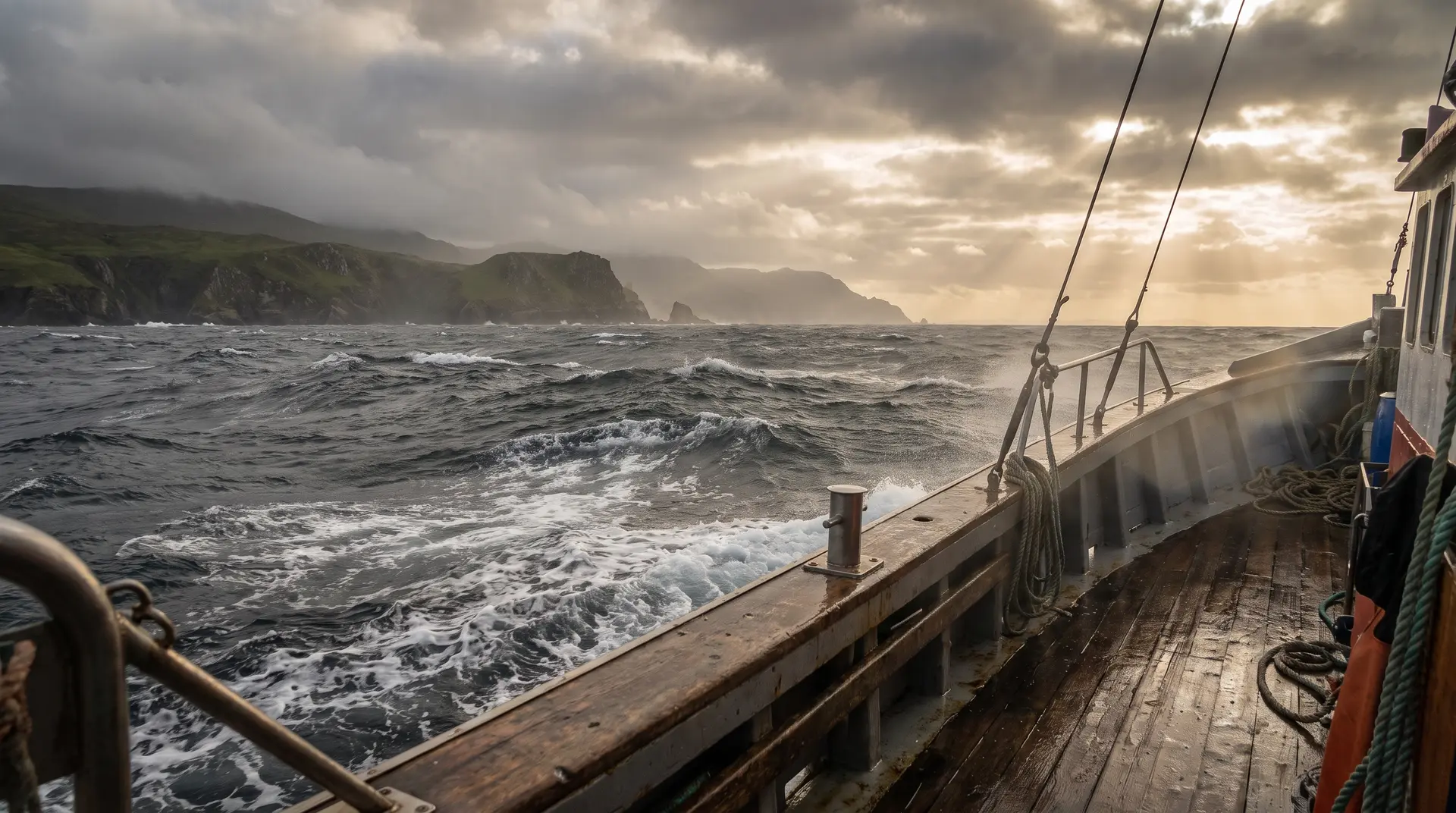
Winter on this coast runs on a cycle of cold fronts. A front tracks up from the Cape, brings wind and pushes up the swell for a day or two, then moves through and leaves a window of lighter wind and settling seas behind it. Then the next one arrives. The whole season is a rhythm of windows and blowouts, and expedition planning is the art of being on the water when the windows open.
This is the single best argument for booking a full week rather than a long weekend. The run moves in pulses and the weather moves in cycles, and you need enough sea days for the two to line up. The market consensus of a five-sea-day minimum exists for exactly this reason. Our 7-day format is built around it, with the season timing chosen to match when the cold corridor opens on the southern Wild Coast.
It also means a blown-out day is not a failure of planning. It is a known cost of operating in the Wild Coast winter, priced into every serious expedition on this coastline. What separates operators is not whether blowouts happen but what your day looks like when one does, which is covered below.
Launch Windows and What a Sea Day Looks Like
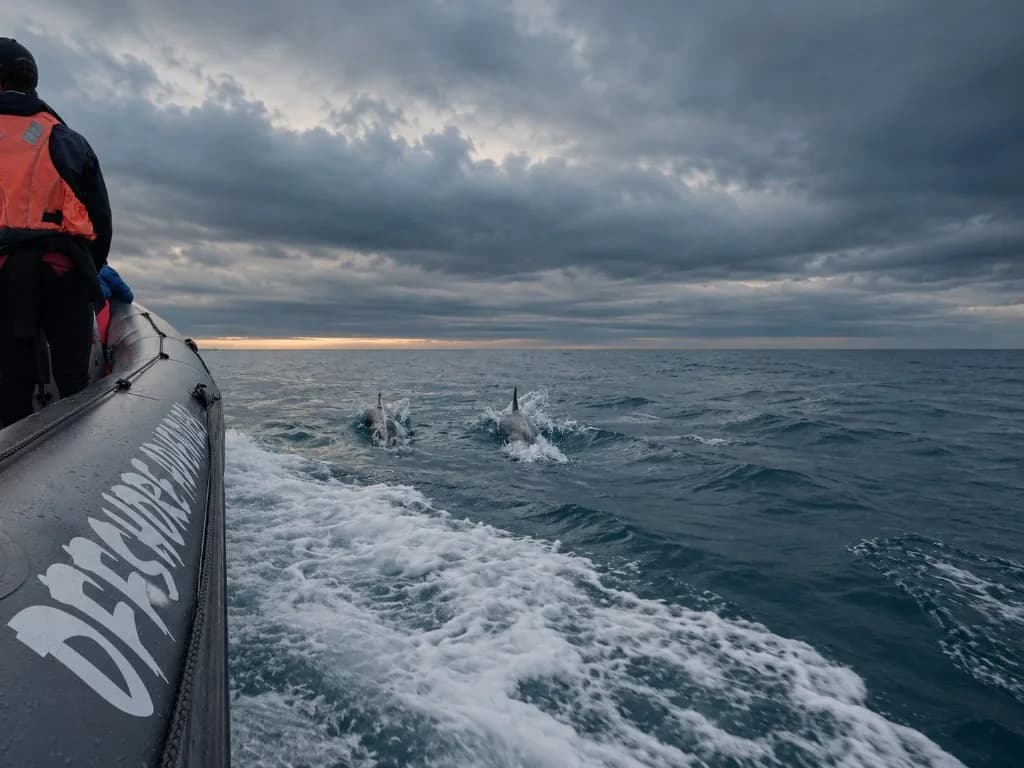
Sea days start early. Launches across the sardine run fleet go out between about 06:30 and 08:00, because mornings are usually the calmest part of the day and because the first feeding activity often kicks off with first light. From Chintsa the RIB goes off the beach, you push through the surf zone, and then it is 6-8 hours of running and watching, dropping on activity when the spotters or the birds give it away.
The skipper makes the launch call each morning based on wind, swell and the forecast for the day, not just conditions at the beach. A day that looks marginal at 06:00 can be workable by 08:00, and a flat morning can close out by afternoon; the crew manages that in real time. When the call is no, it is no. Nobody puts a boatload of guests through a surf launch into a sea that will not be workable an hour later.
Chintsa's position on the southern Wild Coast means you are fishing the early phase of the run, when the action sits in the Gqeberha-East London zone before shifting north. Fewer boats work this stretch than the Port St Johns fleet mid-season, which matters when a bait ball forms and lasts less than ten minutes. More on the home-turf case in our East London and Chintsa guide.
Blown-Out Days: The Industry Standard, and the Chintsa Difference
First, the part nobody likes saying out loud: across the entire sardine run industry, sea days lost to weather are not refunded. That is the standard from Port St Johns to Mpame to here, and any operator who implied otherwise would not survive a bad-weather season. You are buying an expedition in the Southern Hemisphere winter, and some weather risk transfers to you.
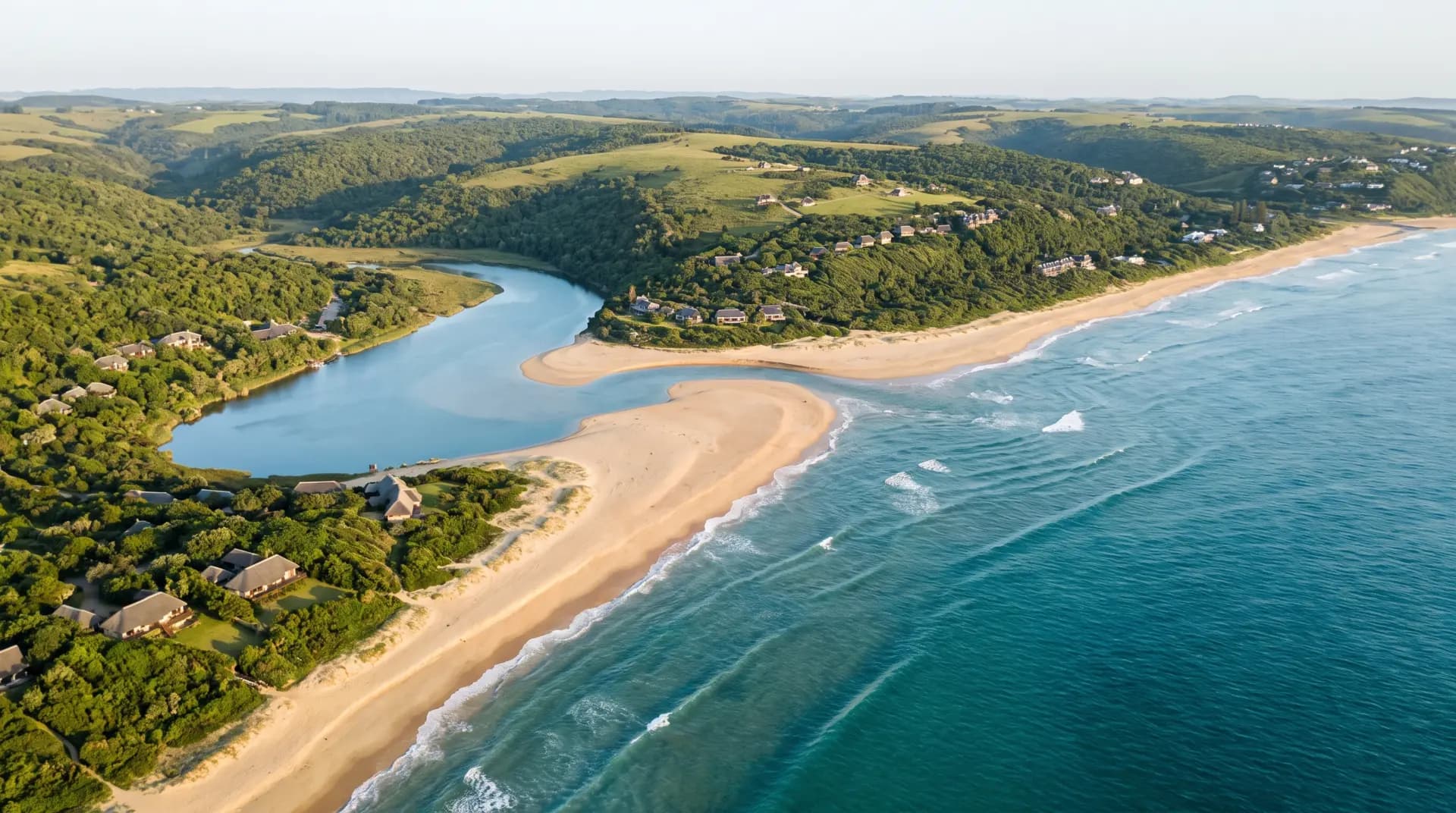
What you can control is where you sit out the blow. This is where base choice gets real. The remote Wild Coast lodges are spectacular on sea days and very quiet on land days; there is only so much time you can spend watching rain on a river mouth. Chintsa is a functioning holiday village 40 minutes from an airport city, and a blown-out day here has an actual programme.
How many days should you expect to lose?
There is no honest fixed number; it depends entirely on the front cycle in your week. Some weeks run five for five. Others lose a day or two. Build your mindset around a 7-day trip where most days are sea days and the odd one is not, and plan anything unmissable (flights, connections) with a buffer rather than against the last possible day. The full land-day options are in the Chintsa travel guide.
What a Chintsa land day can look like
- A game drive at Inkwenkwezi, the private reserve a short drive from the village
- Horse rides and long walks on Chintsa's beach, which is still there even when the sea is too rough to launch
- Hiking trails through coastal forest and dune systems around the village
- A local brewery, cafes and restaurants within minutes, not hours
- Gear sorting, camera work and briefing sessions with the crew, so the next sea day starts sharper
Seasickness: The Unglamorous Reality
Small boat, open ocean, winter swell, 6-8 hours out. If you are prone to motion sickness, the sardine run will find you, and pretending otherwise helps nobody. Plenty of experienced divers who have never been sick on a liveaboard get caught out by a RIB sitting in swell while everyone watches the horizon for gannets.
The good news is that it is largely manageable. Take a non-drowsy motion sickness tablet the night before your first sea day and again with breakfast, before you feel anything. Eat a proper breakfast; an empty stomach makes it worse, not better. On the boat, keep your eyes on the horizon, stay out in the airflow, and tell the crew early if you start feeling rough. Being in the water often helps, since your inner ear stops fighting the boat's motion.
Most people who medicate properly and eat sensibly are fine, and many find they adapt over the first day or two at sea. Pack more tablets than you think you need; they are on the expedition packing list for a reason, and pharmacies in East London stock the local options if you run short.
Take the tablet before you need it
Motion sickness medication works as prevention, not cure. Once you are already sick on the boat, a tablet will do very little. Dose the night before and again at breakfast on every sea day until you know how your body handles the swell.
Dressing for 14-21C Water
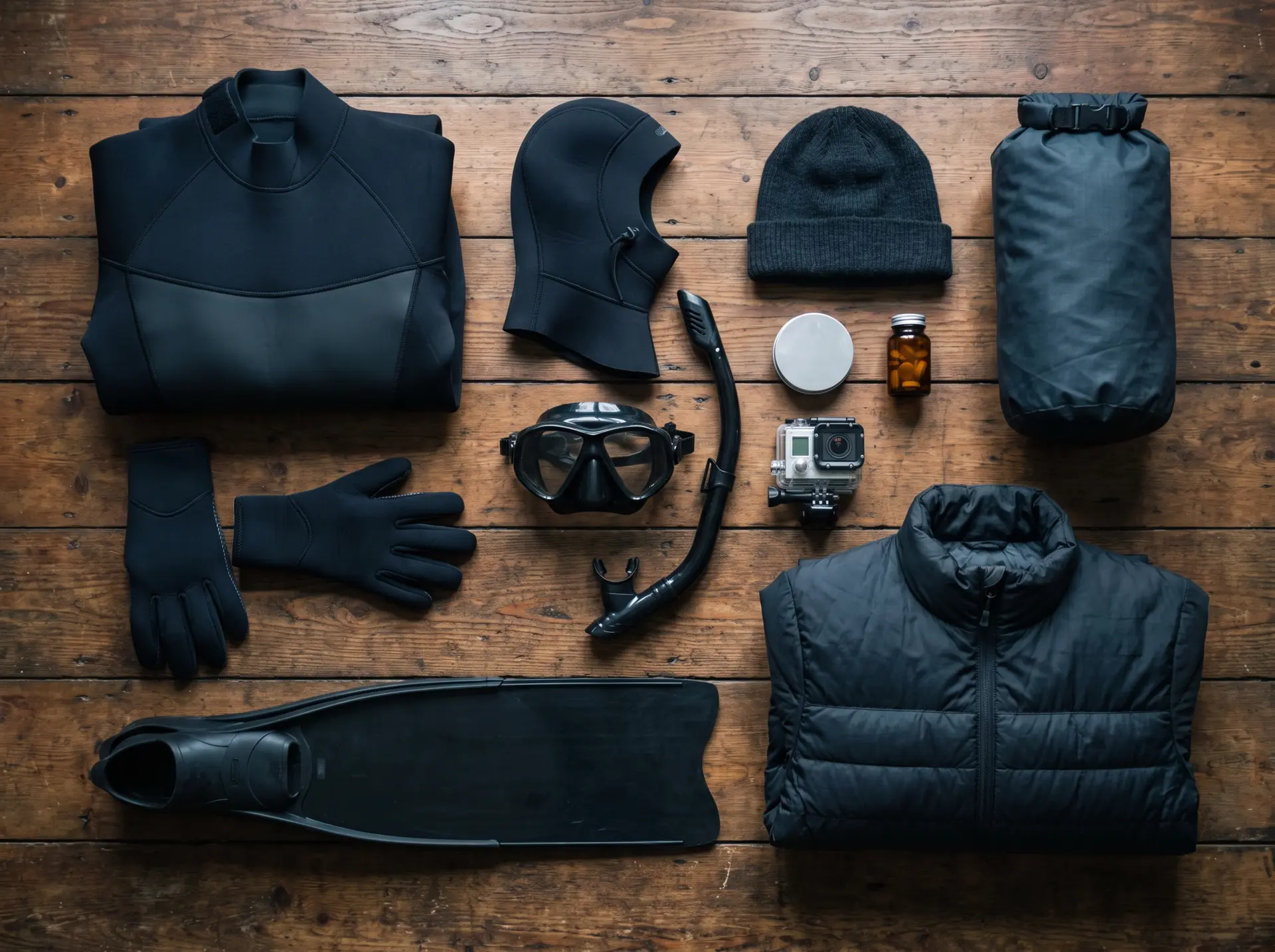
The standard kit is a 5-7mm wetsuit with a hood and gloves, and it is not optional at the cold end of the range. You will be in and out of the water repeatedly rather than doing one long immersion, which means wind chill between drops does as much damage as the water itself. Thermals under a windproof shell, a beanie and something warm to drink turn the boat time from an endurance test into a comfortable stakeout.
If you only own a 3mm tropical suit, hire or buy thicker for this trip; shivering guests call their day early and miss the late-afternoon action. Cold, managed properly, fades into the background within minutes of a dolphin super-pod showing up. Cold managed badly is the whole story of your day. Full gear specifics, including fins, mask and camera considerations, are in the packing list guide, and our 7-day expedition packages set out exactly what equipment is included so you know what to bring and what to leave at home.
Frequently asked questions
How cold is the water during the sardine run?
Between 14C and 21C, moving day to day as cold upwelling pulses shift along the coast. The cold is not incidental: the run only happens when inshore water drops below roughly 21C, so a cold season is a good season. A 5-7mm wetsuit with hood and gloves is the standard response.
What is the visibility like on the Wild Coast in winter?
Anywhere from 2-3m to 30m, and it can swing across that range within a week. River runoff after rain, sediment stirred by big swell and plankton blooms are the main drivers. Visibility generally improves offshore, away from the surf zone and river mouths, which is where the boat spends most of its day anyway.
Is the water warmer in May or in July?
There is no reliable month-by-month gradient you can plan around; temperature is driven by upwelling pulses and the front cycle rather than the calendar. Any week in season can serve up 14C or 20C water. Pack for the cold end of the range regardless of your dates.
Do you go to sea every day of the expedition?
The intention is yes, and the skipper makes a call each morning on wind, swell and forecast. Winter cold fronts mean some days are not workable, and across the whole industry weather days are not refunded. This is exactly why a week-long format with five or more potential sea days is the sensible minimum.
What happens if the sea is blown out for two days in a row?
You get land days, and Chintsa is one of the few sardine run bases where that is a feature rather than a sentence. Game reserves, beaches, hikes and the village itself are all on the doorstep, and the crew uses down days for briefings and gear work. Remote Wild Coast bases have far fewer options when the wind blows.
I get seasick easily. Should I skip the sardine run?
Not necessarily, but go in prepared. Non-drowsy medication taken the night before and at breakfast, a proper meal and time watching the horizon manage it for most people, and many adapt within the first day or two. If you are severely susceptible even with medication, be realistic: this is 6-8 hours a day on a small boat in ocean swell.
Keep reading
Cold water, straight answers, 2027 dates
If you have read this far and the 16C water still sounds like a fair trade for bait balls, you are our kind of guest. The 2026 season has just wrapped and 2027 expedition weeks from Chintsa are open for enquiry now. Tell us your dates and experience level and we will tell you, plainly, what conditions to expect.
Boats carry small groups only, and prime weeks go 6-12 months out.