The Science
Why Does the Sardine Run Happen? The Science
Updated 23 July 2026 · 11 min read · By the Sardine Run Africa crew
Here is the puzzle at the centre of the sardine run: it is a cold-water event happening along a warm-water coast. The dominant force off South Africa's east coast is the Agulhas Current, a broad band of warm water flowing south-west. Sardines are cool-water fish. They favour the sea between about 14 and 20 degrees and will not push through a warm barrier. By rights they should have no business this far up the coast at all. For a few weeks each winter they do exactly that, and working out why is what this guide is about.
The short version is settled science. In winter a corridor of cold water opens close inshore, held between the beach and the warm Agulhas offshore. Once inshore temperatures fall below roughly 21 degrees the door is open, and billions of Southern African pilchards follow the cold north along the Eastern Cape. The harder questions are not settled at all. Why the fish commit to the journey, and why some years the whole event barely materialises, are still argued over by the researchers who study it.
What follows is the oceanography that opens the corridor, the leading ideas about why the sardines move, the reasons a season can fail, and the sensory biology that turns a mass of fish into the flashing bait balls people travel across the world to photograph. Much of it is still under active study. That uncertainty is not a weakness of the story. It is a large part of why the run is worth chasing.
Sardines are built for cold water
Start with the fish, because its biology explains the whole route. The Southern African pilchard, Sardinops sagax, is a cool-water animal. It grows to about 25cm, lives around five years, and filter-feeds on the plankton that blooms in cold, nutrient-rich seas. Warm tropical water is not just uncomfortable for it. It is close to a wall the fish will not cross.
That preference is why the population is centred on the cool, productive shelf of the southern Cape. The sardines spawn on the Agulhas Bank, the wide shallow shelf off the southern coast, during the southern summer, where a single female can release up to around 27,500 eggs. The young grow in that cool water and build into the vast schools that later move up the east coast. So the run is not a random wander. It is a cool-water fish doing what a cool-water fish does: staying in water it can tolerate, and moving when a cool path appears.
Keep that temperature band in mind, roughly 14 to 20 degrees preferred, with an upper limit near 21. Almost everything about the timing, the route and the failures of the run comes back to that narrow window. The water conditions on the run are not background detail. They are the whole mechanism.
The Agulhas Current: the warm wall
The Eastern Cape coast is, for most of the year, too warm for a big sardine presence. The reason is the Agulhas Current, which carries warm water down the east coast from the tropics towards the Cape. It is one of the major warm currents of the southern hemisphere, and it hugs the edge of the continental shelf as it flows.
For a cool-water fish, a warm current running the length of the coast is a barrier, not a highway. It sits offshore like a wall of the wrong temperature. Left to the Agulhas alone, the sardines would stay on the cool Cape shelf and never make the northward journey that draws the dolphins, sharks, whales and gannets people come to see.
The run happens because, in winter, the Agulhas stops being a continuous wall right at the coast. A gap opens between the warm current offshore and the shoreline, and that gap is cold. Understanding how that gap forms is the key to the whole phenomenon.
How winter opens a cold corridor
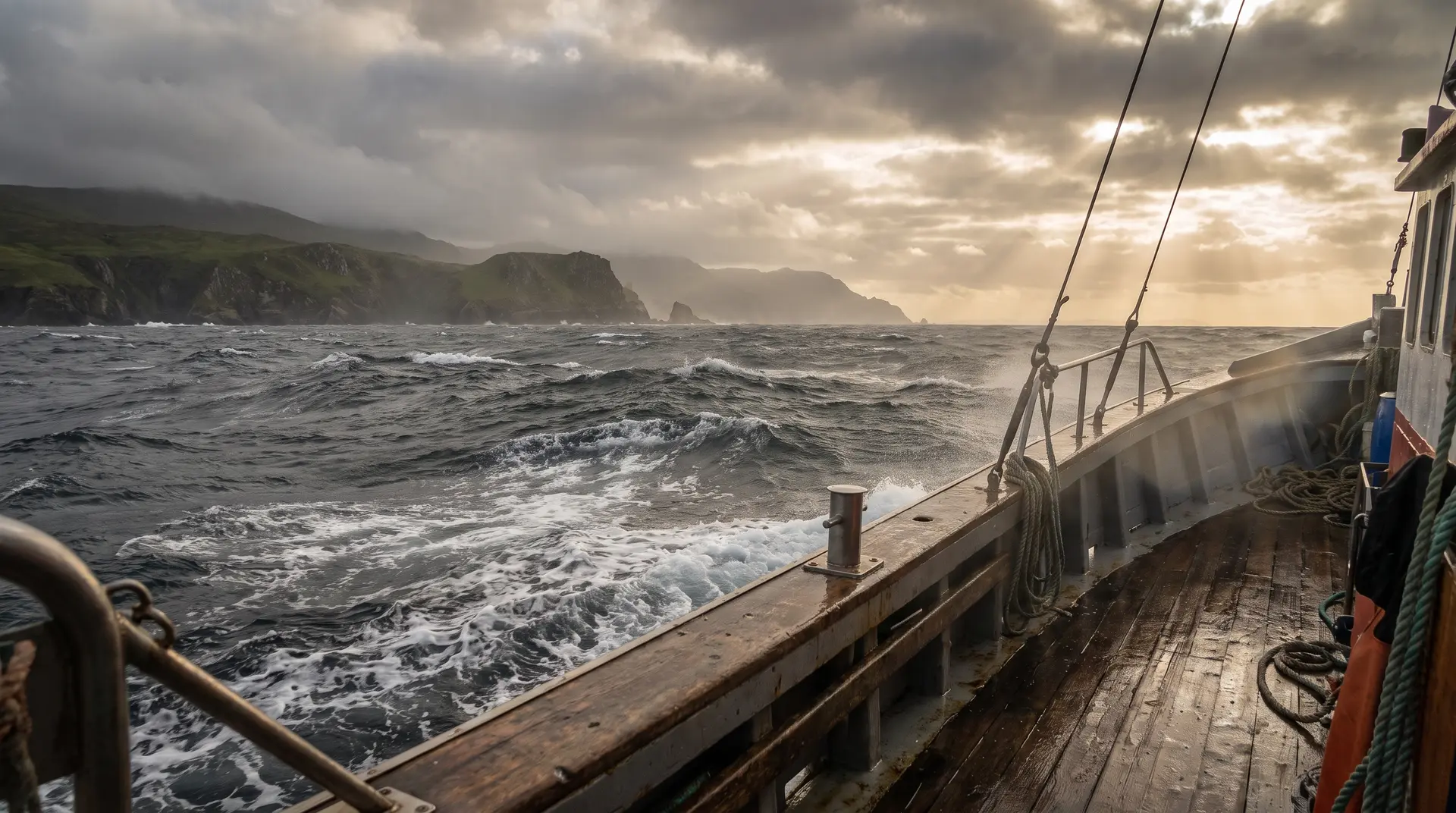
In winter, cooler water forms close to the coast, inshore of the warm Agulhas. Two things drive it. Upwelling brings cold, nutrient-rich water up from depth close to the shore, and cooler counter-currents move against the main Agulhas flow near the beach. Together they build a narrow band of cold water along the coast, pressed between the land and the warm current further out.
That band is the corridor. When the inshore water drops below about 21 degrees, it becomes cool enough for the sardines to travel through, and the shoals push north along the shelf inside it. The corridor is often thin, sometimes only a few kilometres wide, which is why the run tracks the coast so closely and why boats work in relatively close to shore.
Geography then concentrates the action. Where the continental shelf narrows and pinches in towards the coast, the cold corridor and the fish inside it are squeezed tight against the land, and so are the predators. That is why certain stretches of the Wild Coast have a reputation as reliable choke points. The full route the run follows traces how the corridor and the shelf shape the journey from the Agulhas Bank northward.
| Ingredient | What it does |
|---|---|
| Agulhas Current (offshore) | Warm south-flowing water the sardines avoid; forms the outer wall of the corridor |
| Inshore upwelling | Lifts cold, nutrient-rich water from depth close to shore, cooling the inshore band in winter |
| Winter counter-currents | Cooler water moving against the Agulhas near the beach, reinforcing the cold band |
| The ~21°C threshold | Once inshore water falls below about 21°C the corridor is cool enough for sardines to move through |
| A narrowing shelf | Where the shelf pinches close to land, the cold band and the fish are funnelled tight against the coast |
Why do they run? The reproductive-movement hypothesis
The corridor explains how the sardines can travel north. It does not fully explain why they bother. This is where the settled science thins out and the hypotheses begin.
The leading idea is that the run is a seasonal reproductive movement by a distinct, cool-water-adapted portion of the population. On this view the east-coast winter shoals are not the whole Sardinops population wandering, but a subgroup following spawning-related cues along the cold corridor when it opens. The movement lines up with the reproductive cycle and with the cool water these fish are built for, which is why researchers lean towards a breeding-linked explanation rather than a simple feeding trip.
Other threads run alongside it. Some work treats the run as temperature-tracking behaviour, the fish simply following water in their preferred range as it shifts. There is also a long-running question of whether the run is partly a relic, a behaviour better suited to cooler climatic periods in the past than to the ocean today. These are not competing certainties. They are overlapping attempts to explain an event that does not give up its reasons easily, and the honest position is that no single hypothesis has closed the case.
Why some years barely happen
If the run depends on a cold corridor, then the run depends on the cold. In years when the inshore water stays too warm, the corridor never properly opens, and the shoals do not commit to the journey. The result is a weak run or, in the worst cases, one that barely appears. This is not rare bad luck. It is built into a temperature-driven event.
The pattern is clearest at the northern end. The KwaZulu-Natal leg of the run has weakened noticeably since the early 2000s, with several poor or absent seasons, and warm inshore water is the usual suspect. A warming ocean is a documented pressure on the whole phenomenon, which is why the long-term future of the run is a genuine research and conservation question rather than a marketing line.
For anyone planning a trip, this is the single most important thing the science tells you. You are booking a wild, weather-driven event, not a fixture. The marine life you are likely to encounter turns up across the season, but the bait balls themselves depend on the water doing what it usually does and sometimes does not.
Why no honest operator guarantees bait balls
The run is driven by inshore water temperature, wind and current. Warm years produce weak or failed runs, and the KwaZulu-Natal leg has been unreliable since the early 2000s. Reputable operators sell the expedition and the season, not a specific sighting. You raise your odds with more days at sea, a good spotter and a fast boat, not with a promise.
The flash: lateral lines and shoaling
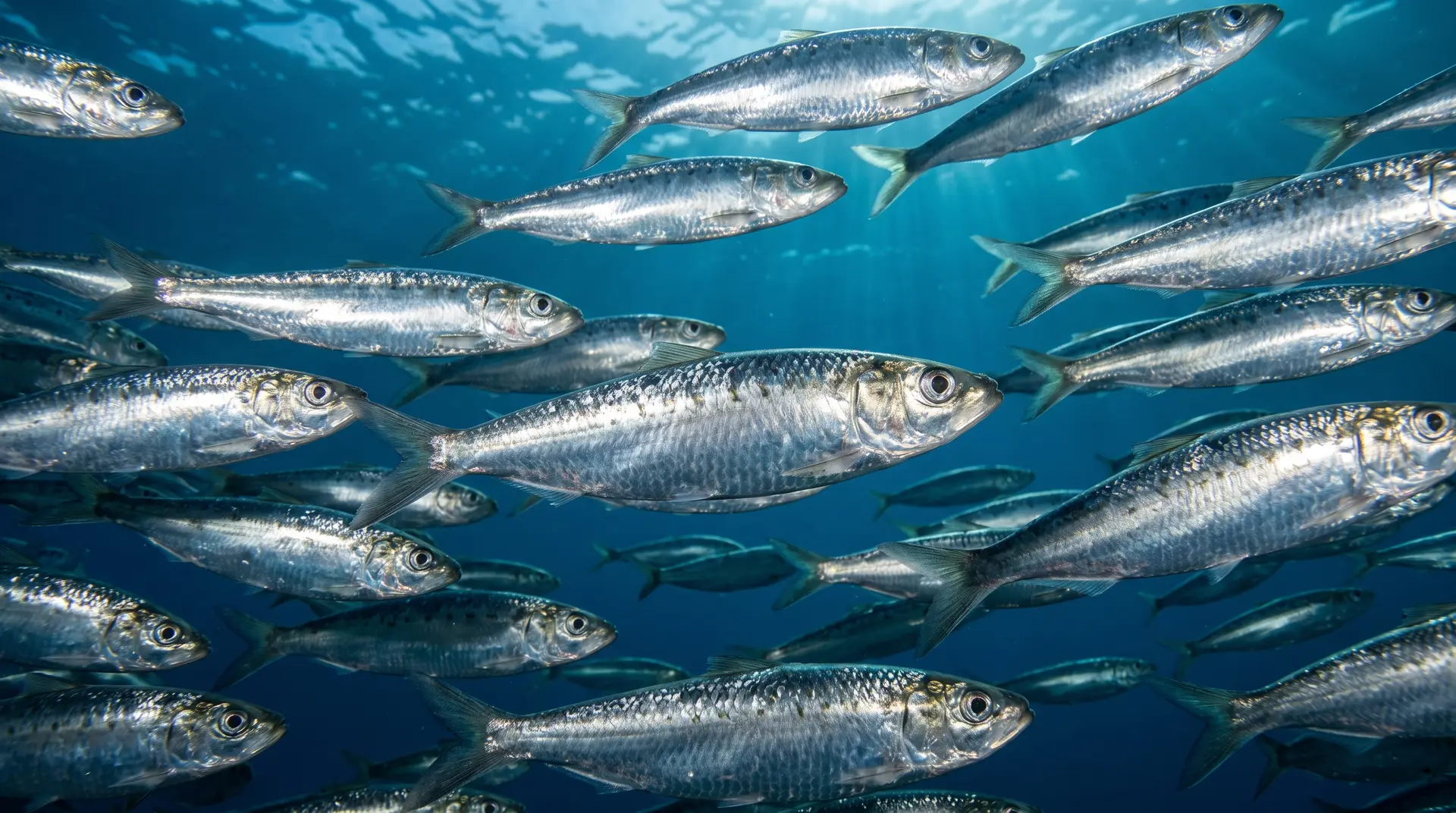
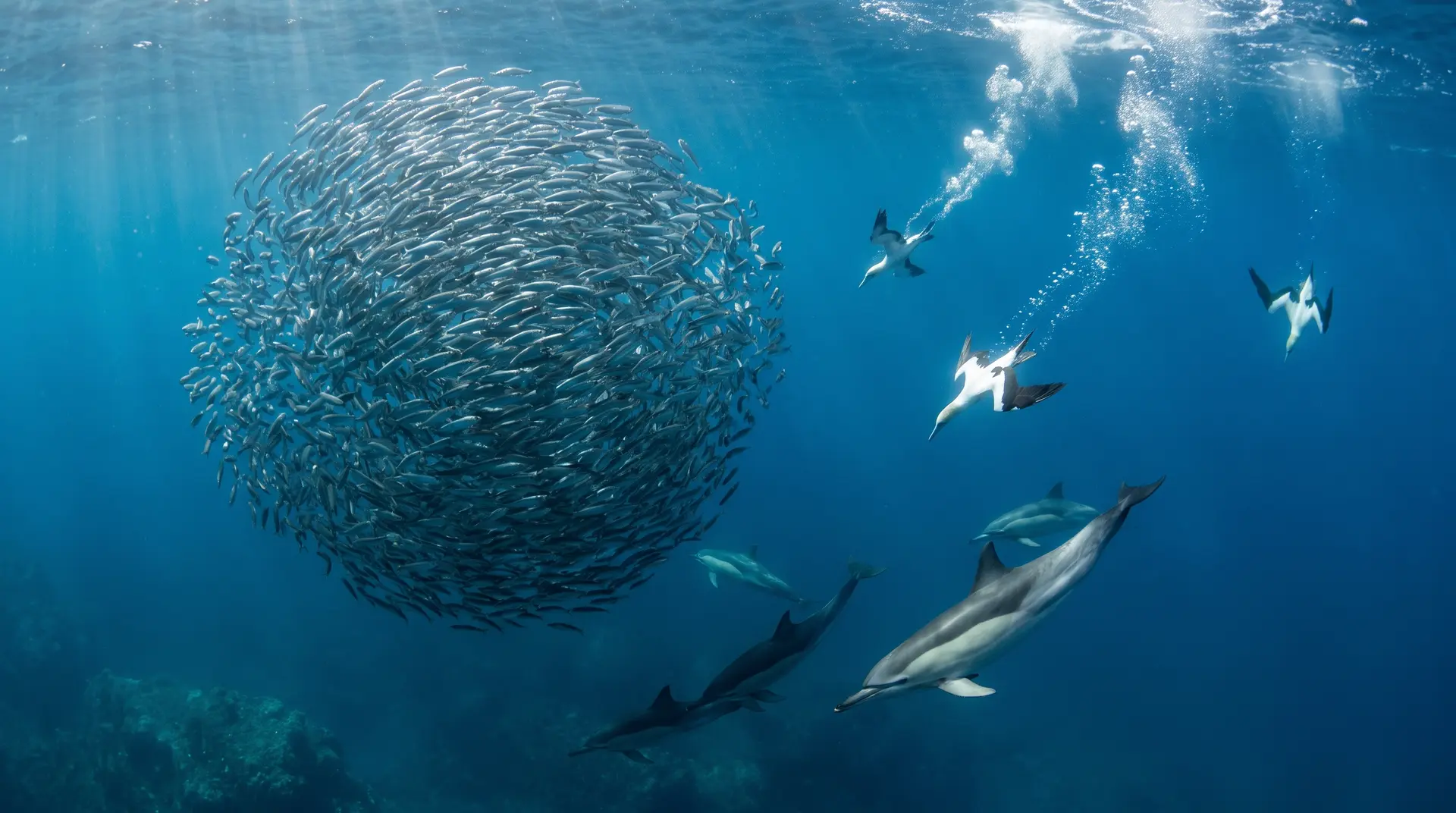
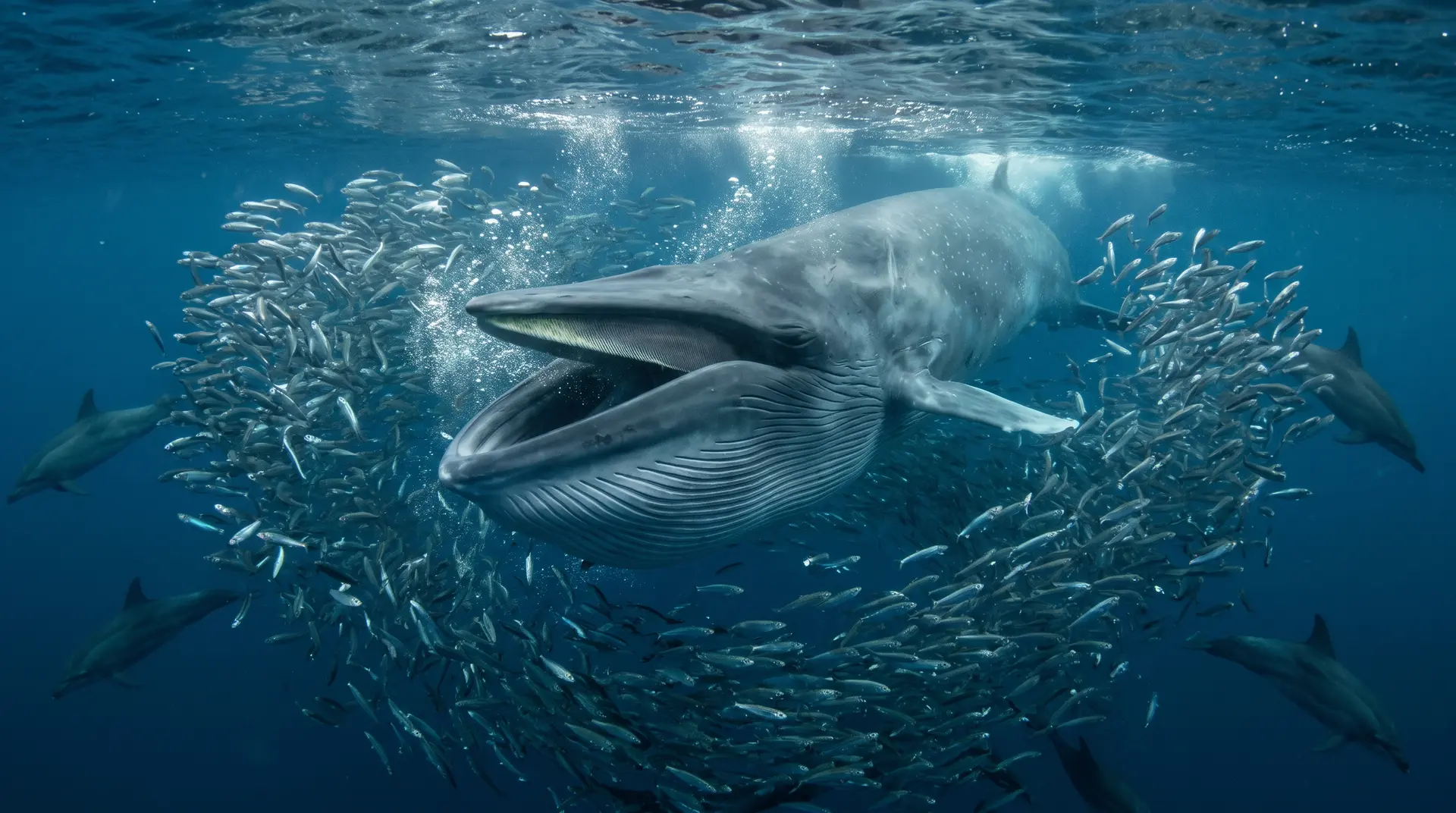
The last piece of science is the one you actually watch. When predators corner a portion of a shoal, the sardines pack into a tight spinning sphere near the surface, a bait ball, usually 10 to 20 metres across and rarely lasting more than about ten minutes. The way thousands of fish move as a single body, throwing off sheets of silver light, comes down to sensory biology.
Each sardine carries a lateral line, a row of pressure- and motion-sensitive organs along its flank. It senses the tiny water movements of its neighbours and adjusts its own position in a fraction of a second. Multiply that across the shoal and you get turns that ripple through thousands of fish almost at once. The synchronised pivots catch and scatter light, which is the flashing that photographers chase and that gives this page its cold-water hero shot.
The flash is not decoration. It is defence. A shoal that turns as one, flaring silver, makes it hard for a predator to lock onto any single fish, and packing tight is safety in numbers pushed to an extreme. The irony of the run is that the same tight schooling that protects the fish is exactly what lets dolphins and gannets herd them into a ball in the first place.
How a shoal moves as one
- The lateral line lets each sardine feel pressure changes from the fish around it and react in milliseconds, without needing to see them clearly.
- Synchronised turns ripple through the shoal as thousands of fish adjust together, producing the coordinated silver flashing seen from above and below.
- The flash as defence confuses predators by making it hard to single out and track one target in a mass of moving light.
- The bait ball forms when predators herd a section of the shoal to the surface; the fish crowd tighter, which is safety in numbers taken to its limit.
- The short window means a ball typically collapses in under ten minutes, so spotting the action early and reaching it fast is what puts you in the water at the right moment.
What science still can't tell you
Pull the threads together and you get a run that is well understood in its physics and still open in its biology. The cold corridor is real and measurable. Satellite sea-surface-temperature data, aerial surveys and tagging work all feed a steadily improving picture of where and when the water cools enough to let the fish move. The oceanography is not the mystery.
The mystery is the animal. Why a specific portion of the population makes the journey, how the fish read the cues to start, and how the whole event will hold up as the ocean warms, are all questions with partial answers and active research behind them. Anyone who tells you the sardine run is fully solved is selling certainty the science does not have.
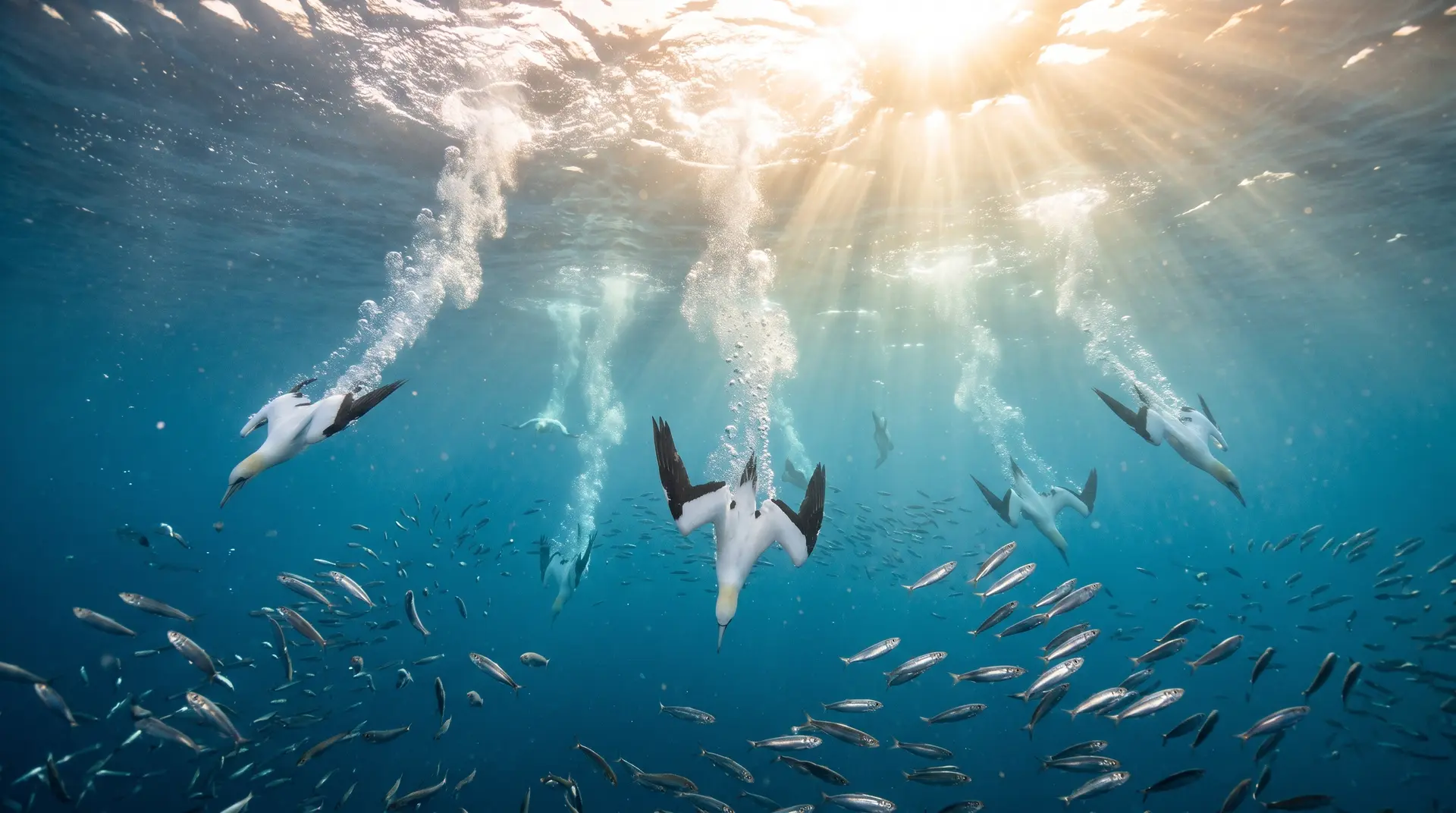
That is the part worth holding onto when you plan a trip. Watching the run is not watching a documentary that always plays the same. It is reading the ocean the way a guide does: the water temperature, the wind, a column of diving gannets that marks a shoal you cannot see. If that appeals, our expedition packages are built around days at sea with a spotter and a fast boat on the southern Wild Coast, where the cold corridor tends to open first each winter. The next bookable season is 2027.
Frequently asked questions
Do the sardines run to breed or to feed?
The leading hypothesis is that it is a seasonal reproductive movement by a cool-water-adapted portion of the population, following spawning-related cues along the cold winter corridor. Other researchers frame it partly as temperature-tracking, the fish following water in their preferred range. No single explanation has fully closed the question, which is why the run is still an active area of study.
What water temperature triggers the run?
Sardines favour water between about 14 and 20 degrees and need the inshore band to fall below roughly 21 degrees before they will move through it. When winter upwelling and cooler counter-currents drop inshore temperatures under that threshold, the corridor opens and the shoals push north. If the water stays warmer than that, the run weakens or fails.
If sardines avoid warm water, why does the warm Agulhas Current matter?
Because the Agulhas is what makes the cold corridor possible in the first place. The warm current forms the offshore wall, and the run happens in the narrow band of cold water that opens between it and the coast in winter. Without a warm current pinning the boundary, there would be no defined cold corridor for the fish to follow up the coast.
Is climate change going to end the sardine run?
A warming ocean is a documented pressure on the run, and the KwaZulu-Natal leg has already weakened noticeably since the early 2000s as inshore water has more often stayed too warm. Whether the event fades, shifts south, or persists in a changed form is an open research question. It is one reason the run's long-term future is treated as a conservation issue, not just a tourism one.
Do scientists actually know why the run happens?
They understand the oceanography well: the cold inshore corridor, the temperature threshold, and how upwelling and counter-currents open it. The biology is less settled. Exactly why a portion of the population makes the journey, and how the fish read the cues to begin, are still debated. The physics is solved; the animal's motivation is not.
Why do sardines school so tightly into bait balls?
Their lateral lines sense pressure and motion from neighbouring fish, letting thousands turn as one and flare silver, which confuses predators and makes any single fish hard to target. Packing into a tight ball is safety in numbers taken to an extreme. The catch is that this same behaviour lets dolphins and gannets herd a section of the shoal to the surface, which is what creates the bait balls divers come to see.
Keep reading
See the science play out on the water
Sardine Run Africa runs 7-day expeditions from Chintsa, near East London, on the southern Wild Coast where the cold corridor tends to open first each winter. You will spend the days reading water temperature, wind and diving gannets with a spotter and a fast boat. The next season is 2027. Browse our packages or get in touch to plan your dates.
Boats carry small groups only, and prime weeks go 6-12 months out.