Field Guide
Sardine Run Marine Life: The Full Predator Cast, Species by Species
Updated 23 July 2026 · 9 min read · By the Sardine Run Africa crew
Estimates put the number of long-beaked common dolphins working the sardine run at up to 18,000. Not spread across the season. Working the coast at the same time, in super-pods that can stretch past the horizon. They are the reason everything else shows up, because without dolphins there is no bait ball, and without a bait ball the sharks, whales and gannets have nothing to feed on.
This guide walks through the full predator cast you can meet on a Wild Coast expedition, species by species: what each animal actually does at a bait ball, how it behaves around swimmers, and how likely you are to see it on any given sea day. The short version is that some species are near-daily companions and others are once-a-season events, and any operator who tells you otherwise is selling, not guiding.
Everything here is written for the water we work: the southern Wild Coast off Chintsa and East London, where the run arrives first each season, in May and June, before the fleet follows it north. If you have not yet read what the sardine run is, start there and come back.
Long-beaked common dolphins: the bait-ball architects
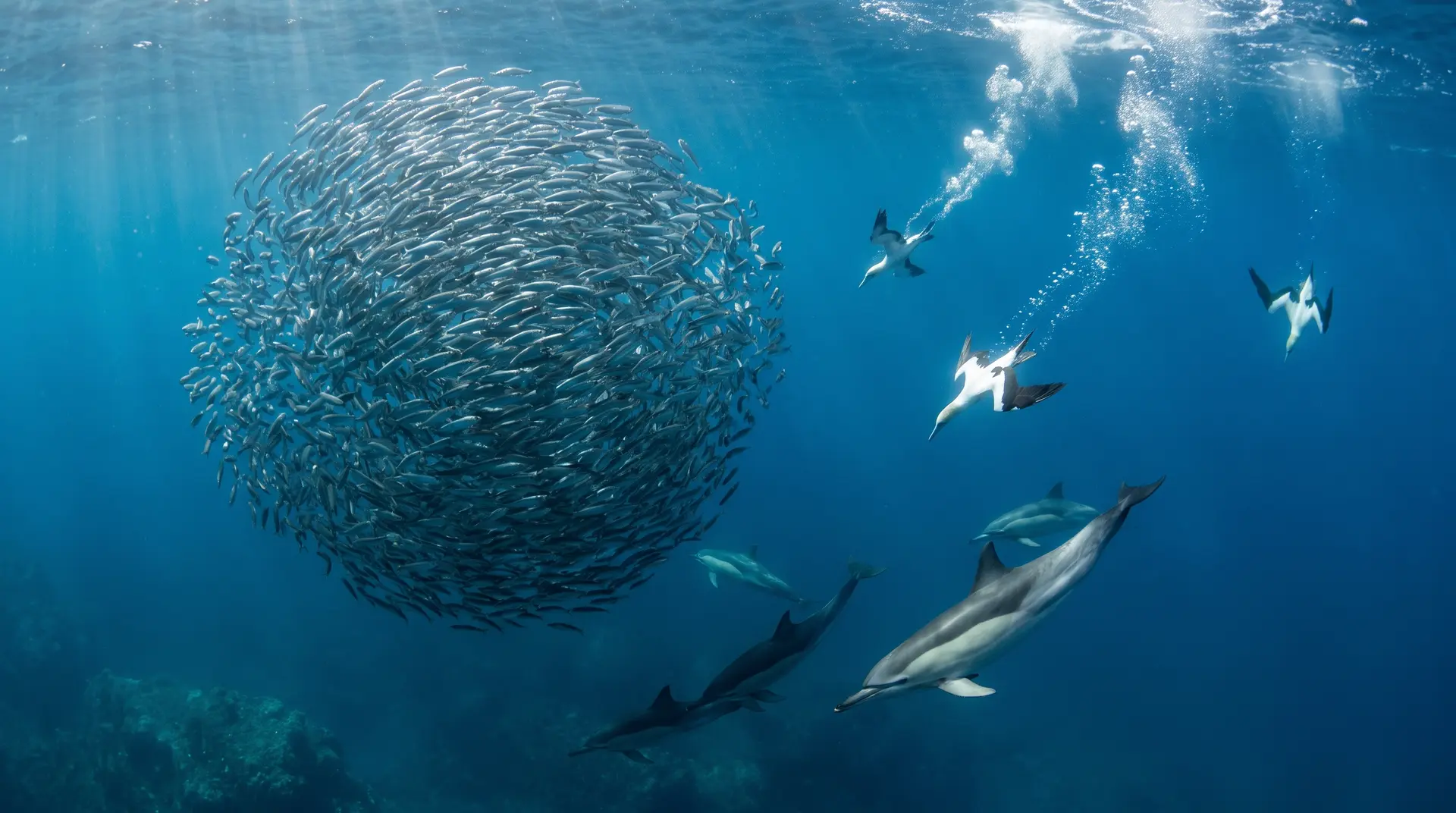
Every bait ball starts with common dolphins. Pods locate a section of the shoal, then work beneath it, blowing bubbles and driving the sardines upward against the surface. The surface acts as a wall. Once the fish are pinned, the pod tightens the ball, usually to somewhere between 10 and 20 metres across, and takes turns punching through it to feed. The whole structure rarely holds for more than about ten minutes, which is why fast boats and good spotting decide whether you get in the water in time.
For anyone searching for a place to swim with dolphins in South Africa, this is the honest answer: the sardine run is it, at a scale no aquarium-style encounter can touch. You are not swimming with three habituated animals. You are floating at the edge of a hunt involving hundreds, sometimes thousands, and they ignore you completely because they are working.
From the boat you will hear them before you see them properly, a hiss of white water as the pod runs the shoal. In-water visibility ranges from 2 or 3 metres to 30 on the best days, so what you see below the surface varies enormously; the water conditions guide covers what drives that.
Bottlenose dolphins: the residents
Bottlenose dolphins live along this coast year-round, and during the run they join the feeding without doing the architectural work. They travel in smaller pods than the commons, ride bow waves more readily, and are often the first cetaceans you see after launch on a quiet morning.
Telling them apart is easy with a day of practice. Commons are smaller and faster, with a cream-and-grey hourglass pattern along the flank. Bottlenose are bigger, plainer, greyer and more curious about the boat. On the encounter table below they sit one rung down from the commons, seen on most days rather than effectively every day.
Whales on the sardine run: one feeds, one passes through
The whale sardine run story confuses more first-time guests than anything else, so here it is plainly. Two large whales dominate the season, and only one of them is there for the sardines.
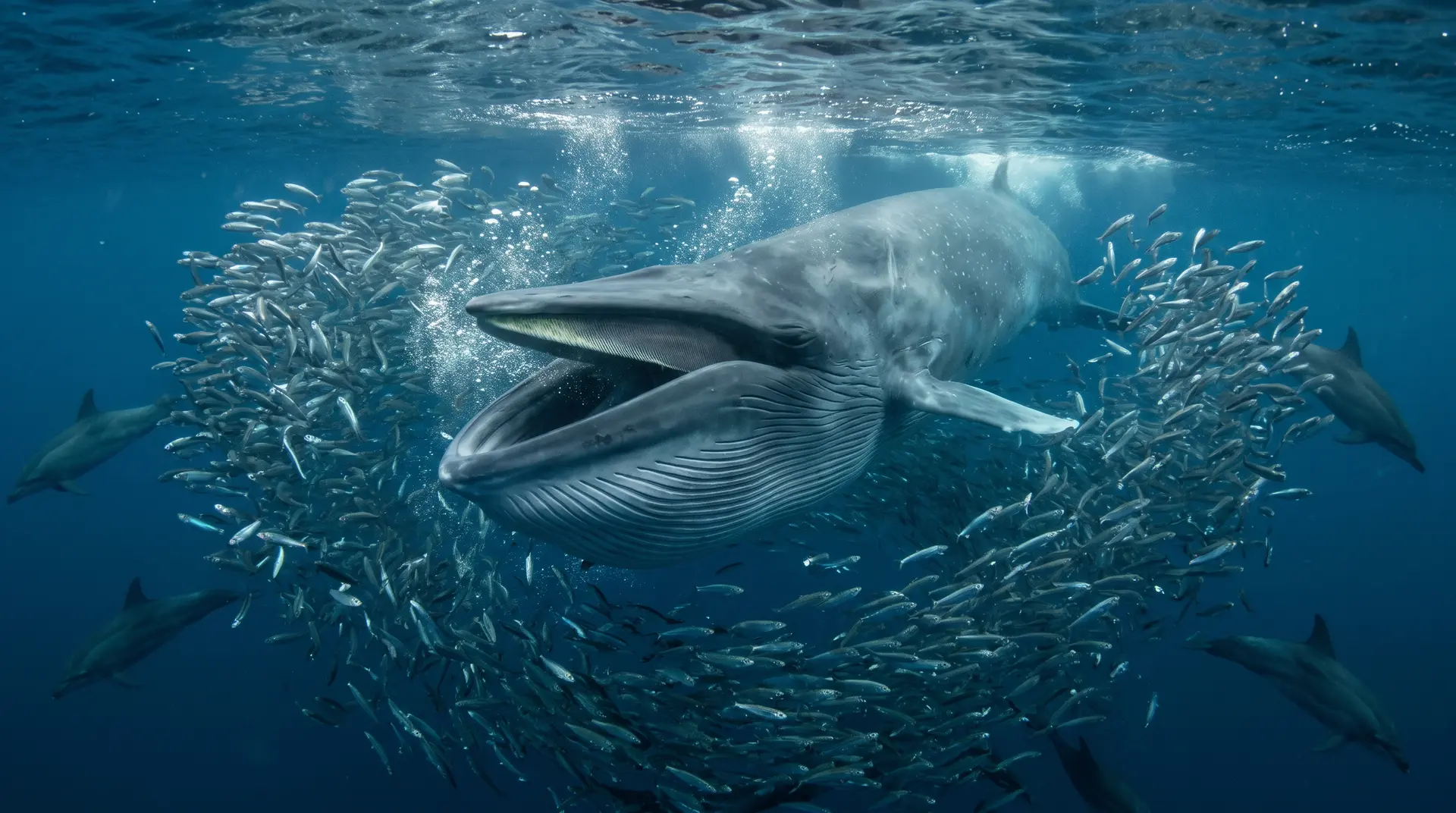
Bryde's whales (say "broo-dus") are the bait-ball feeder. They are the only baleen whale that stays in warm and temperate water year-round rather than migrating to polar feeding grounds, and during the run they shadow the dolphin pods. When a ball is pinned at the surface, a Bryde's will lunge through the middle of it, mouth agape, taking a swimming pool of water and fish in one pass. From the boat you get seconds of warning: the ball flinches, the gannets lift, and 15 metres of whale comes through the middle. It is the single most violent thing you will see all week.
Humpback whales are travelling, not feeding. Their northward migration to breeding grounds runs through the same corridor in the same months, which is why you see blows and breaches on almost every sea day. But they are commuters passing the restaurant, not customers. They feed in Antarctic waters, not on Wild Coast sardines. Southern right and minke whales also turn up occasionally in season, and the run's timing means a good week often produces more whale sightings than a dedicated whale-watching trip.
The humpback misconception
Plenty of marketing copy shows a humpback exploding through a bait ball. On this coast that is not what happens: humpbacks here are migrating, not feeding. The whale crashing bait balls is the Bryde's. Also worth knowing: South African law sets a 300m approach limit for whales without a permit, so close passes happen on the whale's terms, not the skipper's.
The sharks: copper, dusky and blacktip
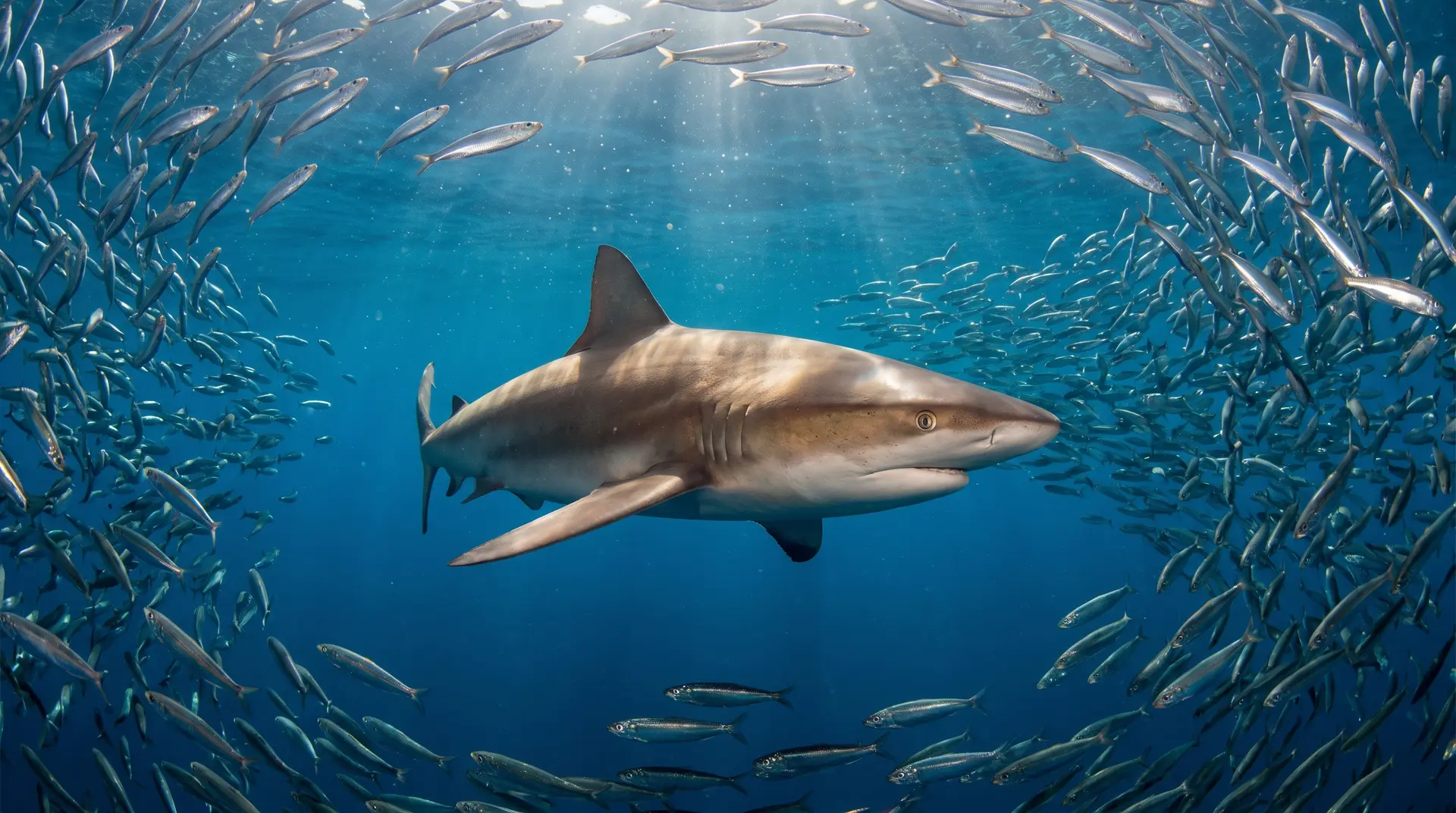
The copper shark, also called the bronze whaler, is the signature shark of the run. Coppers follow the shoals in numbers, and at an active bait ball they feed in slow, deliberate passes through the wall of fish, entirely focused on sardines. Watching a copper come through a ball three metres away, calm as a commuter, does more to fix people's ideas about sharks than any documentary.
Dusky and blacktip sharks work the same water. Duskies are the heavier-set of the two; blacktips are quicker and twitchier around the edges of the action. Spinner sharks appear too, and great whites are recorded in the area occasionally, though they are not a feature of bait-ball feeding the way coppers are.
On safety: the sharks are there for a food source measured in billions of fish, and swimmers are neither prey-shaped nor interesting. Guides control every in-water entry, read the behaviour at the ball, and pull people back when feeding gets too dense. Decades of commercial sardine run operations across the Wild Coast have built a clear picture of how these species behave around divers, and it is far less dramatic than the surface footage suggests.
Cape gannets: the dive-bombers and the best spotters on the coast
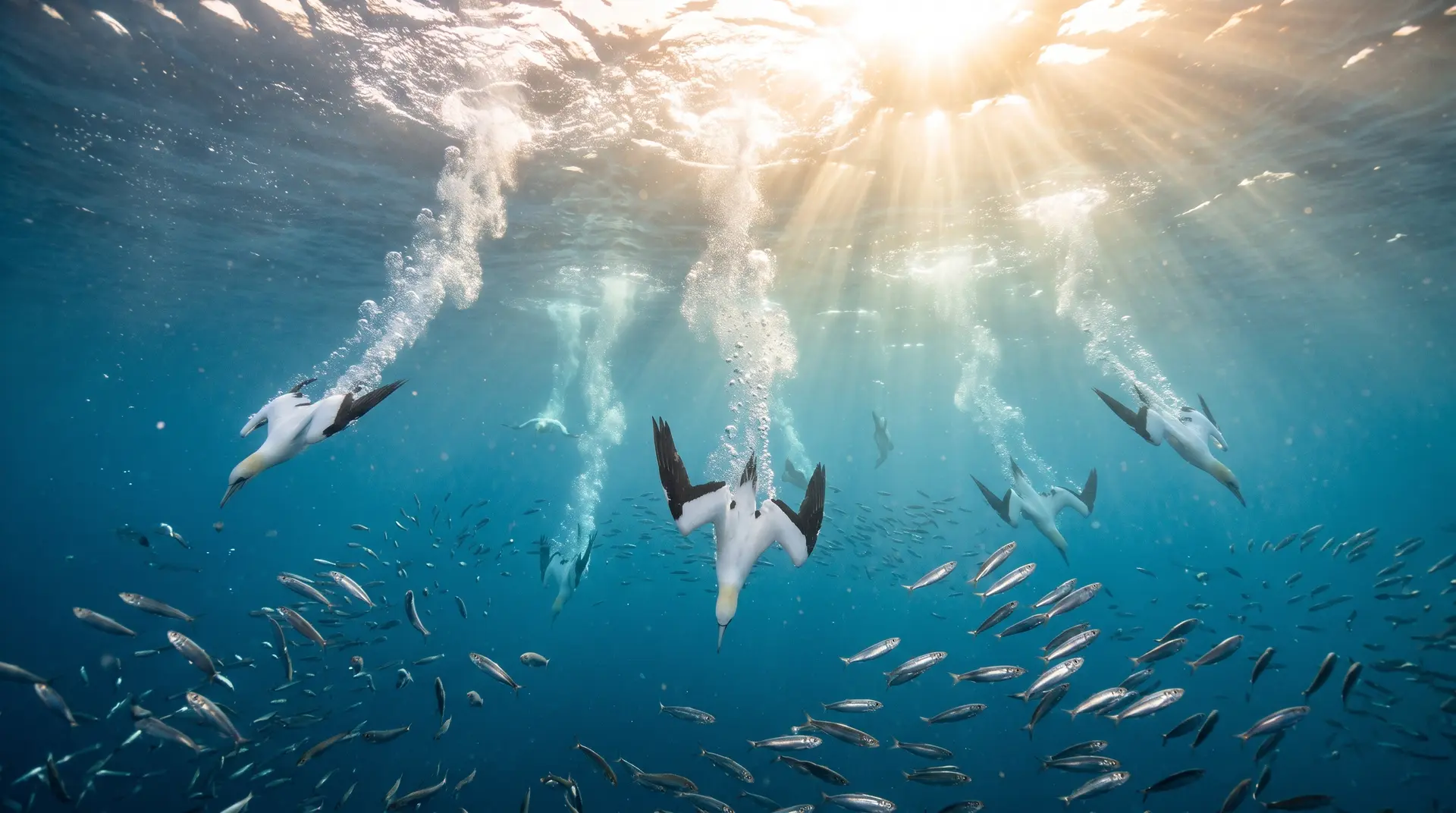
Cape gannets are the run's air force and its early-warning system in one. They dive from as high as 30 metres, folding their wings at the final moment and hitting the water hard enough to reach the fish several metres down. Air sacs in the face and chest cushion the impact. When several hundred birds are working a ball, the surface looks like mortar fire, and underwater you see them as white streaks trailing bubbles, flying downward past you.
For the crew, gannets matter as much as any spotter plane. A raft of birds sitting on the water means fish moved through recently; a wheeling, climbing stack of them means action is starting; a full plunge-feeding frenzy visible from a kilometre away means drop everything and go. Learning to read the birds is half of finding the run, and by day three most guests are calling it before the skipper says a word.
Cape fur seals and African penguins: the supporting cast
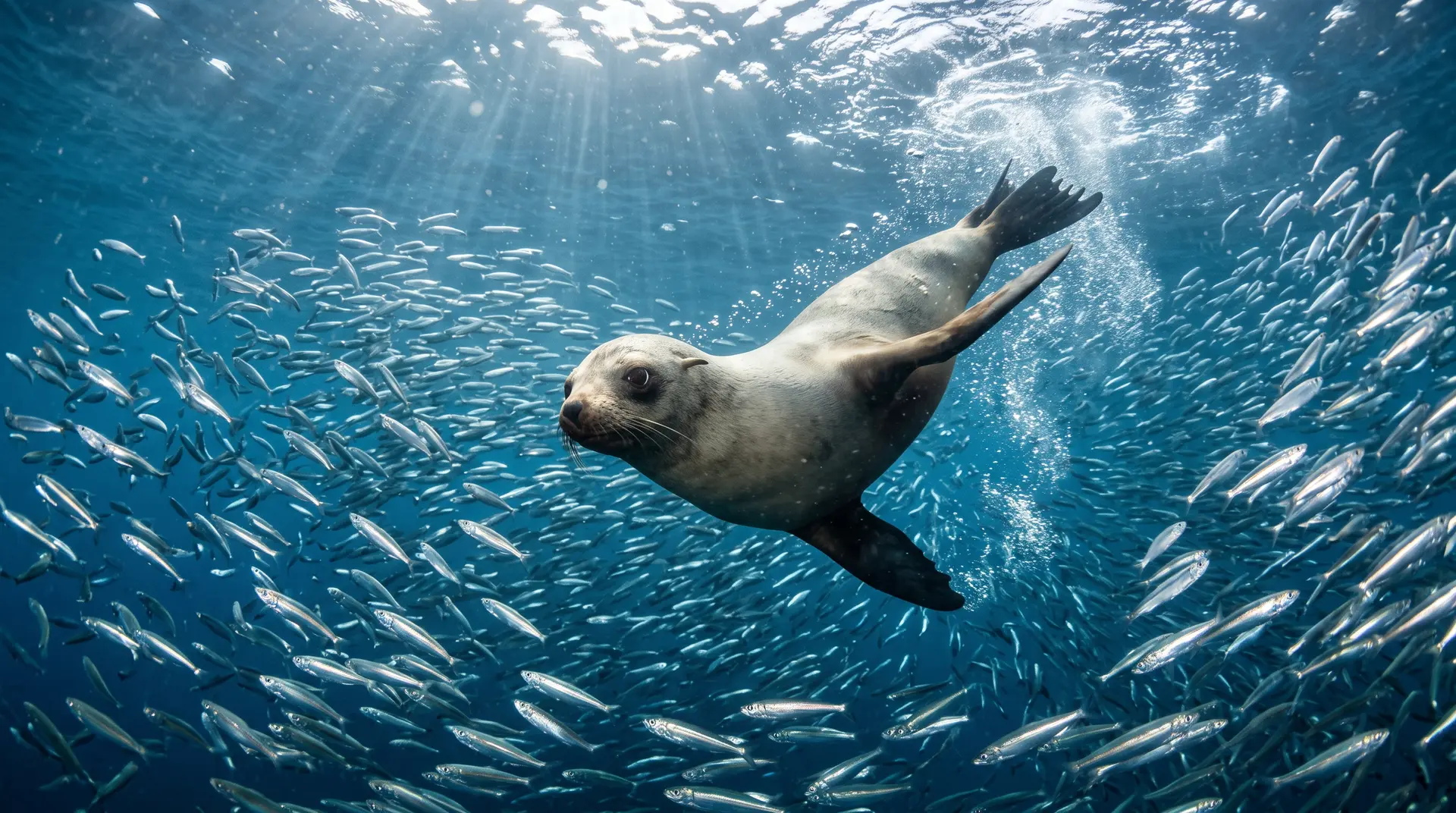
Cape fur seals raid bait balls in quick, acrobatic bursts, grabbing fish and rolling away. They are opportunists rather than architects, more common where the action passes near their colonies, and an in-water seal encounter is one of the livelier surprises the run can hand you. They move like nothing else down there.
African penguins are the cast member nobody expects. They feed on the fringes of the run, porpoising between shoals, and seeing an endangered penguin hunting wild sardines in open ocean is a quietly special thing even for guides who have done many seasons. Petrels and shearwaters fill out the seabird picture, scavenging scraps behind the main event.
Orcas: the occasional headline act
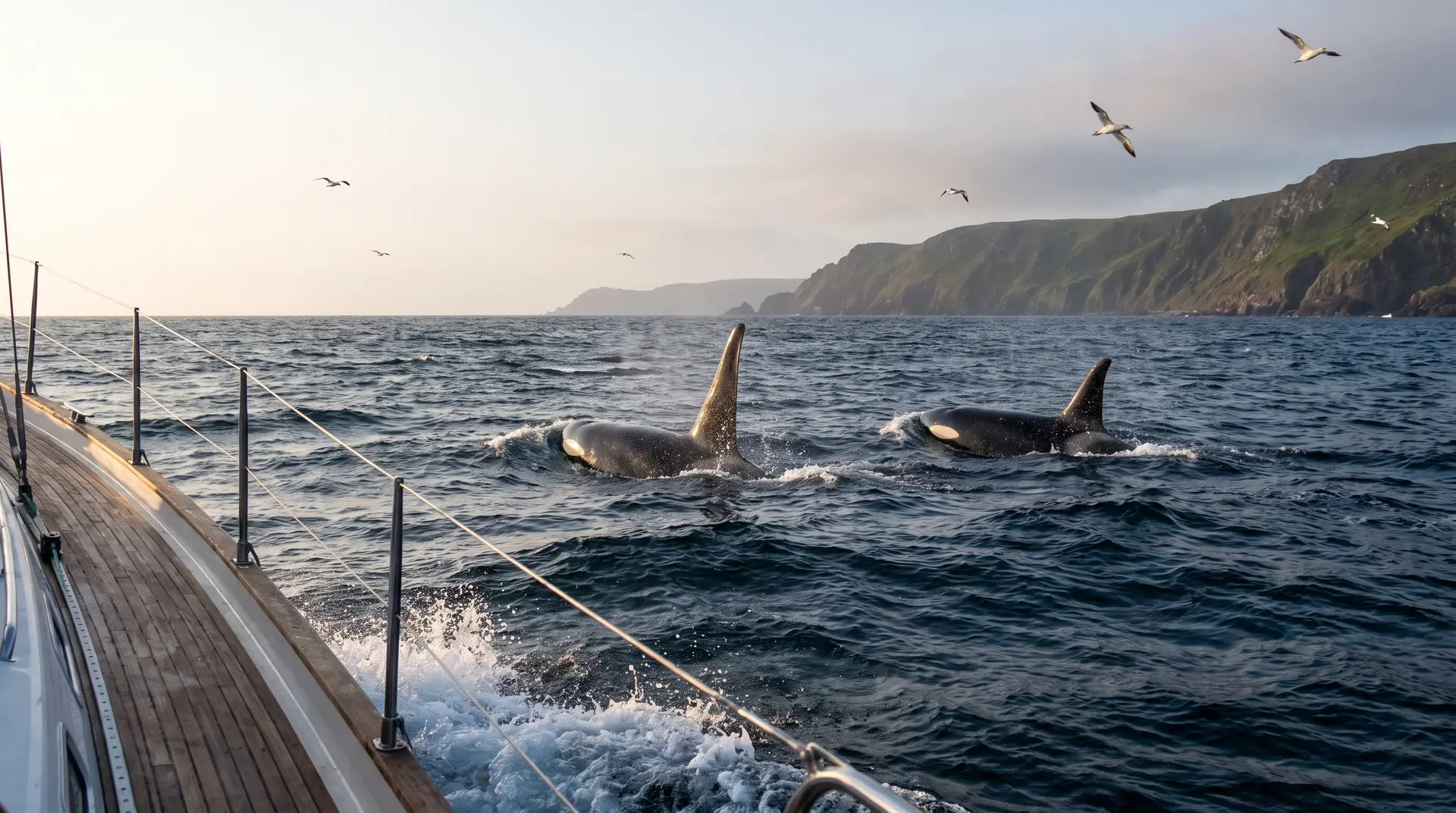
Orcas appear on the run most seasons, somewhere along the coast, for someone. They hunt the hunters, taking dolphins rather than sardines, and when a pod moves through an area the common dolphins simply vanish, which is often the first clue the crew gets. An orca encounter reorganises the whole day: boats converge, radios go quiet and busy at once, and whatever the plan was, this is now the plan.
Be clear-eyed about the odds. Orcas are a rare, unbookable bonus, not a target species. If a week produces one, you will tell the story for years. Most weeks do not, and no honest operator will imply otherwise.
Bait ball diving: how likely is each encounter?
The table below is our honest framing of encounter likelihood across a week in season. It reflects the standard Wild Coast pattern reported across operators and seasons: cetaceans, gannets and general action on most or all sea days, with the full sharks-through-a-bait-ball spectacle less frequent and never guaranteed. Bait balls are the event everyone comes for and the one thing nobody can schedule, which is why expedition length matters and why five or more sea days is the market consensus minimum.
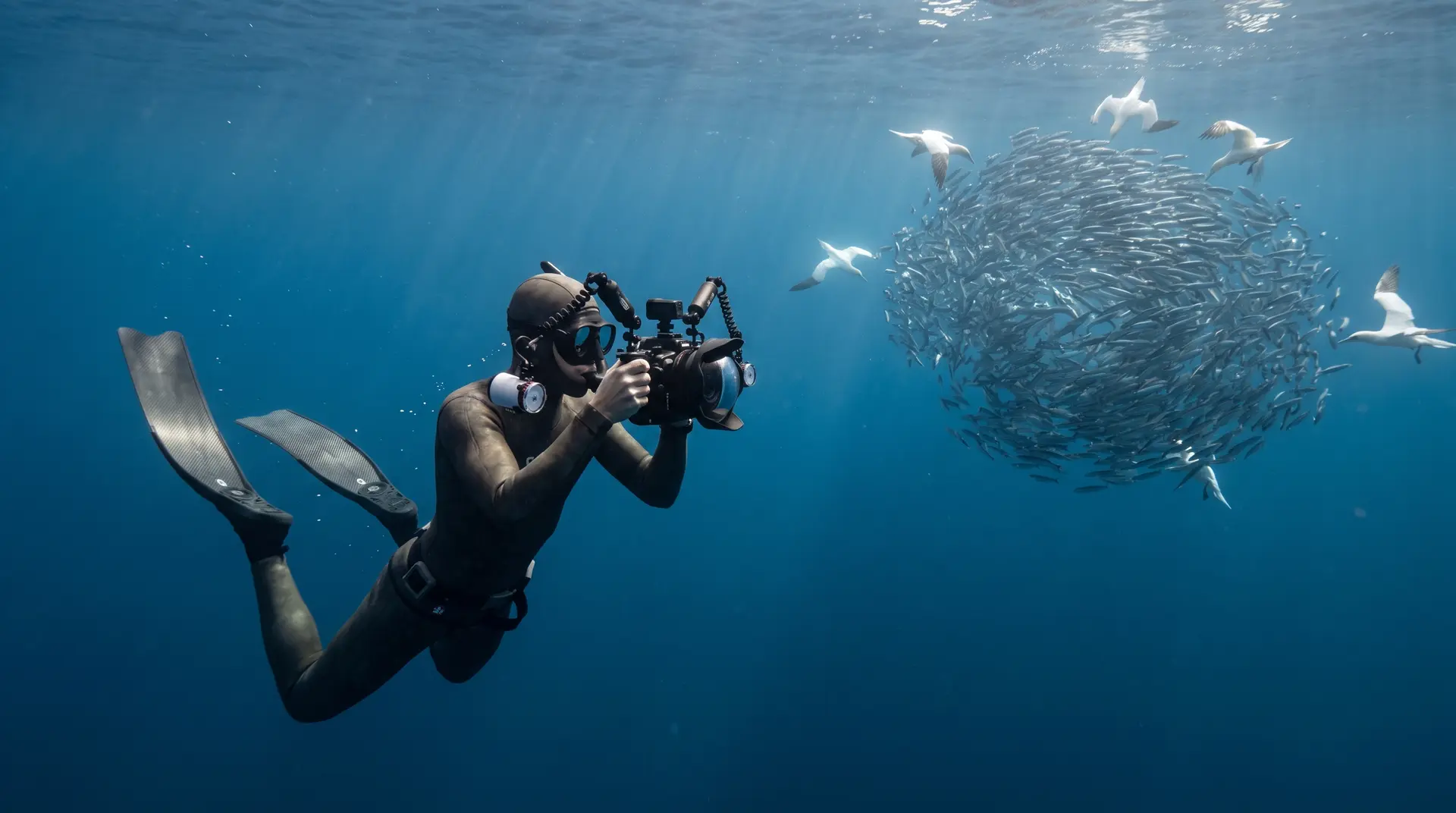
One more expectation worth setting: most of this is experienced on snorkel, at the surface, because the action moves too fast for scuba except on a stable, static ball. That is good news if you are not a certified diver; the no-scuba guide explains how non-divers get the best of the run. Our 7-day Chintsa expeditions are built around exactly this cast, in the early-season southern water where the run arrives first; the packages page has the details for 2027.
| Species | Role at the bait ball | Likelihood |
|---|---|---|
| Long-beaked common dolphin | Builds and drives the bait ball | Daily |
| Cape gannet | Plunge-dives from up to ~30m | Daily |
| Humpback whale | Migrating past, not feeding | Daily |
| Bottlenose dolphin | Joins feeding, rides bows | Most days |
| Bryde's whale | Lunge-feeds through the ball | Most days |
| Copper, dusky, blacktip sharks | Feed through the ball | Most days |
| Cape fur seal | Raids the edges | Occasional |
| African penguin | Feeds on the fringes | Occasional |
| Southern right / minke whale | Passing through | Occasional |
| Orca | Hunts the dolphins | Rare |
| Great white / spinner shark | Recorded in the area | Rare |
How the cast fits together
None of these animals works alone, and that is the real spectacle. Dolphins build the ball. Gannets mark it from the air and thin it from above. Sharks and Bryde's whales take it apart from below, seals and penguins pick at the edges, and inside all of it the sardines flash and reform in synchrony because their lateral lines sense every pressure change around them. A ball that took a super-pod twenty minutes to build can be gone in five.
That interdependence is also why sightings stack. Find the dolphins and you have found the day; the rest of the cast is rarely far behind. It is the closest thing the ocean offers to a full food web performing in one place, at swimming distance, and if you want the mechanics behind why it all happens here, the science guide goes deeper. Photographers should read the photography guide before choosing lenses, because the cast above dictates the kit.
Frequently asked questions
Do humpback whales eat sardines during the sardine run?
No. Humpbacks seen during the run are migrating north to breeding grounds and feed in Antarctic waters, not on the shoals. The whale that actually lunge-feeds through bait balls is the Bryde's whale, which stays in these warmer waters year-round.
Which sharks will I actually see in the water?
The copper (bronze whaler) shark is the signature species and the one you are most likely to share a bait ball with, alongside dusky and blacktip sharks. Spinners appear too, and great whites are recorded in the region occasionally but are not a regular part of bait-ball feeding.
Is it safe to swim near feeding sharks and dolphins?
The predators are focused on a food source of billions of fish, and swimmers are not on the menu. Guides control every entry, read the intensity of the feeding, and keep swimmers at the edge of the action rather than inside it. In-water time only happens when the skipper and guide judge conditions right.
How often do orcas show up?
Orcas are recorded on the run most seasons somewhere along the coast, but for any single expedition they are a rare bonus rather than an expectation. They hunt the dolphins rather than the sardines, and their arrival usually empties an area of common dolphins within minutes.
What actually holds a bait ball together?
Pressure from below and the surface above. Dolphins drive sardines up against the surface and circle them into a ball typically 10 to 20 metres across, while the fish school tightly because their lateral lines sense every movement around them. The structure rarely survives more than about ten minutes once serious feeding starts.
Are African penguins really part of the sardine run?
Yes. African penguins feed on the fringes of the shoals, and sightings of them porpoising between bait balls happen every season. They are an occasional encounter rather than a daily one, and one of the more memorable ones given the species is endangered.
Keep reading
Meet the whole cast in 2027
Our 7-day expeditions run from Chintsa, on the southern Wild Coast, where the run arrives first each May and June. Small boats, early-season water, and the full predator cast from common dolphin super-pods to Bryde's whales. The 2026 season has just wrapped; 2027 places are open now, and the best weeks go first. See the packages page for dates and pricing, or send us your questions via the contact page.
Boats carry small groups only, and prime weeks go 6-12 months out.