Trip Planning
Sardine Run Port St Johns: The Classic Epicentre and Its Trade-Offs
Updated 23 July 2026 · 9 min read · By the Sardine Run Africa crew
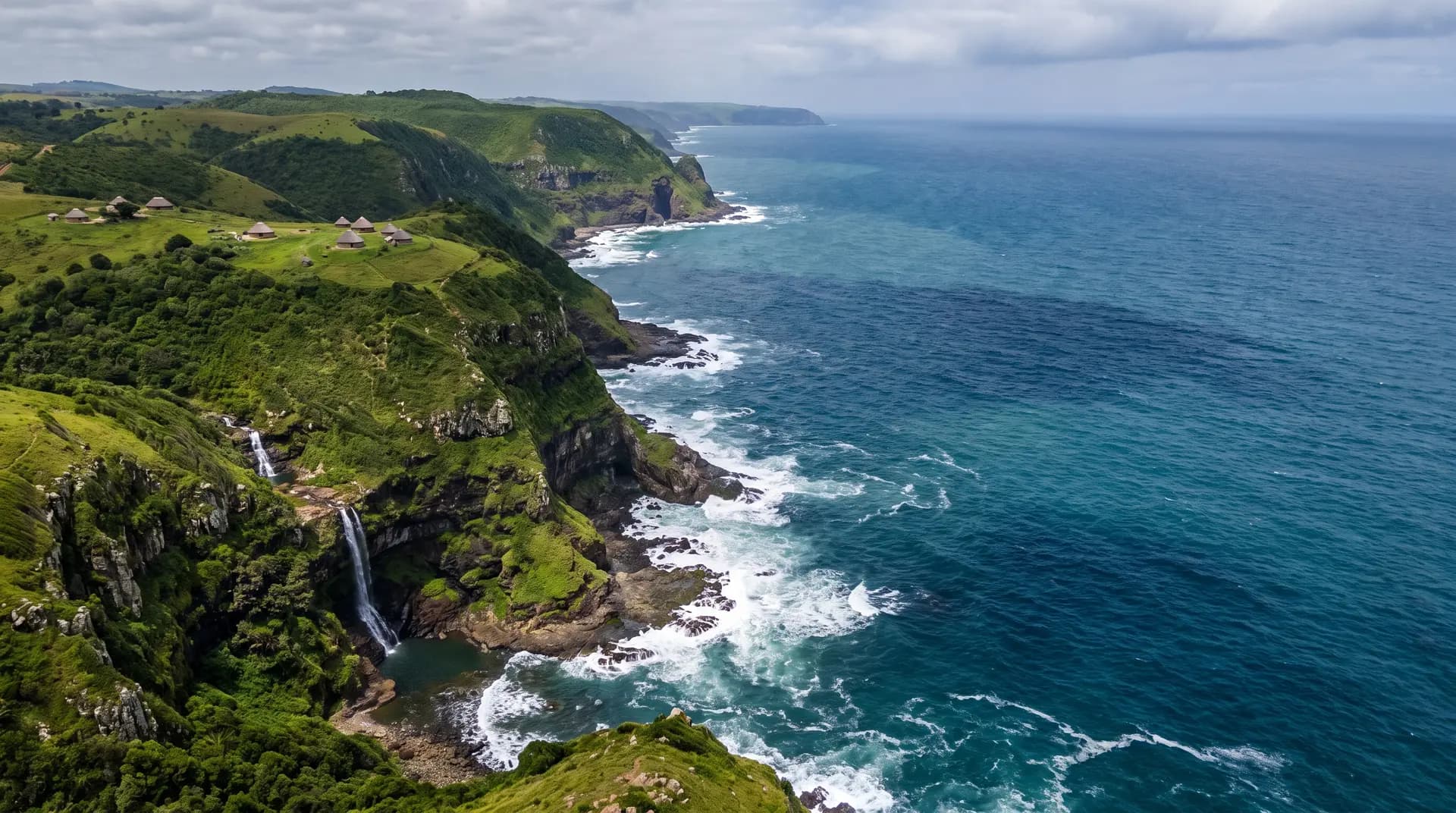
A few kilometres north of Port St Johns, at Waterfall Bluff near Mbotyi, the continental shelf pinches in toward the coast. Sardine shoals that had room to spread out further south get squeezed into a narrower corridor of cool water, closer to shore, with the predators packed in around them. That single piece of seafloor geography, more than anything else, is why Port St Johns became the name everyone knows in sardine run circles.
The town earned its reputation. From mid-June into July the action concentrates along this stretch, the spotter planes circle, and film crews have been coming back for two decades. If you have seen sardine run footage on television, a fair share of it was shot within a boat ride of the Umzimvubu River mouth.
But the classic epicentre comes with a classic set of trade-offs: awkward flights, a river-mouth launch, and a mid-season fleet all working the same water. This guide lays out how a Port St Johns expedition actually works, what it costs, and why an increasing number of divers now start their run further south, at Chintsa near East London, where the shoals pass first.
Why Port St Johns Became the Sardine Run Hub
The run is a moving event. Shoals leave the Agulhas Bank in autumn and push north-east along the Eastern Cape, past Gqeberha, East London and the Kei River, then up the Wild Coast toward KwaZulu-Natal. Historically the fish passed the Bashee River around 8 to 9 June and reached Durban near the 25th. You can trace the whole corridor in our sardine run route guide.
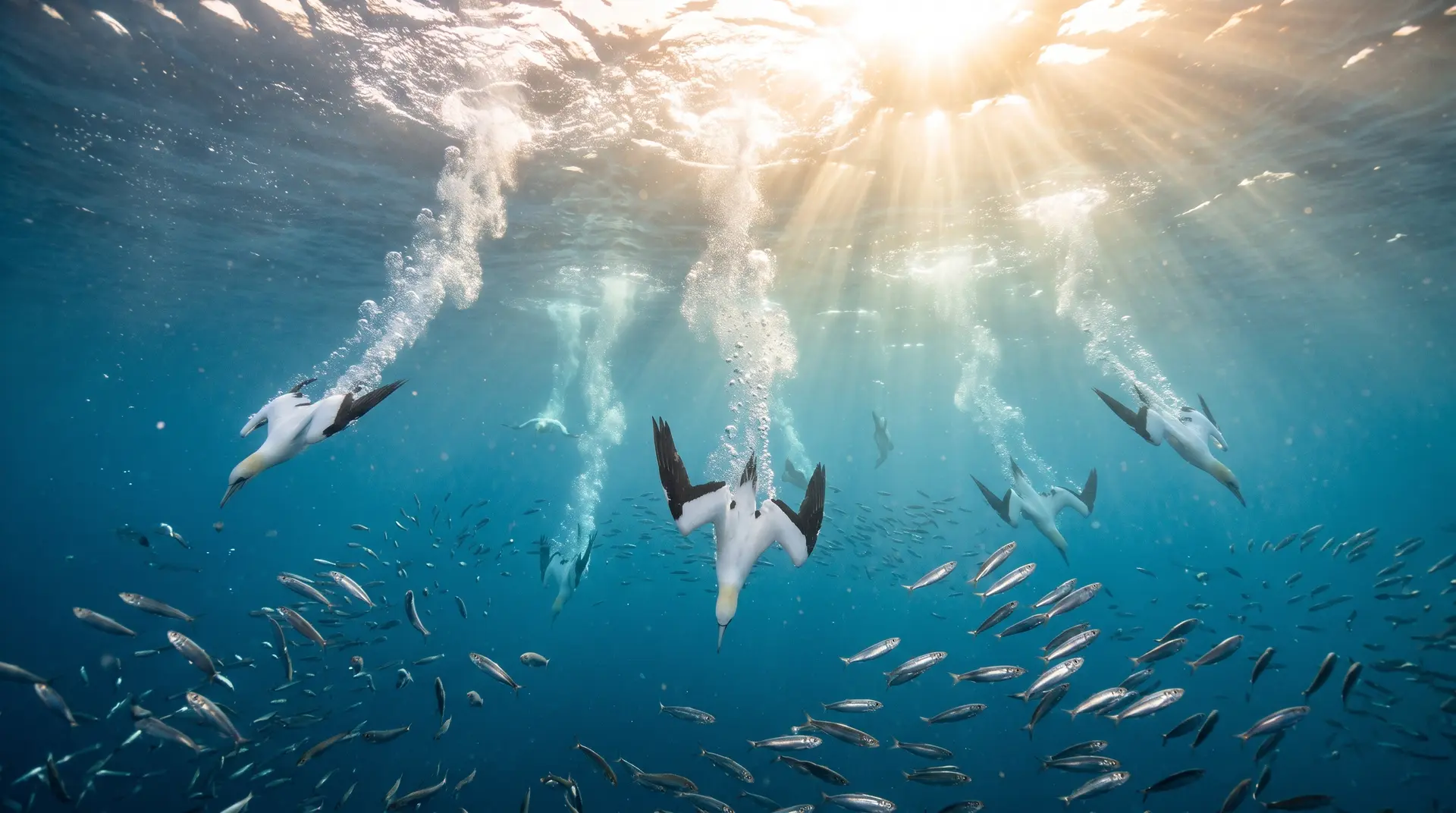
Port St Johns sits at the point where that corridor tightens. The shelf narrowing at Waterfall Bluff funnels the shoals inshore, so from roughly mid-June through July the density of sardines, common dolphins, Bryde's whales and diving gannets along the Mbotyi to Port St Johns stretch can be remarkable. Predictable concentration is what expedition operators need, and two of the most established names in the game, Offshore Africa (based in town since 2008) and ProDive, run their seasons from here.
The season sold from Port St Johns reflects that timing. In 2026, Offshore Africa sold trips from 10 June to 10 August and ProDive from 18 June to 23 July. Nobody sells a May departure from Port St Johns, because in May the fish are still hundreds of kilometres to the south.
The Umzimvubu River-Mouth Launch
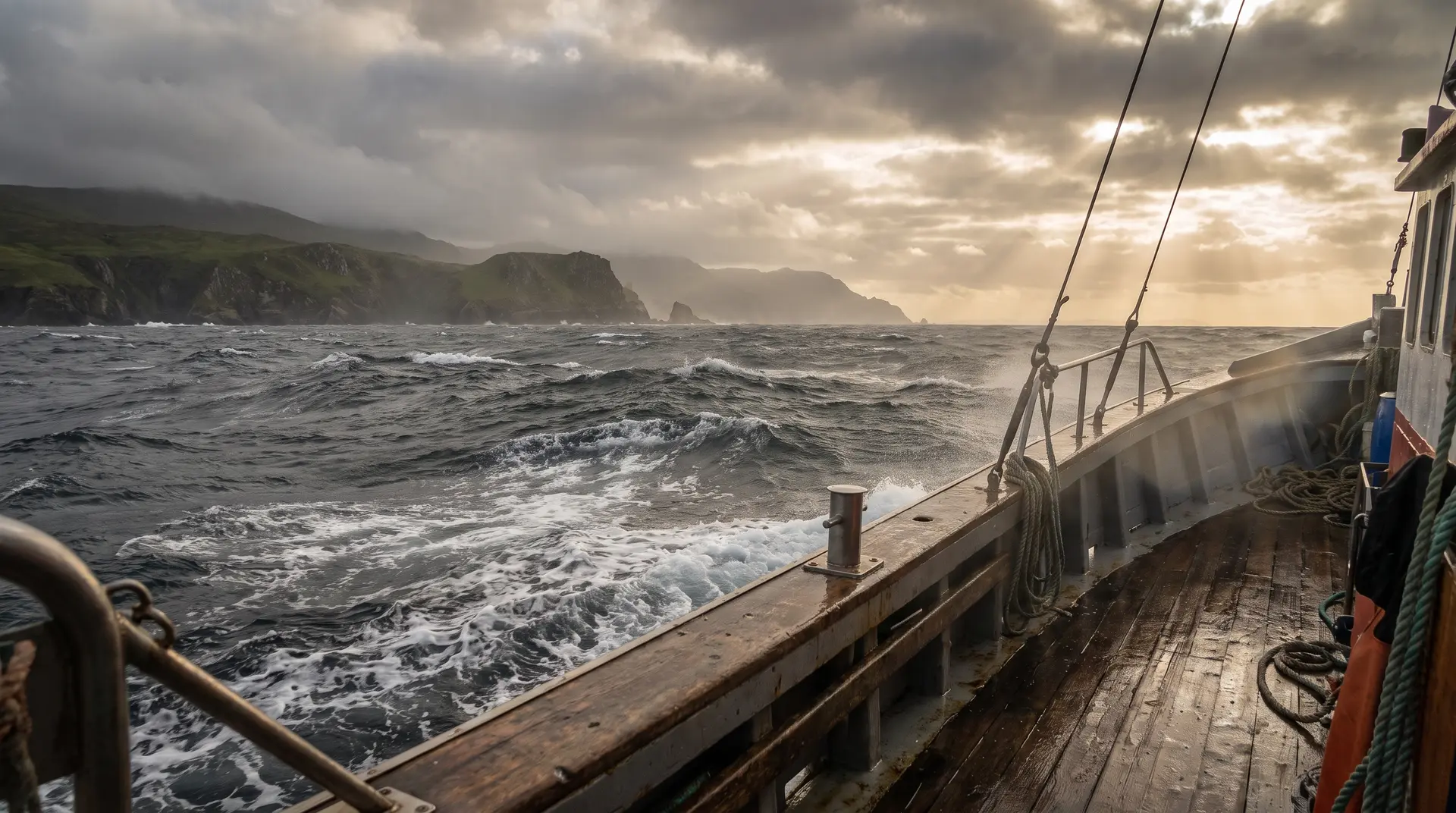
Port St Johns boats do not launch off a beach. They load at jetties up the Umzimvubu River (Offshore Africa uses its own jetty; ProDive launches in front of Cremorne Estate), motor down the river, and cross the river mouth to reach the open sea. It is a distinctive way to start a sea day, with the Gates of St John rising on either side as you head out.
Once through the mouth you are into standard Wild Coast winter conditions: 6 to 8 hours on a small RIB, swell that varies day to day, water between 14 and 21 degrees, and visibility anywhere from 2 metres to 30. Our water conditions guide covers what that range feels like in practice. Launches typically go between 06:30 and 08:00, and every operator on this coast holds the same line on weather: blown-out days are not refunded.
The compensation for the long days is aerial intel. Offshore Africa flies what it calls an exclusive spotter plane for its own boats, and ProDive includes spotter cover in its packages. When a bait ball forms and usually collapses inside ten minutes, the operators who find it from the air first are the ones whose guests get wet on it.
Getting There: The Mthatha Airport Reality
This is the part most first-time bookers underestimate. Port St Johns has no airport of its own. The standard route is a flight into Mthatha, which has a limited schedule, followed by a road transfer of about an hour and a half. Offshore Africa quotes that transfer at R1,925 to R2,695 per vehicle on top of the package. The alternative is driving roughly five hours from Durban.
Compare that with the southern end of the run. King Phalo Airport in East London takes multiple direct flights daily from Johannesburg (about 1h35) and Cape Town, and Chintsa is around 40 minutes from the terminal. If your international flight lands late, or a domestic leg gets cancelled, the East London routing gives you far more ways to recover the day.
| Port St Johns | Chintsa (East London) | |
|---|---|---|
| Nearest airport | Mthatha (limited flights) | King Phalo, East London (multiple daily directs from JNB and CPT) |
| Road transfer | About 1.5 hours (R1,925-R2,695 per Offshore Africa's published rates) | About 40 minutes |
| Drive from Durban | Roughly 5 hours | Longer; most guests fly instead |
| Season window sold | Mid-June to early August | May to June (early phase of the run) |
Mid-Season Boat Traffic and the Booking Squeeze
Concentration cuts both ways. The same shelf narrowing that concentrates the fish concentrates the industry. Port St Johns hosts its two resident operators plus visiting boats that follow the run north, including KZN-based outfits like African Watersports that run their Port St Johns programme across the Mkambati to Coffee Bay stretch. In the peak weeks, several boats and more than one aircraft can be working the same event.
None of this makes the diving bad. The operators here are professional, boats carry only 6 to 8 guests, and the established names belong to the Sardine Run Professional Association. But a bait ball is a small, short-lived thing, and you may share it.
The demand shows in the booking calendar. Most of ProDive's 2026 departures were marked full months before the season opened, and across the market the advice is consistent: book 6 to 12 months ahead for prime mid-season weeks. Deposits run 30 to 50 percent and are non-refundable everywhere on this coast.
The hyperbaric chamber
Port St Johns has one of only two hyperbaric chambers relevant to the run (the other is in Durban). It is a real safety asset for the area, though worth keeping in perspective: most sardine run water time is snorkelling, not deep scuba. Carry dive and travel insurance such as DAN regardless of where you base yourself.
What a Port St Johns Expedition Costs
Port St Johns sits at the premium end of direct-operator pricing. Published 2026 rates put Offshore Africa between R32,805 (4 nights, 3 sea days) and R94,940 (12 nights, 10 sea days) per person sharing, with gear rental at R500 per day. ProDive's flagship 7-night, 6-sea-day trip was R52,900 (about $3,300), with shorter and longer options at R27,250 and R79,950. UK agency packages built on the Port St Johns product start around £3,675 including international flights.
For context, the wider market for a roughly 7-day, 5-sea-day package runs from about R27,500 at budget Wild Coast bases to R53,000 at the Port St Johns premium operators. Our cost guide breaks down what drives the differences. The short version: you pay for sea days, aerial spotting, boat quality and base location, and Port St Johns commands the mid-season premium because the mid-season fish are on its doorstep.
Add the practical extras to any Port St Johns quote: the Mthatha transfer, the Pondoland Marine Protected Area permit (usually included by the local operators, but check), and gear rental if you need it.
The Case for Starting Further South at Chintsa
Here is the honest version of the comparison, because we operate from Chintsa and you should know why. The run does not begin at Port St Johns; it arrives there. PADI's own guidance on the event puts the early phase, May into June, closest to Gqeberha and East London, with the action shifting to the Port St Johns and Mbotyi stretch later in June and July. Operators' own calendars agree: Chintsa seasons open in May, Port St Johns seasons open in mid-June.
Basing at Chintsa in the early season means you meet the shoals on their way north, launch straight off the beach, and fly in and out through a proper airport 40 minutes away. Only a handful of boats work this stretch, so the event you find is usually yours. And on a blown-out day, Chintsa has land options that a remote river town cannot match: game reserves, long swimming beaches and the East London hinterland, all covered in our Chintsa travel guide.
What Chintsa does not offer is the mid-July concentration at Waterfall Bluff. If your only available dates are in July, Port St Johns or Mbotyi is where the fish will most likely be, and you should book there without hesitation. Geography does not care about anyone's marketing.
Our 7-day Chintsa expeditions run in the early season window for exactly this reason, with the 2027 season now open for booking. The 2026 run has just wrapped up, and prime weeks across the whole coast sell on the 6-to-12-month horizon.
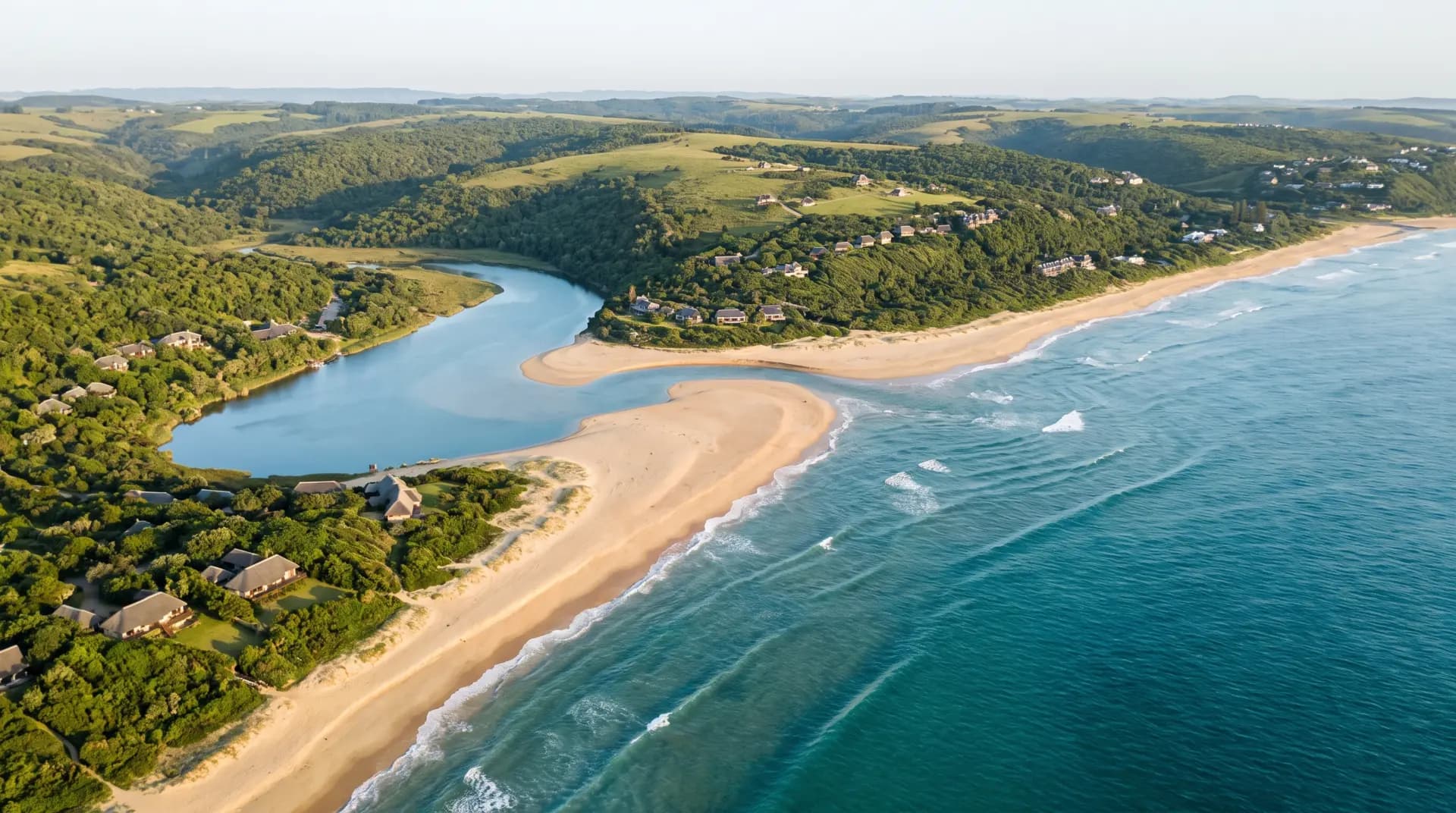
Or Combine Both: A Two-Base Season Strategy
The strongest itinerary for anyone with time and budget is not either-or. Start south in late May or early June to catch the run's arrival with few boats around, then move up the coast for the mid-season concentration. The two bases sell different halves of the same migration, and serious photographers have quietly done this split for years.
The logistics work in that order, too. Fly into East London, spend your first week at Chintsa, then transfer north by road as the fish move north. Doing it in reverse means fighting the migration's direction and the Mthatha flight schedule at the same time.
If you are still weighing bases, our where to see the sardine run guide compares the full set, from Gqeberha to the KZN South Coast, on timing, access and crowding.
Frequently asked questions
When does the sardine run reach Port St Johns?
Typically from mid-June, peaking through July. Historically the shoals passed the Bashee River south of town around 8 to 9 June and reached Durban around 25 June. Port St Johns operators sell their seasons accordingly: 2026 departures ran from roughly 10 to 18 June onward.
How do I get to Port St Johns for the sardine run?
Fly to Mthatha, which has a limited flight schedule, then take a road transfer of about 1.5 hours (quoted at R1,925 to R2,695 by Offshore Africa). The alternative is driving around five hours from Durban. There is no airport in Port St Johns itself.
Is there a hyperbaric chamber at Port St Johns?
Yes. Port St Johns and Durban have the two chambers relevant to the run, which is a real safety point in the area's favour. That said, most sardine run water time is surface snorkelling rather than deep scuba, and dive insurance such as DAN is strongly recommended wherever you base yourself.
Do I need a permit to dive the sardine run at Port St Johns?
The waters around Port St Johns fall within the Pondoland Marine Protected Area, and operators there include the MPA permit in their packages. Confirm it is listed in your inclusions when you book. The Chintsa stretch further south operates outside the Pondoland MPA.
How crowded does Port St Johns get in peak season?
In the mid-season peak, the two resident operators plus visiting boats that follow the run north can all be working the same stretch, guided by more than one spotter aircraft. Boats are small (6 to 8 guests), but a bait ball rarely lasts ten minutes and may be shared. Prime weeks also sell out months in advance; ProDive marked most 2026 departures full well before the season.
Can I combine a Chintsa expedition with Port St Johns?
Yes, and the order matters: start at Chintsa in late May or June for the run's early phase, then move north as the fish do. The two bases cover different halves of the same migration. Ask us about timing a 2027 Chintsa week so it dovetails with a mid-season leg further north.
Keep reading
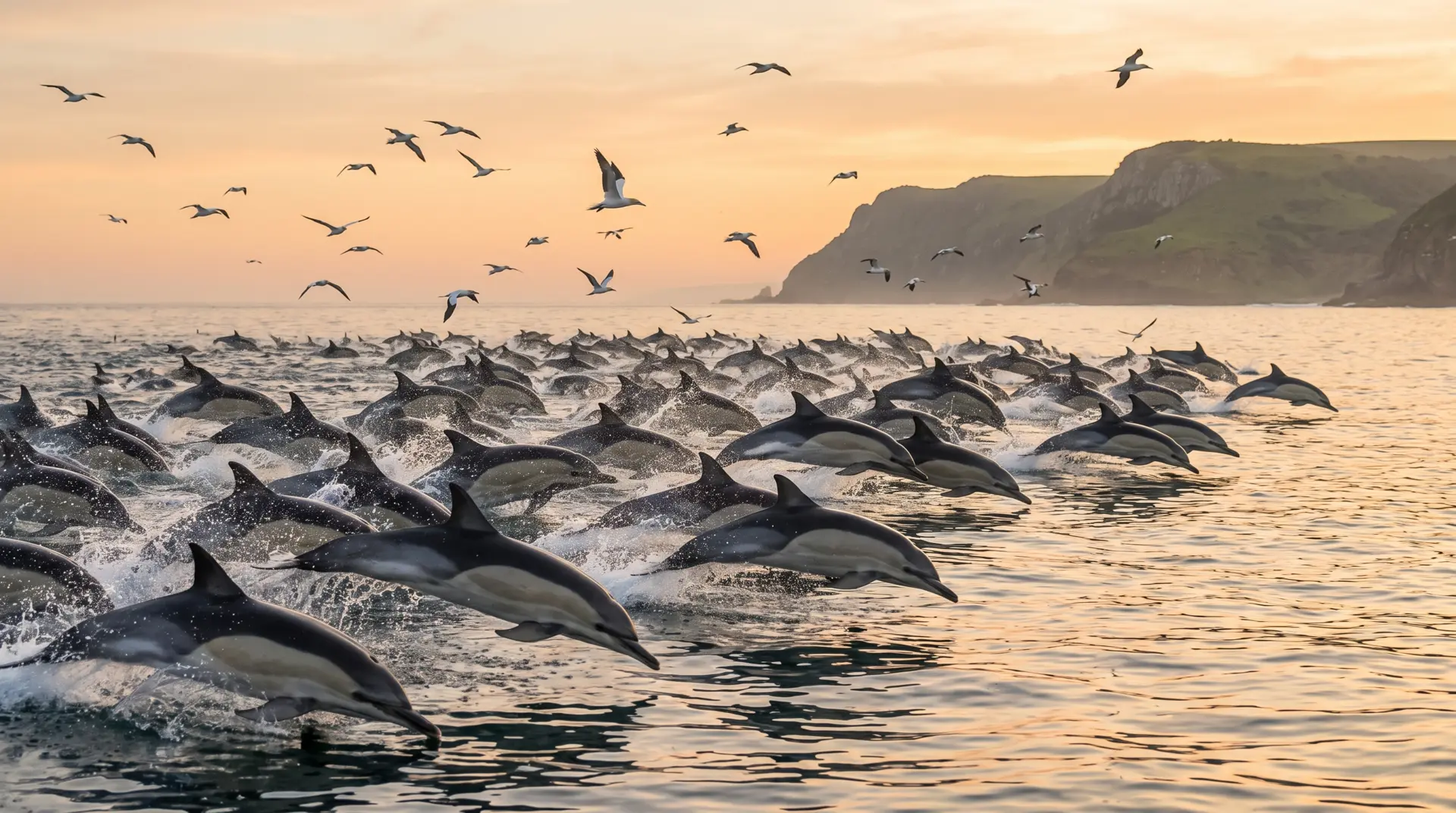
Meet the run before it reaches Port St Johns
Our 7-day expeditions launch from the beach at Chintsa in the early season, 40 minutes from East London's King Phalo Airport, on the first stretch of coast the shoals reach. The 2027 season is open for booking now, and early-season weeks are limited to small groups.
Boats carry small groups only, and prime weeks go 6-12 months out.