
Season Report
Sardine Run 2026 Season Report: Field Notes From the Water
Updated 23 July 2026 · 9 min read · By the Sardine Run Africa crew
The boats are washed down, the wetsuits are drying, and the 2026 sardine run is over. Here is a number worth sitting with: a full year after the fact, around 210 people a month are still searching for "sardine run 2025". Seasons of the greatest shoal on Earth do not stop mattering when the last gannet folds its wings in July. People study past runs to decide whether to book the next one, and they are right to.
So this is our season report, written in late July 2026 from Chintsa, at the southern end of the action. It is a structural retrospective rather than a diary. The day-by-day record (which boat saw what, where, in what conditions) lives on our season tracker, updated through May, June and July as it happened. This page does a different job: it explains the shape of the season, how that shape compares with the pattern of recent years, and what it tells you about planning for 2027.
If you followed the 2026 run through news reports and operator socials, you will have noticed the same rhythm every experienced skipper watches for: early southern action, a northward drift, a Port St Johns crescendo, then the taper. That rhythm is the story.
The shape of a sardine run season
Every sardine run is a moving front, not a fixed event. Billions of Southern African pilchards leave the Agulhas Bank in autumn and push up the Eastern Cape coast inside a corridor of cool inshore water, with the predators in tow. The front passes each stretch of coast once, over a period of weeks, which is why the question "when is the run?" always has a second half: where?
The 2026 season followed the same three-act structure the run always has, and understanding that structure is more useful than any single day's log. Southern waters near Gqeberha and East London see the earliest action from May. The fish and the fleet then work north past the Kei River mouth toward Coffee Bay, and by mid-June the traditional epicentre around Port St Johns and Mbotyi carries the peak into July. Late July, where we are now, is the taper.
| Phase | Coastline | Typical window | What is happening |
|---|---|---|---|
| Southern window | Gqeberha to East London and Chintsa | May to mid-June | First shoals arrive; gannets, common dolphins and Bryde's whales work the front with few boats around |
| Wild Coast peak | Kei River to Coffee Bay, Port St Johns and Mbotyi | Mid-June to July | The front concentrates where the shelf narrows; the full fleet and the spotter planes converge |
| The taper | Northern Wild Coast into southern KZN | Late July onward | Action thins; humpback traffic continues; KZN arrivals have been unreliable since the early 2000s |
Phase one: the southern window off East London and Chintsa
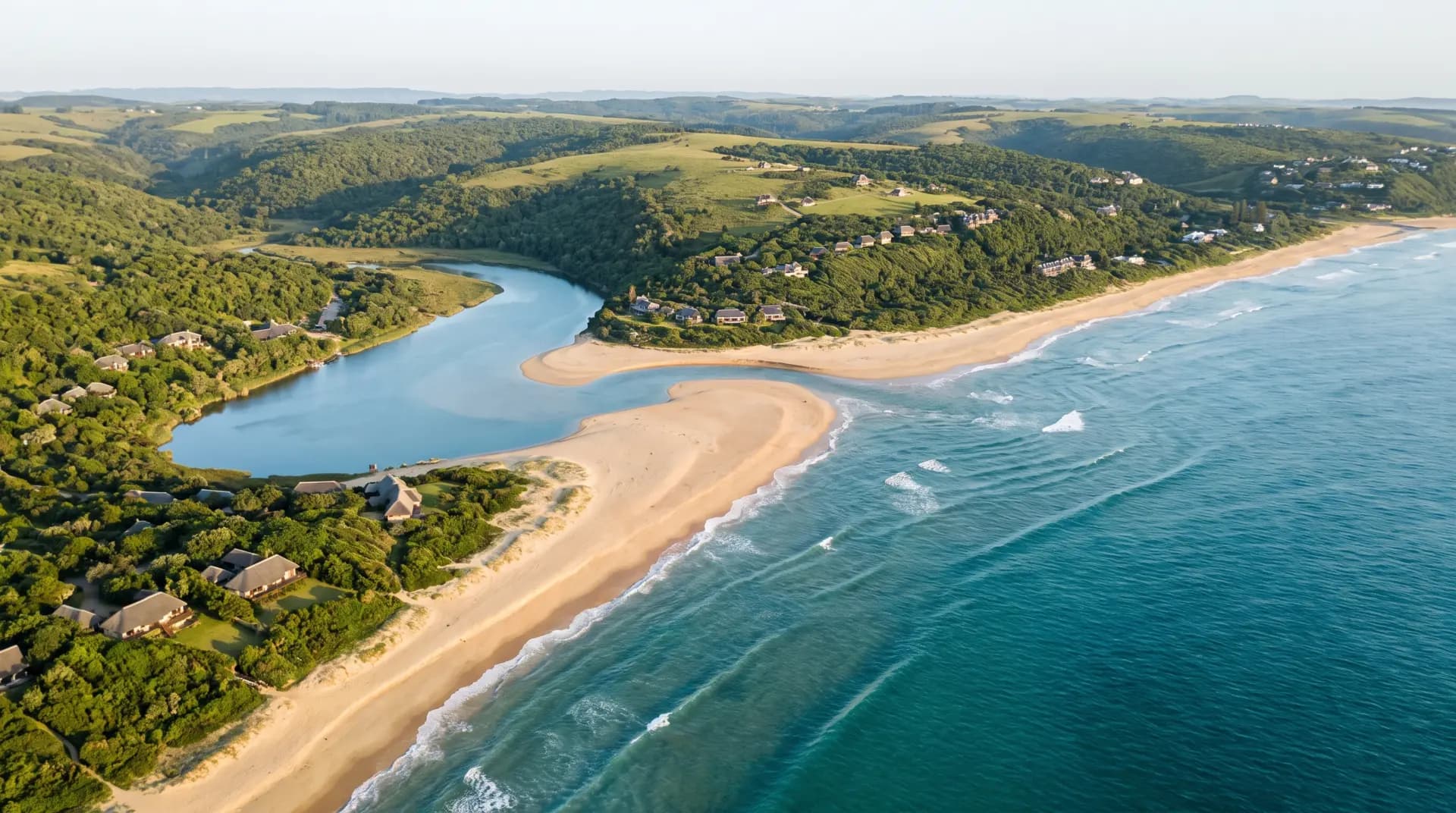
May and early June belong to the southern coast. PADI's own guidance, and the sales calendars of every operator working this stretch, agree: the early phase of the run is best viewed between Gqeberha and East London before the front moves north. That is the window we work from Chintsa, about 40 minutes from King Phalo Airport, and it is the reason our home stretch of coast exists as an expedition base at all.
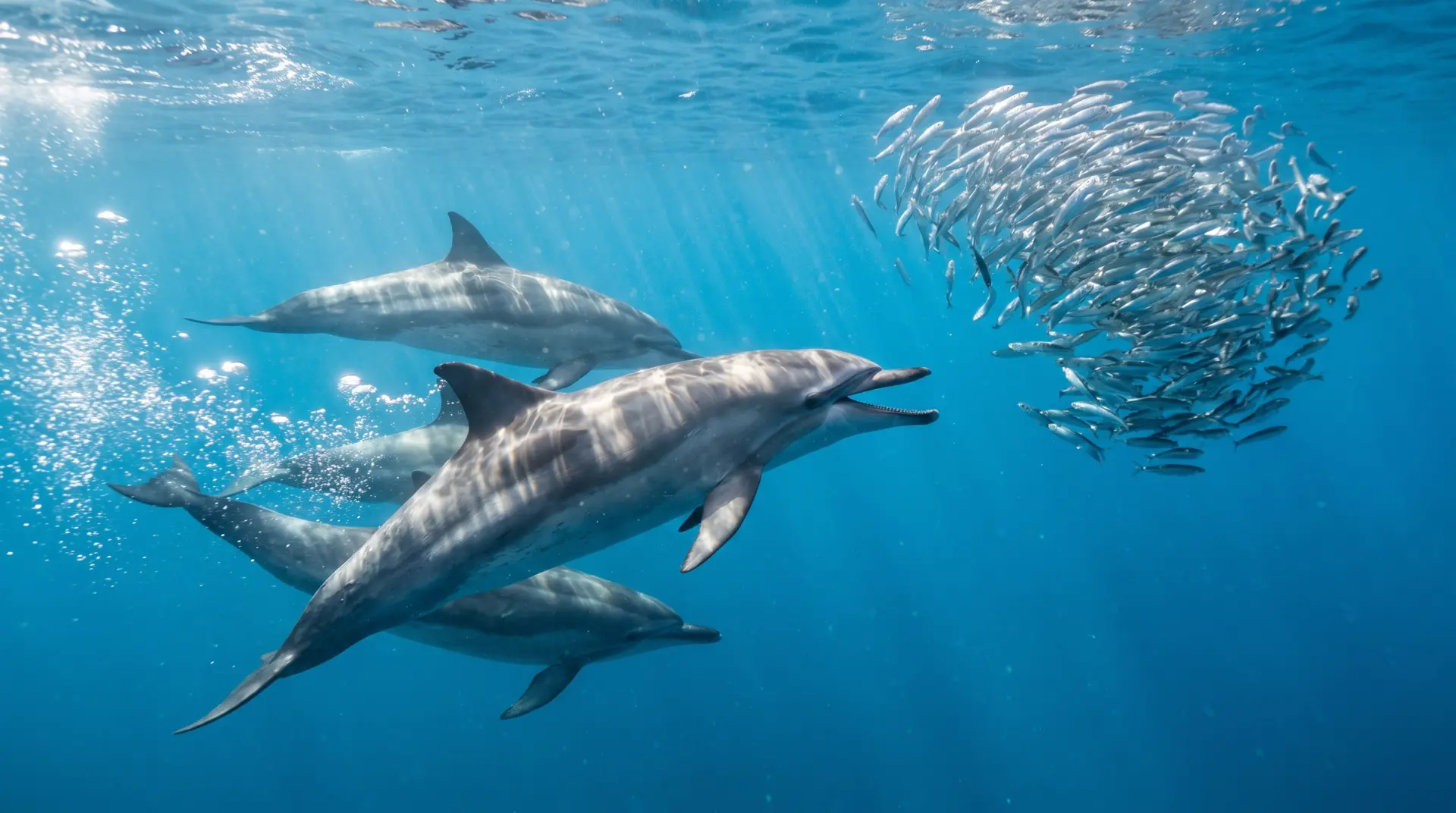
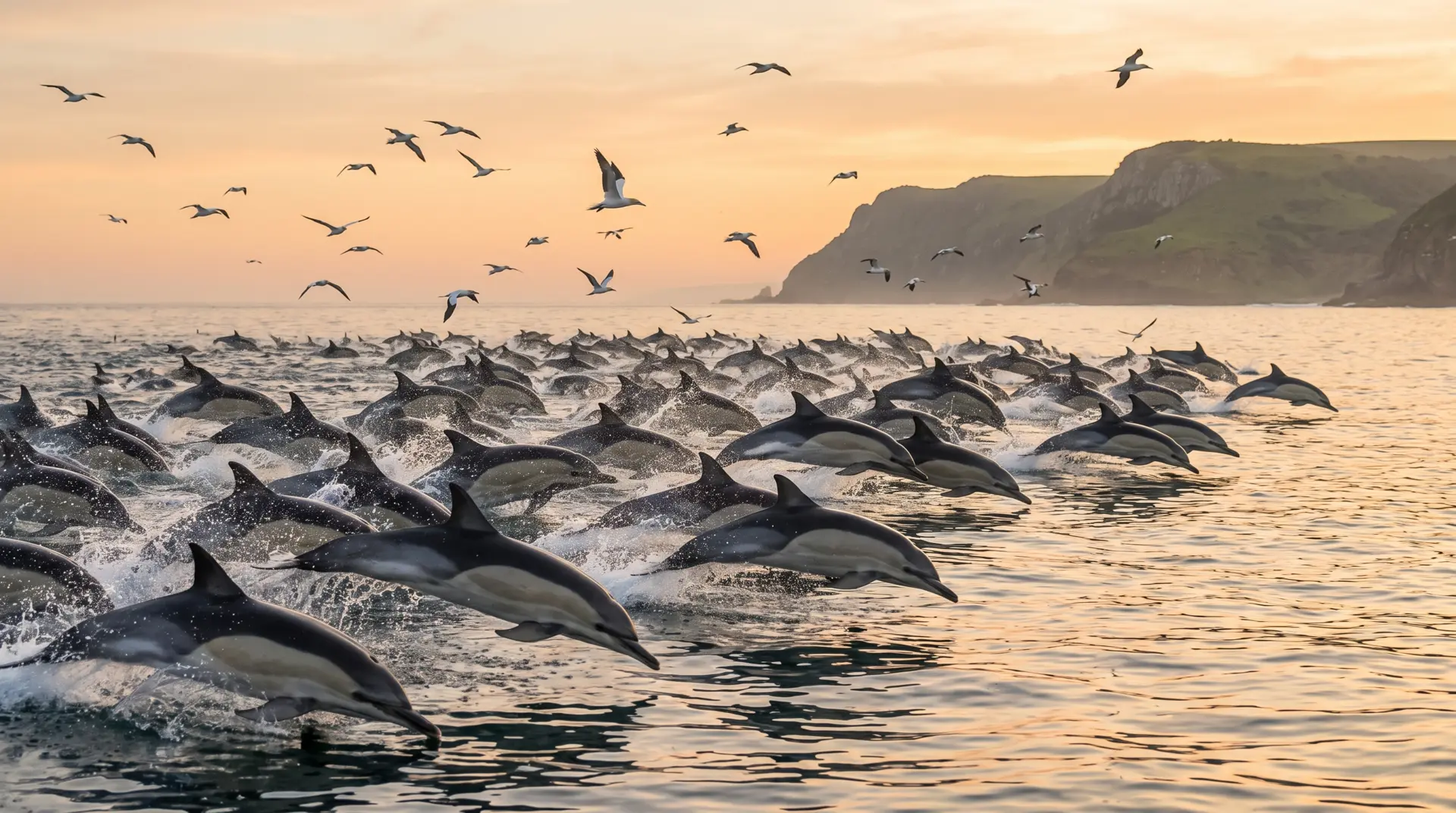
What does the southern window feel like in practice? Long horizons and few boats. The predator cast assembles before the sardines arrive in numbers: common dolphin pods scouting, Cape gannets rafting up and testing dives, the first humpbacks of the northward migration passing offshore. When the shoals push through, the action can be as intense as anything further north, with one difference that matters to photographers and divers alike. You are often the only boat on it.
The southern phase is also the honest answer to a question we get every year: why not just base everything at Port St Johns? Because by the time the peak arrives there, weeks of run have already passed the southern coast. A season is longer than its most famous fortnight.
Phase two: the Port St Johns peak
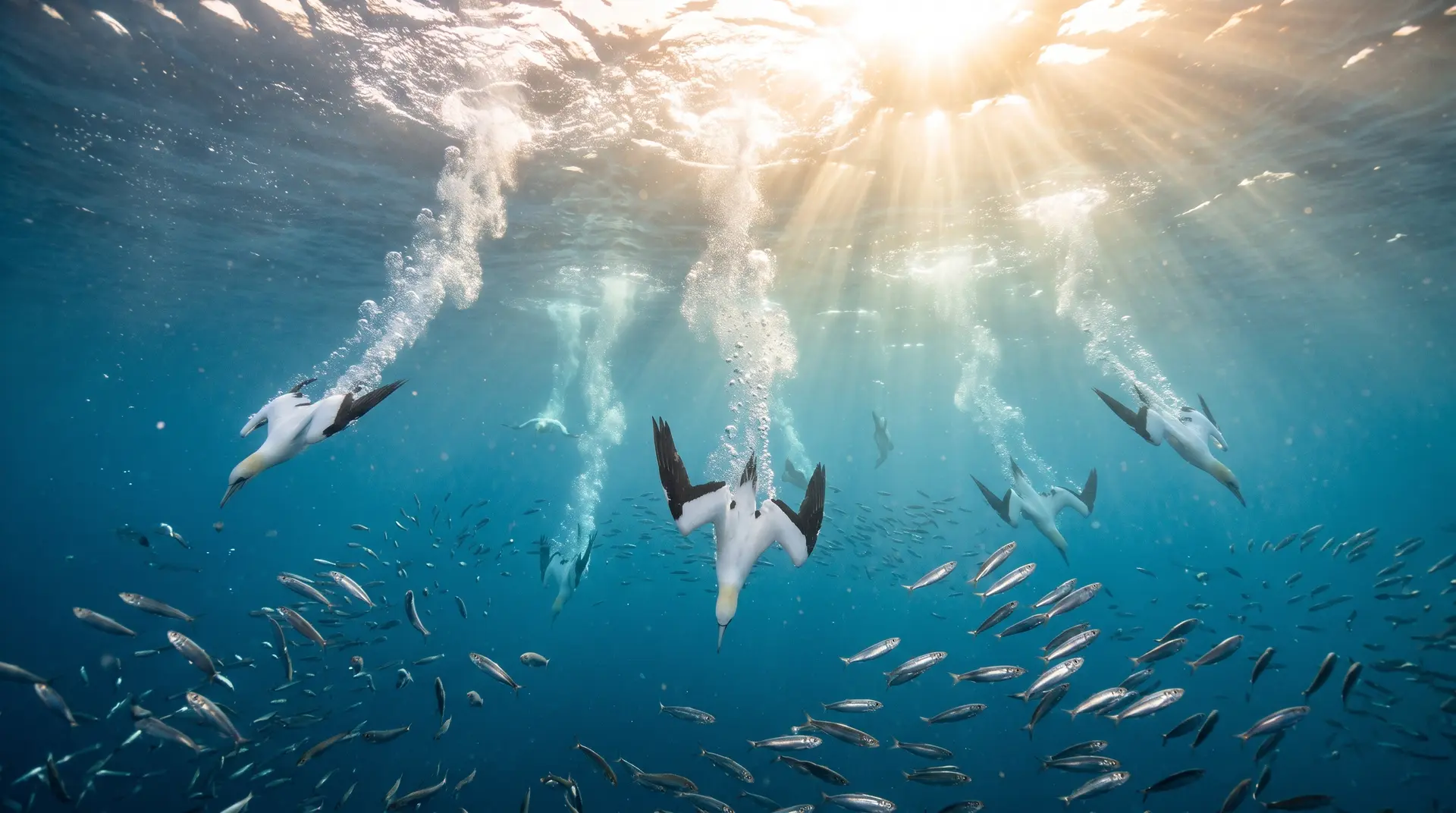
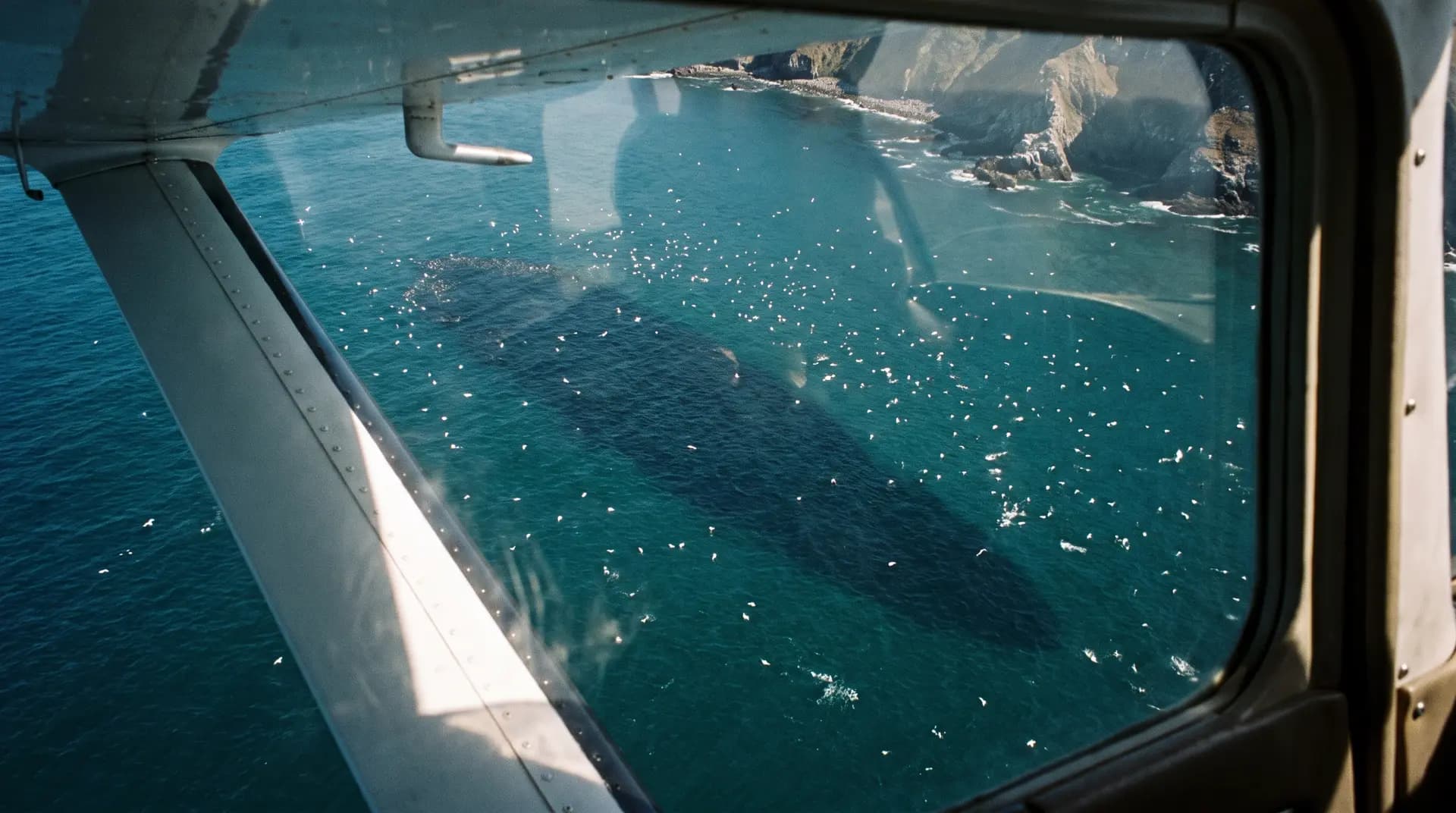
From mid-June the story consolidates around Port St Johns and Mbotyi, and 2026 was no exception in structure. The geography does the work. At Waterfall Bluff near Mbotyi the continental shelf narrows sharply, squeezing the cool inshore corridor and the shoals inside it closer to the coast. Predators and fish concentrate, and so does everything chasing them: the RIBs, the spotter aircraft, the film crews.
The peak is the run at its most cinematic and its most crowded. PSJ operators sold the 2026 season from roughly mid-June into early August, and prime weeks were marked full months in advance, which tells you how much demand piles into that narrow window. If the peak is what you want, book it early and go in with clear eyes about sharing the water.
It is worth repeating what the peak is not: a guarantee. Bait balls form when dolphins carve a pocket of the shoal into a tight sphere near the surface, usually 10 to 20 metres across, and they rarely last ten minutes. Even in the best fortnight of a good year, finding one is a game of aerial intel, fast boats and time at sea. That was true in 2026, it was true in 2025, and it will be true in 2027.
Sardine run 2025, 2026 and why old seasons still matter
Search data says people research past seasons hard before committing to a future one. Sensible. A single season report can mislead you; a stack of them teaches you the pattern. Here is what the pattern years, 2025 and 2026 included, consistently show.
First, the south-to-north sequence holds. The historical benchmarks (shoals passing the Bashee River around 8 to 9 June, reaching Durban around 25 June in the strong decades) shift year to year, but the order of events does not. South first, north later.
Second, the reliable sightings and the headline sightings are different things. Dolphins, humpbacks and working gannets are seen on most sea days in season, in almost every year. Bait balls are pulses: several can stack into one week and then the coast goes quiet for days while the front moves. Any season summary that only counts bait balls misses most of what a week at sea delivers.
Third, time at sea is the variable you control. The market consensus of a five-sea-day minimum exists because the run moves in pulses. Across every recent season, the guests who saw the most were, unsurprisingly, the ones with the most days on the water when a pulse came through. Photographers who book ten or more sea days are not being extravagant. They are playing the odds correctly.
The 2020s trend: later, patchier, temperature-driven
Zoom out from any single year and the decade has a signature. The run of the 2020s tends to arrive later and behave more patchily than the runs of the 1990s, and the mechanism is no mystery: temperature. Sardines are cool-water fish that prefer 14 to 20 degrees Celsius, and the inshore corridor only opens when coastal water drops below about 21. Warm years narrow that corridor, delay it, or in the worst case fail to open it at all. The science of why the run happens is the science of why it sometimes barely does.
The clearest long-term casualty is KwaZulu-Natal. The famous beach-netting arrivals on the Durban coast have been unreliable since the early 2000s, which is why serious expeditions moved south to the Wild Coast and the Eastern Cape, where the cool corridor still opens dependably. Ocean warming is a documented pressure on the event, and we would rather say so plainly than sell you a postcard from 1995.
What does that mean for a guest choosing a week? Two things. Flexibility beats precision: pick a base and a window, not a date you expect the fish to keep. And southern bases carry a quiet structural advantage in warm years, because the front passes the Eastern Cape first, while the water there is at its coolest. Our guide to water conditions during the run covers what those temperatures feel like from inside a 5mm wetsuit.
How to read any season report skeptically
A useful season report names its base and its window, because a quiet fortnight at one point on the coast says nothing about the front two hundred kilometres away. It separates boat-based sightings from in-water encounters. And it resists the highlight reel: one spectacular day does not make a season, and one flat week does not break it.
That is why our daily logs live on the tracker page rather than being compressed into a verdict here. Read the days, note the gaps between pulses, and you will learn more about what to expect from a week at sea than any summary sentence could teach you.
No operator controls the ocean
No honest operator guarantees bait balls, in 2026 or any other year. What a good operation controls is everything else: sea days, boat speed, spotting, guiding and safety. Judge season reports, ours included, by what they claim about the controllables, not by promises about the fish.
What 2026 sets up for 2027
The practical takeaways from this season are the same ones the pattern years keep teaching, so treat them as a checklist for 2027. Book early: boats on this coast carry six to eight guests, prime weeks sell out months ahead, and much of the PSJ peak was spoken for well before the 2026 season opened. Six to twelve months of lead time is normal, which means the 2027 booking window is open now, not next autumn.
Choose your phase deliberately. If you want the early front with room to work, the southern window from Chintsa in May and June is the play, and it comes with the easiest logistics in the game: direct flights from Johannesburg or Cape Town into King Phalo Airport, then a 40-minute transfer. Our season dates guide breaks the calendar down phase by phase.
Then buy sea days, not luck. A 7-day expedition with five days on the water is the sensible floor. Our 2027 Chintsa departures run on exactly that logic, and the packages page sets out dates, inclusions and pricing without an enquiry-form treasure hunt.
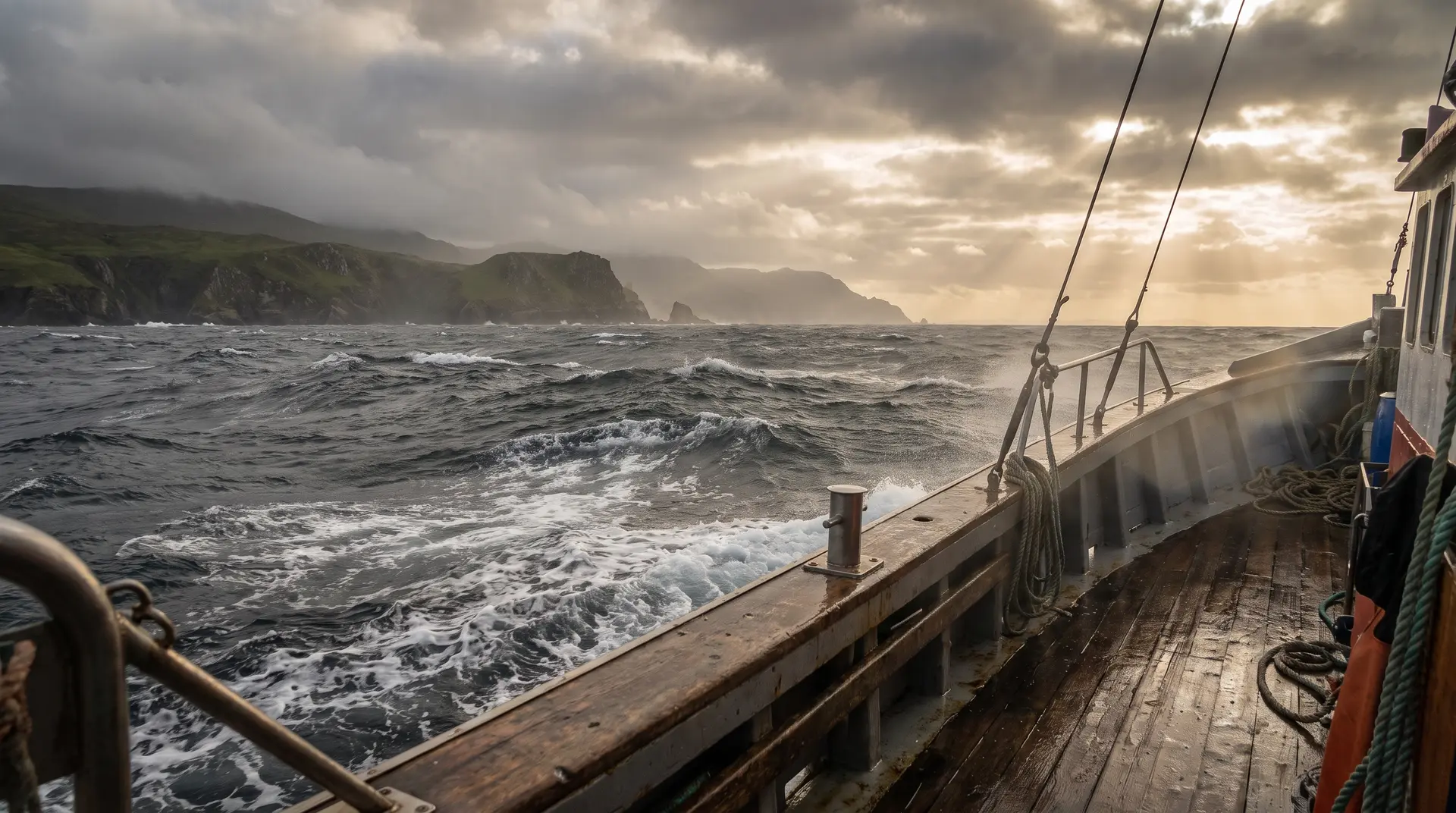
One more thing the 2026 season should remind everyone: the run rewards the prepared. Winter sea days are long, entries are fast, and the guests who got the most out of this season were the ones who arrived boat-fit and properly kitted. Start with the packing list and the fitness guide well before May.
The 2027 planning checklist, straight from the 2026 season
- Book 6 to 12 months out; small boats and prime weeks disappear first
- Pick your phase: southern window (May to mid-June, Chintsa) or Wild Coast peak (mid-June to July)
- Commit to at least 5 sea days; the run moves in pulses and time at sea is the only odds you control
- Budget for a 5 to 7mm wetsuit, hood and gloves; the corridor water runs 14 to 21 degrees
- Follow the tracker from May 2027 so you watch the front move in real time
Frequently asked questions
Was the 2026 sardine run a good season?
The 2026 season followed the classic structure: southern action from May, a Port St Johns peak from mid-June into July, then the late-July taper. For the day-by-day record of sightings and conditions, see our season tracker, which we updated throughout the run. We keep this report structural because a season verdict without the daily logs behind it is marketing, not reporting.
Why are people still searching for the sardine run 2025?
Because past seasons are the best available evidence for planning a future one. Around 210 searches a month for "sardine run 2025" were still happening a year later. Read multiple season reports together and the pattern emerges: the south-to-north sequence holds every year, while the exact timing and intensity shift with water temperature.
Did the 2026 run reach Durban and KwaZulu-Natal?
KZN arrivals have been unreliable since the early 2000s, which is a documented long-term trend rather than a one-season quirk. The dependable action in the 2020s happens along the Eastern Cape and Wild Coast, which is why expedition operators, ours included, base there rather than on the KZN South Coast.
Is the sardine run getting weaker every year?
Not in a straight line, but the 2020s trend is real: runs tend to arrive later and behave more patchily, linked to warming coastal water. The run needs inshore temperatures below about 21 degrees to open its corridor. The Eastern Cape still delivers dependable seasons, and southern bases see the front first, when the water is coolest.
When should I book for the 2027 sardine run?
Now, or close to it. Boats carry six to eight guests, the booking norm is 6 to 12 months ahead, and prime 2026 weeks at Port St Johns were full months before the season started. Our 2027 Chintsa departures run May to July, with the earliest expeditions catching the southern window.
Where can I find the daily 2026 sighting logs?
On our season tracker page, which we ran throughout May, June and July 2026. It records what the boats found day by day, along with sea conditions. This report deliberately stays at the season level; the tracker is where the detail lives.
Keep reading
The 2027 booking window is already open
The lesson of every recent season is the same: the guests who saw the most booked early and bought sea days. Our 7-day Chintsa expeditions for May to July 2027 catch the southern window before the fleet moves north. See dates and pricing on the packages page, or ask us anything first.
Boats carry small groups only, and prime weeks go 6-12 months out.