Trip Planning
Sardine Run FAQ: 25 Questions, Answered Straight
Updated 23 July 2026 · 12 min read · By the Sardine Run Africa crew
No reputable operator will guarantee you a bait ball. That is the first thing to understand about the sardine run, and it is the question we get asked more than any other. The run is a wild event driven by water temperature, wind and current. What we can tell you is what actually happens on most sea days in season (dolphins, whales, gannets, sharks), what the odds look like over five days versus one, and what every other question you are sitting with actually comes down to.
This page collects the 25 questions people ask us before booking a 7-day expedition from Chintsa, near East London on South Africa's Wild Coast. Booking and deposits, fitness, sharks, kids, insurance, gear, seasickness, solo travel, tipping, and what happens when the southeaster blows the sea flat-out unworkable. The answers are short and honest, because the sardine run sells itself when you describe it accurately.
The 2026 season has just wrapped, so everything here is written for travellers planning the May to July 2027 season, which is open for enquiries now. If your question is not answered below, ask us directly and a human who has spent the season at sea will reply.
How to use this page
The 25 questions below run in rough decision order: first the expectation-setting questions (is it guaranteed, what will I see), then who can come (fitness, age, swimming ability), then logistics (booking, weather, gear, insurance, getting here), then the small stuff people are embarrassed to ask, like tipping and seasickness.
Several answers link out to full guides. If you want depth on any topic, start with the 8-week fitness preparation plan and the complete packing list. If you have already decided and just want dates and prices, the packages page has both.
Booking for 2027
Boats on the run carry six to eight guests, and across the industry prime weeks sell out six to twelve months ahead. Many Port St Johns operators were fully booked for 2026 months before the season started. If a specific 2027 week matters to you, enquire early.
Is the sardine run guaranteed? What the honest answer looks like
No. Sardines need inshore water below about 21°C to move up the coast, and in warm years the run can arrive late, hug the deep, or barely fire at all. Anyone who promises you a bait ball is selling something the ocean has not agreed to.
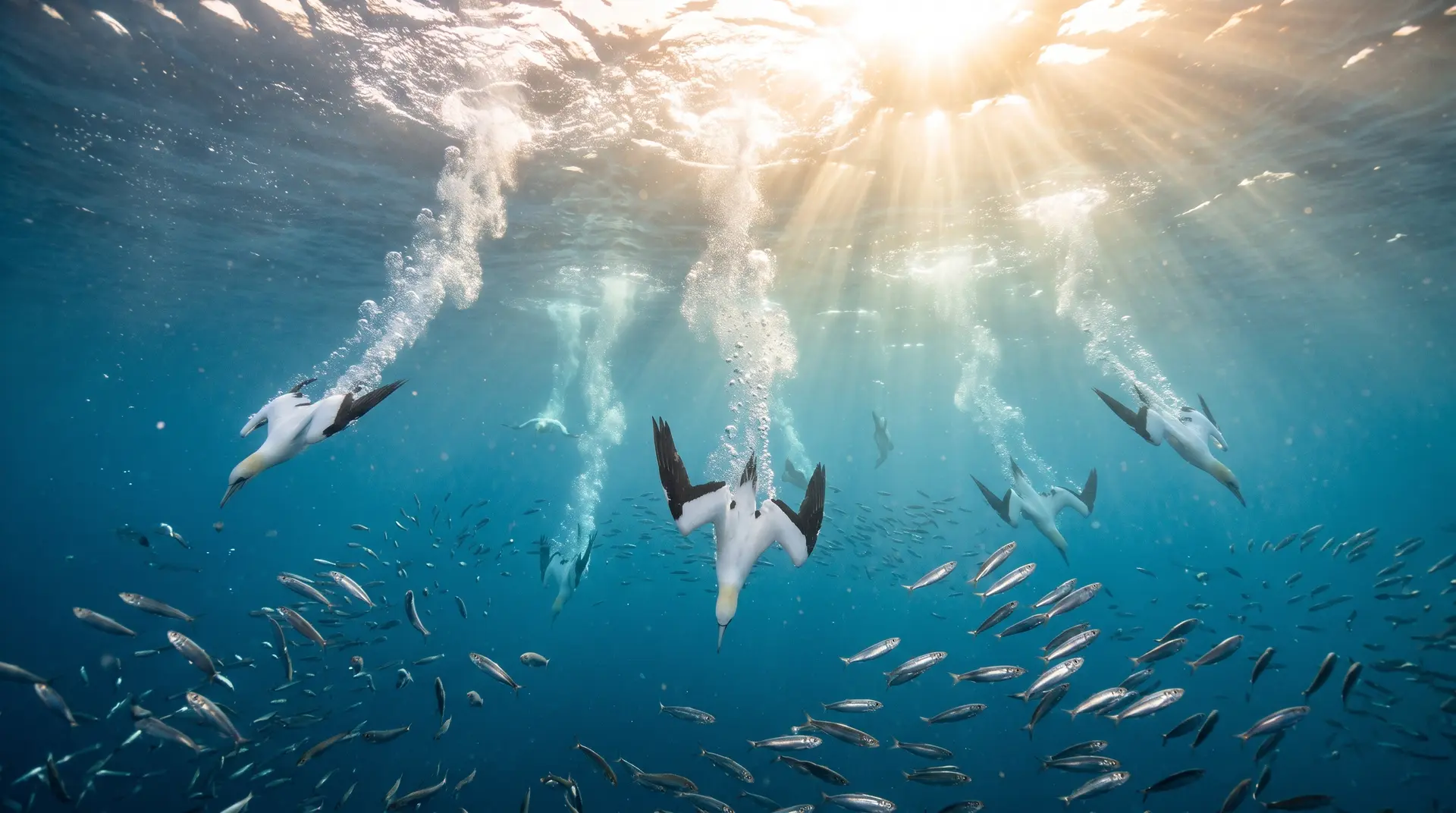
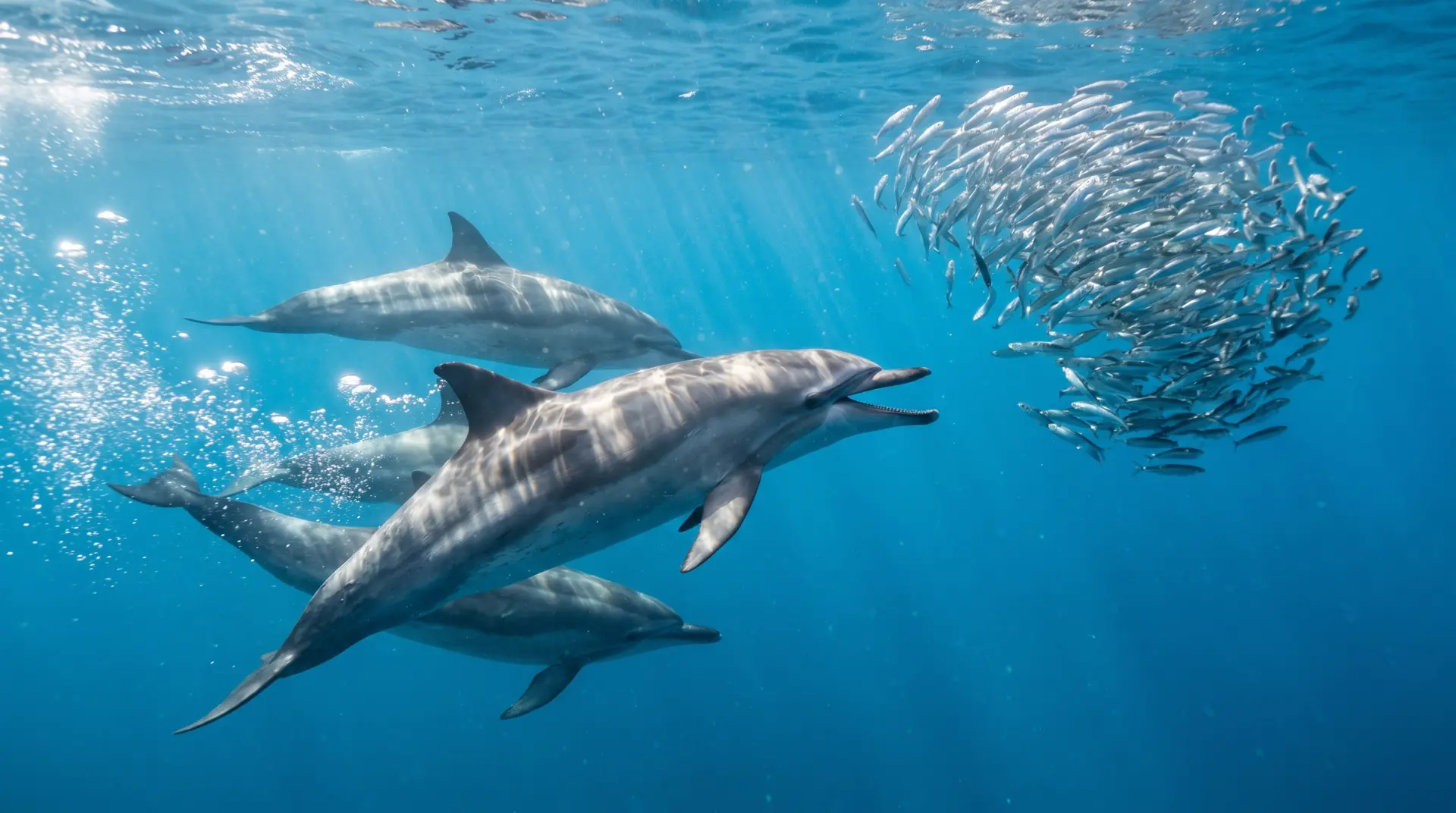
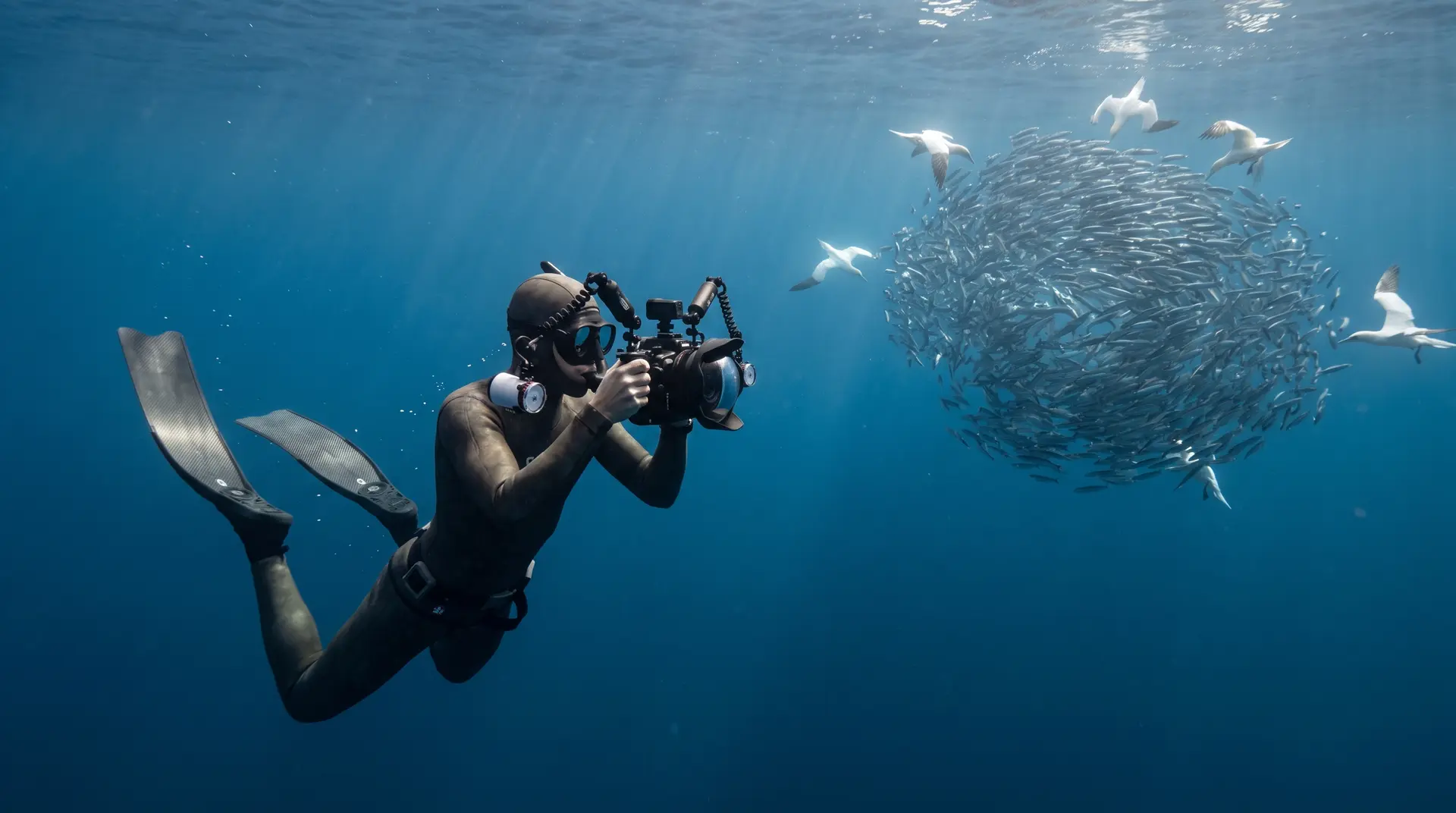
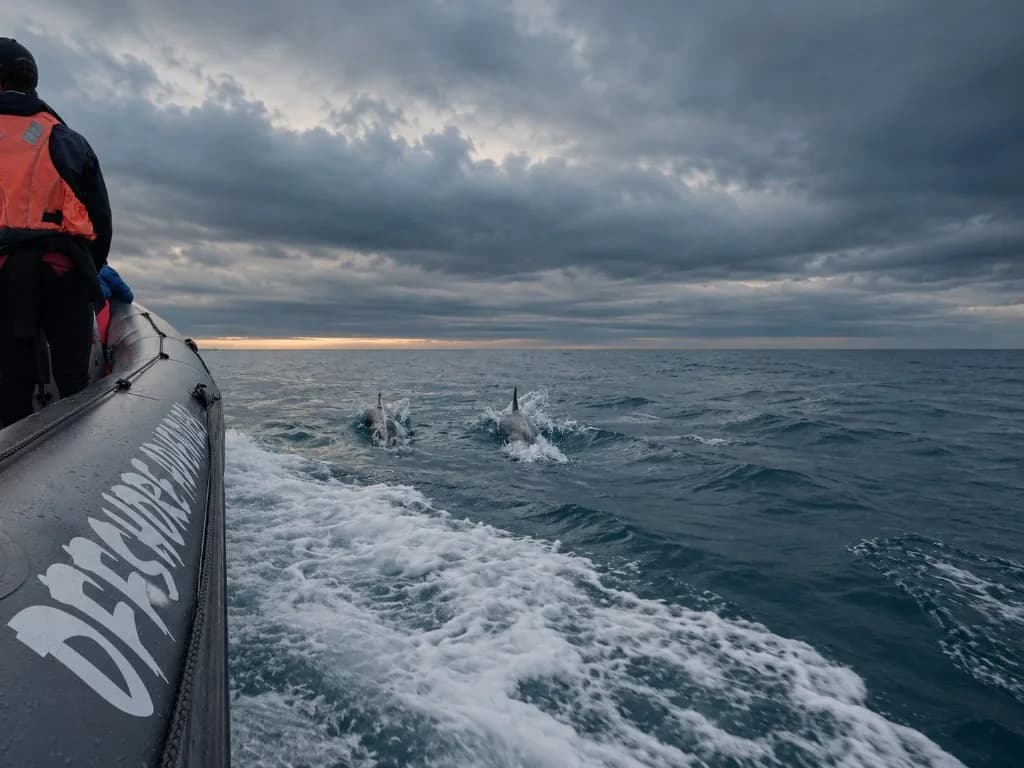
Here is the part the scary version leaves out: a sea day in season is almost never empty. Common dolphin pods that can run to the thousands, migrating humpbacks, Bryde's whales, Cape fur seals and dive-bombing gannets are seen on most days between May and July. The bait ball is the jackpot, not the whole game. That is why the market consensus is a minimum of five sea days: the run moves in pulses, and time at sea is the only variable you control.
Our answer to the guarantee problem is structural, not verbal. Chintsa sits in the southern section of the run's path, where the action typically arrives first (May to June) before moving north to Port St Johns. Read where to see the sardine run for the full geography.
How fit do I need to be for the sardine run?
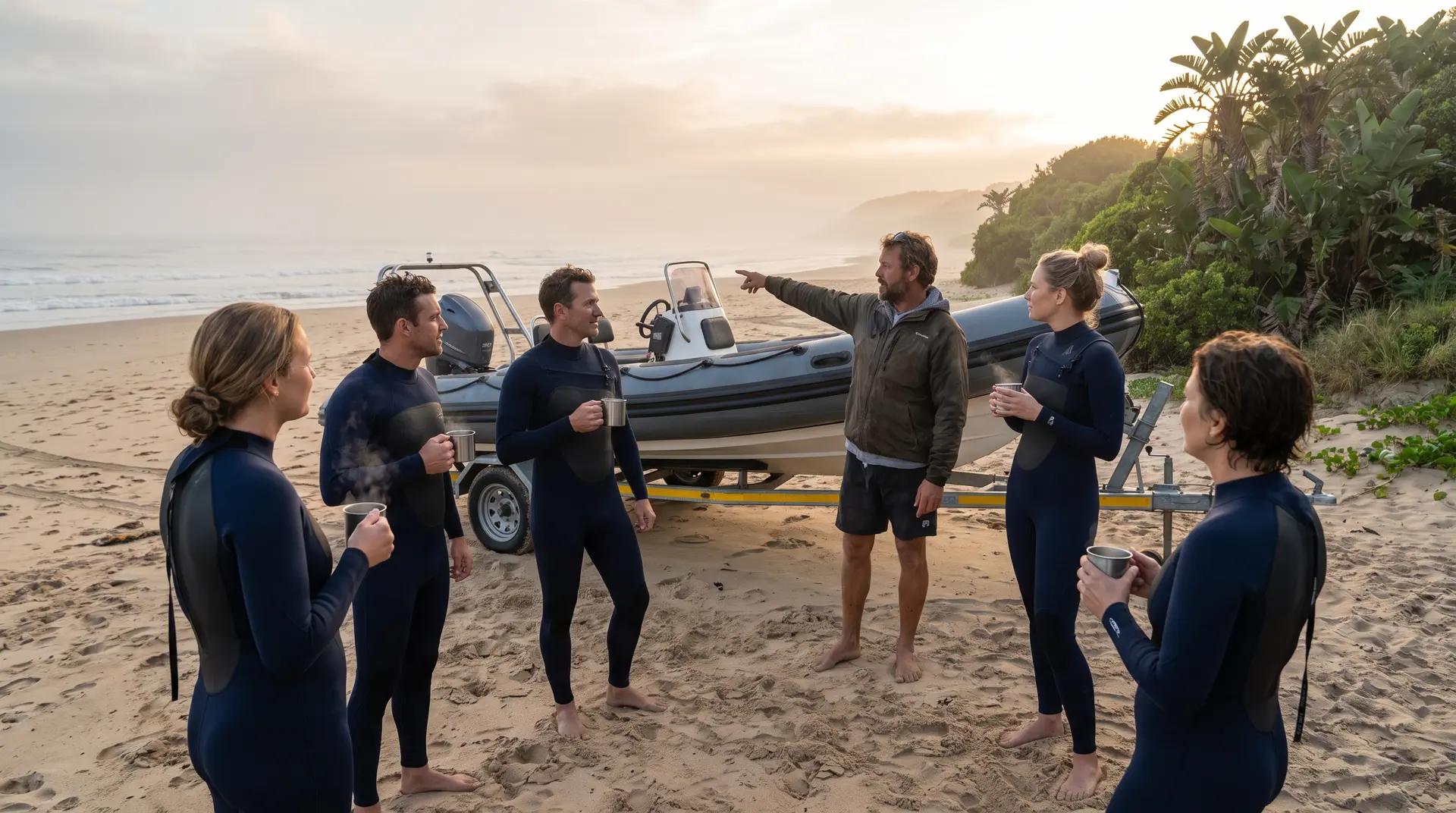
Moderate fitness, decent ocean comfort, and the ability to climb back onto a rubber duck unaided. You do not need to be an athlete. You do need to handle six to eight hours on a small boat in winter swell, several fast entries and exits, and short hard surface swims in a 5mm wetsuit.
If you failed the self-test
Most people can close the gap in two months. Two swim sessions a week plus some pull and grip work covers it, and the fitness preparation guide lays out an 8-week plan. If mobility is a real limitation, the honest answer is that in-water participation is not suitable, but boat-based whale and gannet watching still is.
A quick self-test. You are ready if you can:
- Swim 200m in open water or a pool without stopping, at an easy pace
- Tread water comfortably for 10 minutes
- Haul yourself out of a pool at the deep end without using the steps (this is the boat re-entry movement)
- Spend a full day outdoors in cold wind without falling apart
- Put fins on and off in the water without panic
Quick answers at a glance
The table below compresses the questions we hear most often into one screen. Full answers, with the caveats that matter, are in the FAQ list that follows.
| Question | Short answer |
|---|---|
| Is a bait ball guaranteed? | No. Dolphins, whales and gannets are seen most days; bait balls are the bonus. |
| Do I need a dive certification? | No. Most action is snorkel-based at the surface. Scuba is optional, for qualified divers, on stable bait balls only. |
| How fit must I be? | Moderate. Swim 200m, tread water 10 min, climb back on the boat unaided. |
| Can non-swimmers come? | Yes, as boat-based guests. In-water guests must be confident open-water swimmers. |
| How cold is the water? | Roughly 14 to 21°C. A 5mm wetsuit with hood is standard. |
| When should I book 2027? | Six to twelve months ahead. Prime weeks sell out. |
| What if weather cancels a sea day? | No operator refunds weather days. Chintsa has real land-based alternatives; many bases do not. |
| Are the sharks a danger? | They are focused on sardines. Guides control every entry; incidents on guided runs are rare. |
| Is insurance required? | Dive and travel insurance (such as DAN) is strongly recommended, and required for scuba. |
| How do I get here? | Fly to King Phalo Airport, East London. Chintsa is about 40 minutes by road. |
Frequently asked questions
Is the sardine run guaranteed?
No, and no honest operator will tell you otherwise. The run depends on inshore water cooling below about 21°C, plus wind and current, so bait balls cannot be promised. What is near-certain in season is the supporting cast: common dolphins, humpback and Bryde's whales, Cape gannets and seals are seen on most sea days. You are booking an ocean safari, not a ticket to a scheduled show.
What are my realistic chances of seeing a bait ball?
Nobody publishes hard percentages because the ocean does not cooperate with statistics, but the pattern is clear: more sea days means better odds. The run moves in pulses, and a five-sea-day week gives you multiple shots at intercepting one. Bait balls are typically 10 to 20 metres across and rarely last more than ten minutes, which is why fast boats and good spotting matter more than luck.
Do I need to be a certified scuba diver?
No. Most sardine run action is fast-moving and happens at the surface, so snorkelling is the primary way everyone experiences it, divers included. Scuba is used only on stable, static bait balls at the skipper's discretion, and for that you need a certification (Advanced, or Open Water with solid experience). Our guide to doing the run without scuba covers this in full.
Can non-swimmers or non-divers join the expedition?
Yes, as boat-based guests. Whales breaching, dolphin super-pods and gannets raining out of the sky are all watched from the deck, and plenty of partners join purely for that. Anyone getting in the water must be a confident open-water swimmer; there is no version of in-water participation for weak swimmers.
How fit do I need to be for the sardine run?
Moderately fit. The benchmark: swim 200m comfortably, tread water for ten minutes, and climb back onto the boat unaided (the same movement as hauling yourself out of a pool at the deep end). Sea days run six to eight hours with multiple fast entries. The fitness preparation guide linked above has an 8-week plan if you want a running start.
Is there an upper age limit?
No fixed limit. We have seen guests in their sixties and seventies outlast people half their age; what matters is swimming ability, boat re-entry strength and general health, not the number. If you have a heart, lung or mobility condition, talk to your doctor first and tell us about it upfront when you book, so we can plan around it rather than discover it at sea.
Can children come on the sardine run?
Boat-based, yes, for water-confident teenagers who can handle a long cold day on a small boat; contact us to discuss anyone under 16, as suitability depends on the child, not just the birthday. In-water participation demands adult-level swimming strength and calm in open ocean with large animals, which rules out most younger children. As a rule of thumb, if a teen can pass the fitness self-test above, they can be considered.
How do I book a 2027 expedition?
Pick a week on the packages page and send an enquiry, or contact us on WhatsApp or at info@sardineruntours.co.za. We confirm availability, take a deposit to lock your dates, and the balance falls due before the season. The 2026 season has just ended, so 2027 is the next bookable season, running May to July.
How far in advance should I book?
Six to twelve months ahead for prime weeks. Boats on the run carry six to eight guests, so a week sells out with a single group booking, and many Port St Johns operators had 2026 marked full months before the first launch. Booking in the second half of 2026 for a 2027 week is the comfortable window, not the paranoid one.
What is the deposit and cancellation policy?
Industry-wide, sardine run deposits run 30 to 50 percent and are non-refundable, with the balance due around 60 days before your trip; our specific terms are set out at booking. The non-refundable part exists because a six-seat boat cannot resell your week at short notice. Travel insurance with cancellation cover is the sane way to protect the money.
What happens if the weather blows out a sea day?
The skipper calls it, safety wins, and no operator on this coast refunds weather days; that policy is universal. Where bases differ is what you do instead. Chintsa has game reserves, beaches, horse riding and hiking on the doorstep, which is a real advantage over remote Wild Coast bases where a blown-out day means staring at the lodge wall.
Are the sharks dangerous?
The copper, dusky and blacktip sharks on the run are there for sardines, and a wetsuited human is not on the menu. Guides control every entry, read the animals' behaviour, and pull people out when a situation gets too chaotic. Incidents on professionally guided runs are rare; the sharks are one of the main reasons photographers come.
What safety measures are on the boat?
Commercial boats on this coast operate under SAMSA certification with qualified skippers, and reputable operators carry oxygen and first aid on board. Entries and exits are controlled by the guide, never freelanced. Editorial guides to the run tell readers to choose operators with medical standby for good reason; ask any operator you consider, including us, exactly what is on their boat.
Do I need dive or travel insurance?
Strongly recommended for everyone and effectively essential for anyone planning to scuba. DAN (Divers Alert Network) is the standard for dive cover; pair it with ordinary travel insurance that includes trip cancellation, since deposits are non-refundable. Check that your policy covers snorkelling and boat-based ocean activities, as some budget policies exclude them.
Where is the nearest hyperbaric chamber?
The recognised chambers serving the sardine run coast are at Port St Johns and Durban. Scuba on the run is limited to stable bait balls at conservative depths, which keeps the risk profile low, but the chamber question is exactly the kind of thing your dive insurance exists for. Non-divers snorkelling at the surface carry no decompression risk at all.
Can I rent gear, or must I bring my own?
You can rent. Wetsuits, masks, snorkels, fins and scuba kit are available; market rates for full gear rental are around R500 per day at established operators, and we will confirm current rental pricing when you book. Serious snorkellers and photographers usually bring their own mask and fins for fit, and rent the rest.
What wetsuit do I need?
A 5mm suit with a hood is the working standard, and cold-sensitive people go to 7mm or add a hooded vest. Gloves, booties and long fins complete the picture. Water runs 14 to 21°C and you will be in and out of it all day with wind on the boat between swims, so err warm; the packing list guide has the full kit rundown.
How cold is the water, really?
Between about 14 and 21°C depending on the day and which body of water you are sitting in; the cold inshore corridor is literally what the sardines are following. Air temperatures in winter run 14 to 21°C too, so the boat can feel colder than the sea. The water conditions guide covers temperature, visibility and swell month by month.
How long is a day at sea?
Six to eight hours, launching in the early morning, usually between 06:30 and 08:00. You are on a fast RIB covering serious distance, following bird and dolphin activity, with lunch packs eaten on the water. It is a long, cold, spectacular day, which is why the fitness and clothing questions on this page matter.
I get seasick. Should I still come?
Yes, with preparation. Small boats in winter swell will find out anyone prone to motion sickness, so start non-drowsy seasickness medication the evening before your first sea day, not on the boat. Most people adapt within a day or two, and time in the water resets the inner ear. Skipping breakfast does not help; eat something plain.
I'm travelling solo. Will I fit in, and do I pay more?
Solo travellers are a fixture on the run; a shared boat of six to eight people bonds fast when a whale surfaces next to it. Pricing is quoted per person sharing, so solo guests either share a twin room with another solo traveller or pay a single supplement for their own room. Tell us your preference when you enquire and we will set it out plainly.
How do I get to Chintsa?
Fly to King Phalo Airport, East London, which has direct flights from Johannesburg (about 1h35) and Cape Town, then it is roughly a 40-minute road transfer to Chintsa. Compare that with Port St Johns, which needs a flight to Mthatha plus a 1.5-hour transfer, or a 4 to 5 hour drive from Durban. It is the easiest access of any base on the run.
Why run from Chintsa instead of Port St Johns?
Three reasons: the run typically reaches the southern section (East London and Chintsa) first, in May and June, before moving north; the water here carries far fewer boats than the Port St Johns fleet; and the logistics are simpler, with a major airport 40 minutes away and real land-based options for weather days. The full case is in our East London and Chintsa guide.
Should I tip the crew, and how much?
Tipping is discretionary and never expected, but it is customary in South African guided travel when the crew has worked hard for you, and on the run they will have. There is no fixed formula; guests commonly pool a cash tip at the end of the week for the skipper, guides and lodge staff. Give what the week was worth to you.
What happens in a warm year when the run is weak?
It is a real risk and we will not pretend otherwise: the KZN leg of the run has been unreliable since the early 2000s, and warm inshore water can mute a season anywhere on the coast. A weak sardine year is still a strong ocean year, though; the humpback migration, resident dolphins, Bryde's whales and gannets do not cancel. This is another argument for the southern bases, where cooler early-season water arrives first, and for booking more sea days rather than fewer.
Keep reading
Asked everything? Then you're ready for 2027
The people who get the best weeks are the ones who book six to twelve months out. Look at the 7-day Chintsa expedition dates and prices, or send us the question this page missed; a crew member who has spent the season at sea will answer it straight.
Boats carry small groups only, and prime weeks go 6-12 months out.